
- Catalogs
- Standard Imaging
- Ii Dosimetric Characterization Output Verify

Ii Dosimetric Characterization Output Verify

Ii Dosimetric Characterization Output Verify
Skin cancer is highly prevalent in the United States, with over 2 million cases diagnosed annually. Early detection allows for effective treatment using radiation therapy. This document focuses on the use of high dose rate (HDR) 192Ir brachytherapy sources with conical applicators for treating superficial lesions. The study aims to verify dosimetric characteristics and establish a method for output verification to ensure accurate dose delivery.
HDR 192Ir sources, such as the VariSource iX and GammaMedplus iX, are used to deliver a uniform dose to tumors while minimizing exposure to surrounding tissues. Applicators made from a stainless-tungsten alloy are designed to position the source parallel to the treatment surface, with inserts to collimate the field and ensure flat contact during dose delivery.
Current protocols like TG-43 and TG-61 do not fully apply to HDR 192Ir surface applicators due to unique geometric and scatter conditions. Existing quality assurance procedures provide a consistency check but are limited to specific equipment. This study proposes a new formalism for output verification applicable to various surface applicators.
The proposed method involves measuring the air-kerma rate at the applicator exit window using ionization chambers, followed by applying correction factors to determine the dose to water. This approach ensures accurate dose delivery by accounting for the presence of the applicator and treatment geometry.
Air-kerma rate measurements were conducted using ionization chambers like the Exradin A3 and A20. Monte Carlo simulations were used to characterize the response of these chambers. Calibration coefficients were determined for the Exradin A20 chamber, ensuring traceability to national standards.
Theoretical dose distributions and depth dose curves were generated and showed good agreement with measured values. The proposed output verification method allows for determining the applicator-specific dose to water based on measured air-kerma rates.
The novel output verification methods developed in this study reduce uncertainties in dose delivery for HDR 192Ir surface applicators, enhancing patient care by ensuring accurate and reliable treatment dosages.
The document discusses the calibration of the Exradin A20 chamber using egs_chamber and DOSRZnrc. The primary measurement of air-kerma rate involves determining the rate at the exit window for surface applicators used with HDR 192Ir sources. The Exradin A3 chamber provides secondary NIST-traceable measurements, while the Exradin A20 is used for clinically relevant methodologies.
A specialized apparatus is used for the seven-distance technique, modified to hold a surface applicator. Measurements are taken at various distances, and a power function extrapolates air-kerma rates back to the plane of interest.
Correction factors for absorbed dose to water are determined using MCNP5 and egs_chamber Monte Carlo codes. Dosimetric characterization includes percentage depth-dose curves and relative dose distributions, measured using the Exradin A20 chamber in a water phantom and compared to Monte Carlo simulations.
Relative dose distributions are measured using radiochromic films and TLDs. Monte Carlo simulations provide comparisons to measured values.
Air-kerma calibration coefficients for the Exradin A20 are presented, with measured air-kerma rates for Varian surface applicators using the VariSource iX and GammaMedplus iX. The Exradin A20 shows agreement with the Exradin A3 within 3.5% for VariSource iX and 1.6% for GammaMedplus iX. Monte Carlo simulations provide additional validation.
The document discusses the uncertainties involved in determining the air-kerma rate using the Exradin A3 and A20 chambers. Key uncertainties include chamber calibration, electrometer calibration, air density, timing, chamber position, source position, and measurement reproducibility.
The uncertainty budget is divided into Type A (measured) and Type B (calculated) components. Type A includes standard deviation of the mean for collected charge, while Type B involves factors like catheter shape affecting source position.
Monte Carlo techniques were used to calculate correction factors for dosimetry formalism. The chamber replacement factor (Pcham) and dose to water conversion factor are nearly identical for both VariSource iX and GammaMedplus iX.
Percentage depth dose curves were generated for each source and applicator combination, normalized to a depth of 5 mm. The results showed good agreement between measured and calculated values.
The document describes the experimental setup for analyzing uncertainty in source position due to catheter shape, using different catheter configurations to measure charge readings for consecutive deployments.
Catalog excerpts

Dosimetric characterization and output verification for conical brachytherapy surface applicators. Part II. High dose rate 192Ir sources Regina K. Fulkerson, John A. Micka, and Larry A. DeWerd Citation: Medical Physics 41, 022104 (2014); doi: 10.1118/1.4862506 View online: http://dx.doi.org/10.1118/1.4862506 View Table of Contents: http://scitation.aip.org/content/aapm/journal/medphys/41/2?ver=pdfcov Published by the American Association of Physicists in Medicine
Open the catalog to page 1
Dosimetric characterization and output verification for conical brachytherapy surface applicators. Part II. High dose rate 192 Ir sources Regina K. Fulkerson,a) John A. Micka, and Larry A. DeWerd Department of Medical Physics, University of Wisconsin–Madison, Madison, Wisconsin 53705 (Received 31 July 2013; revised 20 November 2013; accepted for publication 9 December 2013; published 23 January 2014) Purpose: Historically, treatment of malignant surface lesions has been achieved with linear accelerator based electron beams or superficial x-ray beams. Recent developments in the field of brachytherapy...
Open the catalog to page 2
Fulkerson, Micka, and DeWerd: Surface applicator output verification F IG . 1. VariSource iX and GammaMedplus iX. (a) VariSource iX source geometry, units in mm. (b) GammaMedplus iX source geometry, units in mm. Images courtesy of Rasmussen et al. (Ref. 14). Varian offers two types of applicators manufactured out of a stainless-tungsten alloy (Fig. 2) for use with the GammaMedplus iX and the VariSource iX. One applicator type positions the source parallel to the treatment surface inside a source guide tube with a nominal source to surface distance (SSD) of 12.5 mm. The other applicator positions...
Open the catalog to page 3
Fulkerson, Micka, and DeWerd: Surface applicator output verification F IG . 3. Schematic of source dwell positions within Varian surface applicators. (a) Varian surface applicator with VariSource iX. (b) Close-up of VariSource iX in Varian surface applicator showing dwell index. (c) Varian surface applicator with GammaMedplus iX. (d) Close-up of GammaMedplus iX in Varian surface applicator showing dwell index. While standard dosimetry protocols exist for brachytherapy sources and low-energy external photon beams, the geometric and scatter conditions observed with the HDR 192 Ir and electronic...
Open the catalog to page 4
Fulkerson, Micka, and DeWerd: Surface applicator output verification determined as Kair = M · NK · P elec · PTP ·P cham · PPOM , where the air kerma, Kair is determined through: M is the measured charge reading over a collecting period; Pelec is the electrometer calibration coefficient; PTP is the correction for ambient temperature and pressure; and NK is an applicatorspecific calibration coefficient. Pcham = Kair vol is a chamber Kcham replacement factor, where Kair vol is the Monte Carlo calculated kerma to air-volume at the point of measurement and Kcham is the Monte Carlo calculated kerma to...
Open the catalog to page 5
Fulkerson, Micka, and DeWerd: Surface applicator output verification 2.B. Correction factors for determination of absorbed dose to water F IG . 4. Modified seven-distance apparatus with surface applicator. Positioning of the applicator and chamber was achieved with two alignment lasers. Once a nominal distance of 10 cm between the applicator exit window and center of the ionization chamber was achieved, charge readings were collected with a Standard Imaging Supermax electrometer at distances ranging from 5 to 30 cm from the exit window of the surface applicator. Unlike the traditional seven-distance...
Open the catalog to page 6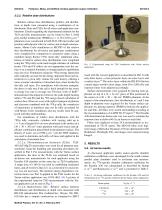
Fulkerson, Micka, and DeWerd: Surface applicator output verification 2.C.2. Relative dose distributions Relative surface dose distributions, profiles, and distributions at depth were measured using a combination of radiochromic films and TLDs for all source and applicator combinations. Details regarding the experimental methods for the TLD and film measurements can be found in Part I. Solid poly-methyl methacrylate (PMMA) ρ = (1.18 ± 0.01) g cm−3 phantoms were constructed to hold TLD-100 microcubes and position radiochromic film for surface and at-depth measurements. Monte Carlo simulations in MCNP5...
Open the catalog to page 7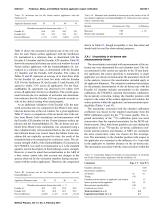
Fulkerson, Micka, and DeWerd: Surface applicator output verification TABLE II. Air-kerma rate for the Varian surface applicators with the VariSource iX. Chamber measured air-kerma rate (mGy • s-1) Exradin A3 54.6 55.1 54.5 55.1 TABLE IV. Measured and calculated air-kerma rate at the surface of the 30 mm diameter applicator and GammaMedplus iX. Values have been normalized to a reference date. Method Air-kerma rate (cGy) % difference Monte Carlo calculated 6.05 Table II shows the measured air-kerma rate at the exit window for each Varian surface applicator with the VariSource...
Open the catalog to page 8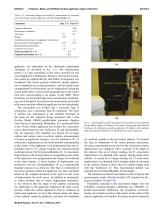
Fulkerson, Micka, and DeWerd: Surface applicator output verification TABLE VI. Uncertainty budget for Exradin A3 measurements of air-kerma rate for the Varian surface applicators with the GammaMedplus iX. Component Type A % Type B % Chamber position relative to applicator exit window 1.2 Source position within applicator 0.31 0.16 Expanded uncertainty (k = 2) 4.2 applicator was dependent on the afterloader deployment mechanics as described in Sec. 1.A. The manufacturer quotes a ±1 mm uncertainty in the source position for any source/applicator combination. However, this broad...
Open the catalog to page 9
Fulkerson, Micka, and DeWerd: Surface applicator output verification 022104-9 TableVII. Uncertainty budget for Exradin A20 measurements of air-kerma rate for the Varian surface applicators with the VariSource iX. Table IX. Calculated Pcham for the Exradin A20 and the surface applicators of interest. These values were derived from MCNP5 simulations. Varian surface applicators with VariSource iX Diameter (mm) Pcham Varian surface applicators with GammaMedplus iX Applicator diameter (mm) Pcham Component Type A % Type B % Chamber positioning on applicator exit window 0.04 Source position...
Open the catalog to page 10
Fulkerson, Micka, and DeWerd: Surface applicator output verification TABLE X. Calculated PDw values for the surface applicators of interest. PDw : Varian surface applicators with VariSource iX Depth (mm) Diameter (mm) PDw : Varian surface applicators with GammaMedplus iX Depth (mm) Diameter (mm) 30 35 40 45 measured calculated measured calculated F IG . 7. Percentage depth dose curves in water for the Varian surface applicators and VariSource iX. Medical Physics, Vol. 41, No. 2, February 2014
Open the catalog to page 11All Standard Imaging catalogs and technical brochures
 QA BeamChecker Plus
7 Pages
 QA CrossChecker
2 Pages
 QA StereoChecker
2 Pages
 Jacob Gersh, PhD, DABR AAPM Talk
19 Pages
 SuperMAX
8 Pages
 MAX 4000 Plus Electrometer
2 Pages
 CDX 2000B Electrometer
2 Pages
 Luthmann QA Tool
2 Pages
 IVB 1000 Well Chamber
2 Pages
 Blue Water Phantom
2 Pages
 Virtual Water Phantom
1 Page
 ARC QA Phantom
2 Pages
 IMRT
IMRT2 Pages
 MIMI
MIMI2 Pages
 Lucy 3D QA
12 Pages
 DoseView 1D
4 Pages
 DoseView 3D
12 Pages
 RAy Datasheet
2 Pages
 RT Workspace Brochure
10 Pages
 Dosimetry Check Datasheet
2 Pages
 IMSure Brochure
10 Pages
 PIPSpro Software Brochure
12 Pages


- Analysis software
- Radiology software
- Tablet computer software
- Tablet PC software
- Test phantom
- Reporting software
- Monitoring software
- Cloud-based software
- Planning software
- Automated software
- Software module
- Measurement software
- Tomography test phantom
- Web-based software
- CT scan test phantom
- Test software
- Import software
- Medical software on site
- General purpose test phantom
- CT software