
- Catalogs
- Stern Weber
- SW_Sterilisation protocol_2022


SW_Sterilisation protocol_2022
SW_Sterilisation protocol_2022
Catalog excerpts
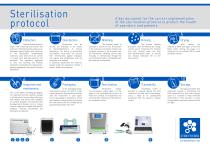
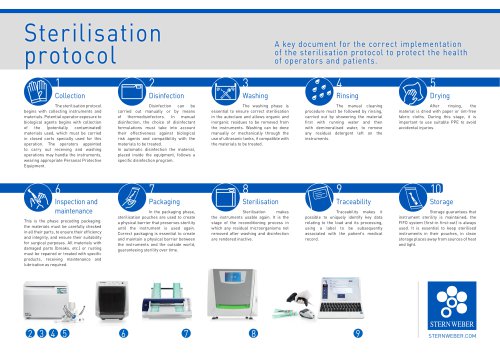
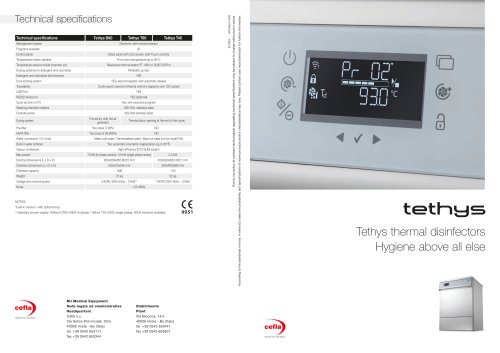
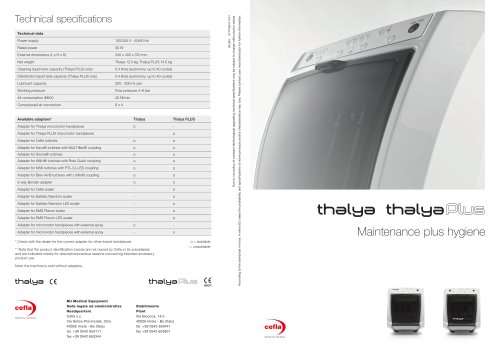
Sterilisation protocol A key document for the correct implementation of the sterilisation protocol to protect the health of operators and patients. The sterilisation protocol begins with collecting instruments and materials. Potential operator exposure to biological agents begins with collection of the (potentially contaminated) materials used, which must be carried in closed carts specially used for this operation. The operators appointed to carry out receiving and washing operations may handle the instruments, wearing appropriate Personal Protective Equipment. Disinfection can be carried out manually or by means of thermodisinfectors. In manual disinfection, the choice of disinfectant formulations must take into account their effectiveness against biological risk agents and compatibility with the materials to be treated. In automatic disinfection the material, placed inside the equipment, follows a specific disinfection program. The washing phase is essential to ensure correct sterilisation in the autoclave and allows organic and inorganic residues to be removed from the instruments. Washing can be done manually or mechanically through the use of ultrasonic tanks, if compatible with the materials to be treated. The manual cleaning procedure must be followed by rinsing, carried out by showering the material first with running water and then with demineralised water, to remove any residual detergent left on the instruments. After rinsing, the material is dried with paper or lint-free fabric cloths. During this stage, it is important to use suitable PPE to avoid accidental injuries. This is the phase preceding packaging: the materials must be carefully checked in all their parts, to ensure their efficiency and integrity, and ensure their suitability for surgical purposes. All materials with damaged parts (breaks, etc.) or rusting must be repaired or treated with specific products, receiving maintenance and lubrication as required. In the packaging phase, sterilisation pouches are used to create a physical barrier that preserves sterility until the instrument is used again. Correct packaging is essential to create and maintain a physical barrier between the instruments and the outside world, guaranteeing sterility over time. Sterilisation makes the instruments usable again. It is the stage of the reconditioning process in which any residual microorganisms not removed after washing and disinfection are rendered inactive. Traceability makes it possible to uniquely identify key data relating to the load and its processing, using a label to be subsequently associated with the patient's medical record. Storage guarantees that instrument sterility is maintained; the FIFO system (first-in first-out) is always used. It is essential to keep sterilised instruments in their pouches, in clean storage places away from sources of heat and light.
Open the catalog to page 1All Stern Weber catalogs and technical brochures
 SW S380TRC
22 Pages
 SW_STOOLS
6 Pages
 SW COLOUR Range
3 Pages
 SW S320TR
4 Pages
 SW S300
18 Pages
 SW S220TR
18 Pages
 SW S280TRC
18 Pages
 SW Surgical cart_8SETT2023
8 Pages
 SW_Lampada MCT View_2025
5 Pages
 SW S200
16 Pages
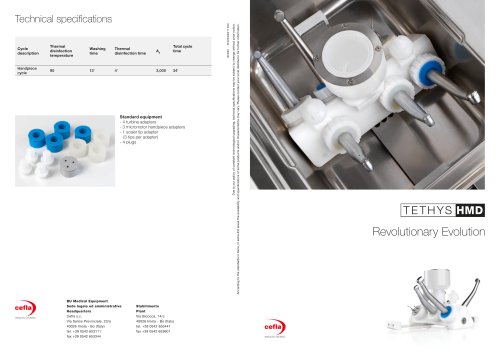 Tethys HMD ALL BRAND 2021
2 Pages
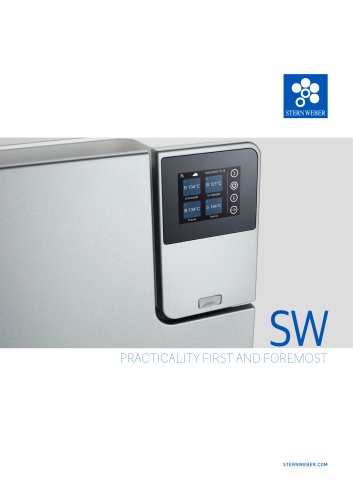 SW_STERILIZATION
7 Pages
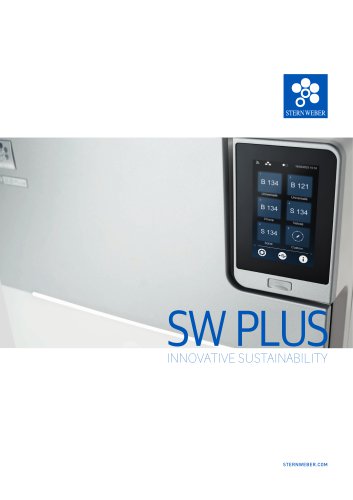 SW_STERILIZATION_SW PLUS
7 Pages
 SW_STERILIZATION_PLATINUM
7 Pages
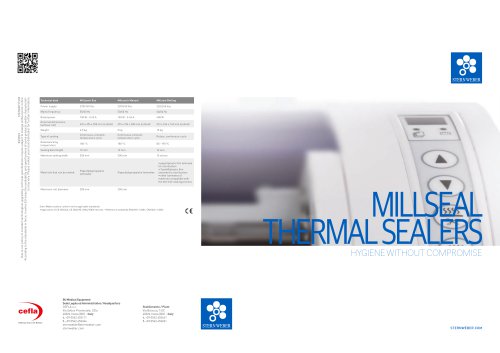 SW_STERILIZATION Millseal
2 Pages
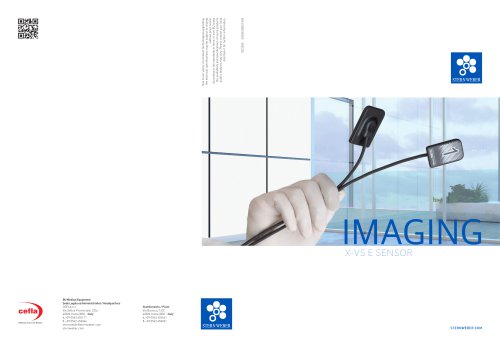 SW_X-VS_E
4 Pages
 SW_X-VS
2 Pages
 SW_RX DC
2 Pages
 Tethys H10 PLUS ALL BRAND_EN
6 Pages
 STERILIZATION Millseal_EN
2 Pages
Archived catalogs
 SW_Handpieces
4 Pages
 SW_X-VS_EN
2 Pages
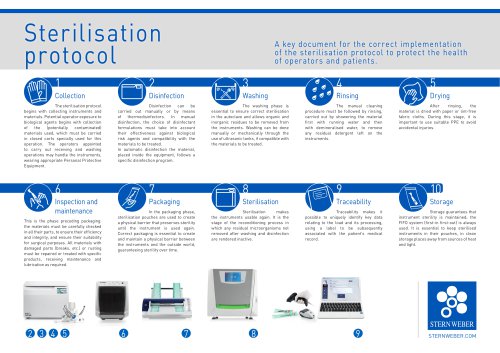 SW Protocollo_EN
1 Page
 SW_STERILIZATION_SW_EN
7 Pages
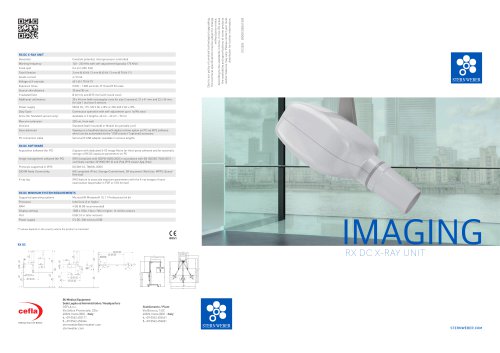 SW_RX DC_GB
2 Pages
 SW_X-VS_E_EN
4 Pages
 SW_STERILIZATION_PLATINUM_EN
7 Pages
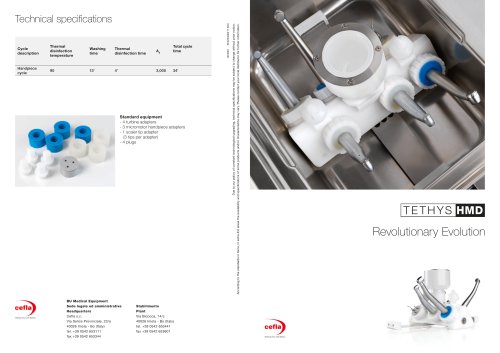 Tethys HMD ALL BRAND_EN
2 Pages
 SW_STERILIZATION_SW PLUS_EN
7 Pages
- Sterilizer
- Surgical lighting system
- Steam sterilizer
- LED surgery light
- Syringe
- Benchtop sterilizer
- Automatic sterilizer
- Dental treatment unit
- Visualization software
- Tablet computer software
- Flat panel detector
- Tablet PC software
- Stool with backrest
- Control software
- Dental unit with light
- Drill
- Micromotor
- Dental stool
- Washer-disinfector