
- Catalogs
- STT Systems
- ISEN MODELS


- Company
- Products
- Catalogs
- News & Trends
- Exhibitions
ISEN MODELS
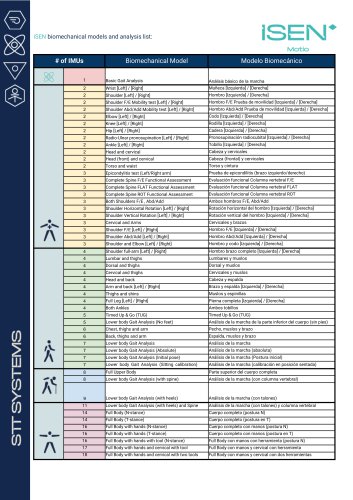
1 / 1 PageView full catalog
ISEN MODELS
Product catalog summary
Overview: The document provides a comprehensive list of biomechanical models and analyses using Inertial Measurement Units (IMUs). It categorizes various biomechanical assessments based on the number of IMUs used, ranging from 1 to 18. The document includes both English and Spanish descriptions of the models and analyses.
Key Sections:
- IMU-Based Biomechanical Models: The list specifies the number of IMUs required for each biomechanical model, ranging from basic gait analysis to full body assessments. The models are designed to analyze different body parts and movements, such as wrists, shoulders, elbows, knees, hips, and more.
- Specific Tests and Assessments: The document details various mobility tests and functional assessments, including shoulder mobility tests, epicondylitis tests, and complete spine functional assessments. These tests are available for both left and right sides of the body.
- Gait Analysis: Several types of gait analyses are mentioned, including basic gait analysis, lower body gait analysis with and without specific body parts, and full body gait analysis in different stances. Some analyses include additional parameters like spine and heel involvement.
- Language Variants: The document provides descriptions in both English and Spanish, ensuring accessibility for a broader audience.
Critical Information:
- Requirements: The number of IMUs required for each model is clearly specified, which is crucial for setting up the biomechanical assessments accurately.
- Parameters and Limitations: Each model and test is designed for specific body parts and movements, indicating the scope and limitations of each analysis.
- Best Practices: The document implies the importance of using the correct number of IMUs and following the specified procedures for accurate biomechanical analysis.
See more
Catalog excerpts
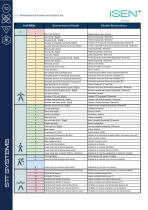
iSEN biomechanical models and analysis list: Motio # of IMUs
Open the catalog to page 1All STT Systems catalogs and technical brochures
 Gait & Running 2DMA
2 Pages
 Cycling 2DMA
2 Pages
 Generic 2DMA
2 Pages
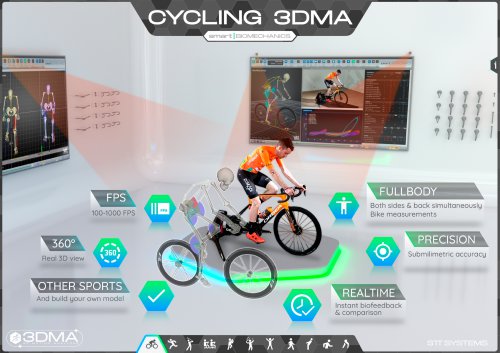 Cycling 3DMA
2 Pages
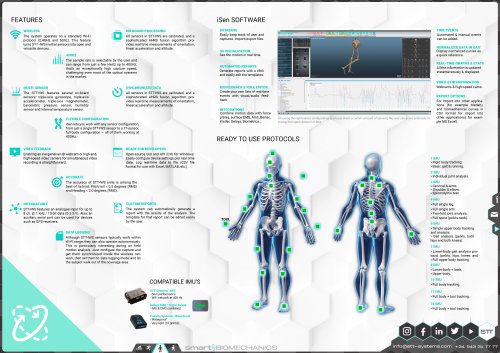 iSen Generic
1 Page
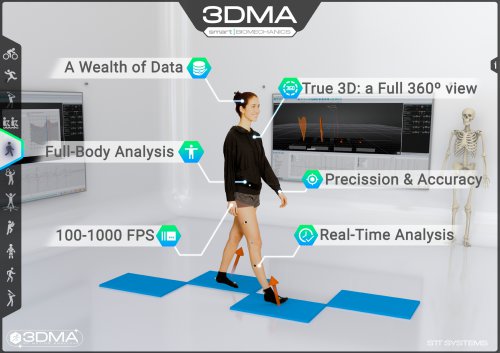 Generic 3DMA
2 Pages
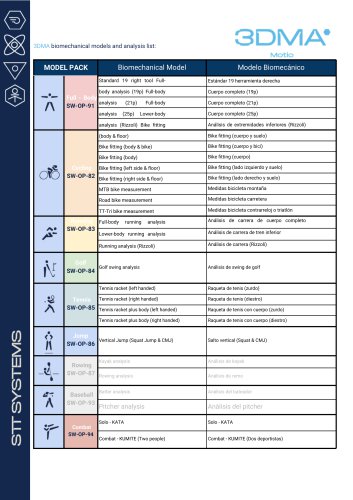 3DMA MODELS
2 Pages
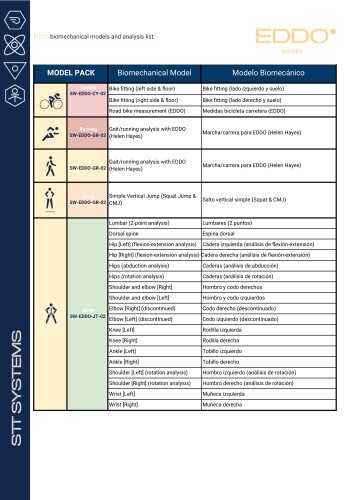 EDDO MODELS
1 Page
Archived catalogs
 STT SYSTEMS
59 Pages
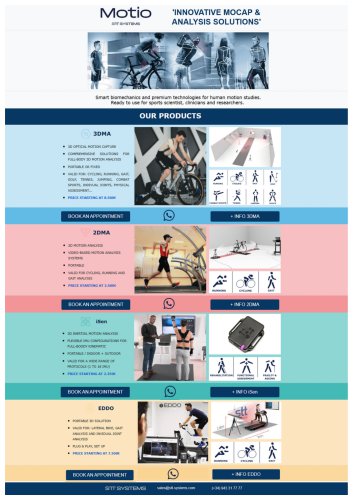 Products
1 Page
 Medical Sector Products
3 Pages
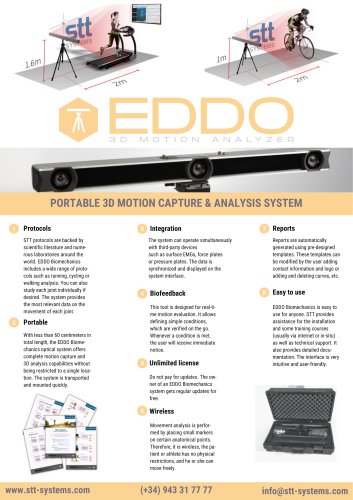 EDDO
EDDO1 Page
 2DMA
2DMA2 Pages
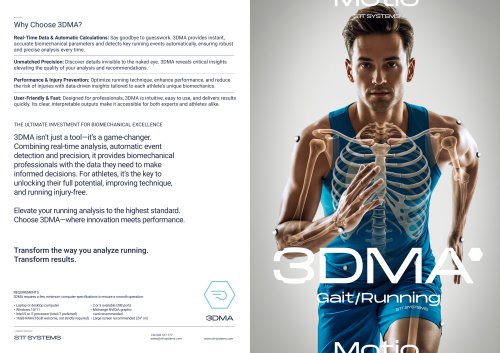 GAIT & RUNNING 3DMA
2 Pages
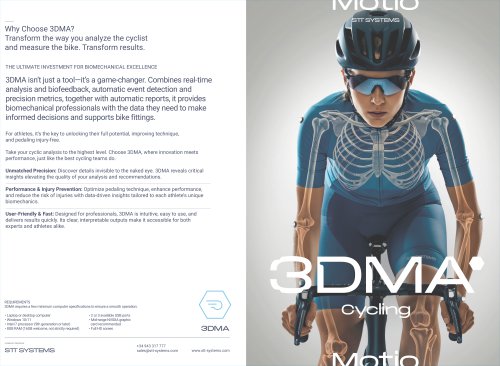 CYCLING 3DMA
2 Pages
 2DMA GAIT RUNNING
2 Pages
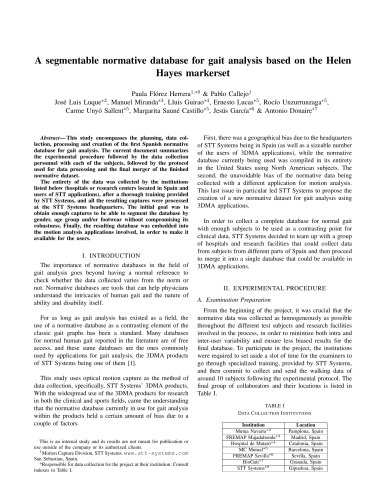
*Prices are pre-tax. They exclude delivery charges and customs duties and do not include additional charges for installation or activation options. Prices are indicative only and may vary by country, with changes to the cost of raw materials and exchange rates.
About MedicalExpo
MedicalExpo is a marketplace that offers B2B players a complete experience, from product sourcing to purchase. MedicalExpo is an entity of VirtualExpo Group.
Are you a buyer?
Are you a supplier?