
- Catalogs
- TaiDoc Technology
- Gluten tester for food

- Company
- Products
- Catalogs
- News & Trends
- Exhibitions
Gluten tester for food
1 /3Pages
Gluten tester for food
1 /3Pages
Catalog excerpts
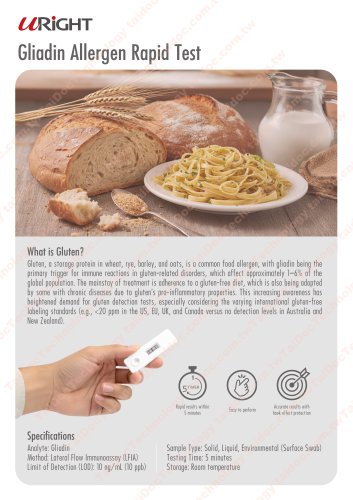
Gluten, a storage protein in wheat, rye, barley, and oats, is a common food allergen, with gliadin being the primary trigger for immune reactions in gluten-related disorders, which affect approximately 1–6% of the global population. The mainstay of treatment is adherence to a gluten-free diet, which is also being adopted by some with chronic diseases due to gluten's pro-inflammatory properties. This increasing awareness has heightened demand for gluten detection tests, especially considering the varying international gluten-free labeling standards (e.g., <20 ppm in the US, EU, UK, and Canada versus no detection levels in Australia and New Zealand). Analyte: Gliadin Method: Lateral Flow Immunoassay (LFIA) Limit of Detection (LOD): 10 ng/mL (10 ppb) Gliadin Allergen Rapid Test Rapid results within 5 minutes Accurate results with hook effect protection Sample Type: Solid, Liquid, Environmental (Surface Swab) Testing Time: 5 minutes Storage: Room temperature
Open the catalog to page 1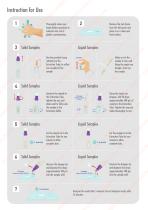
Thoroughly clean your hands before operation to minimize the risk of gliadin contamination. Using the single-use dropper, add 20 drops (approximately 400 μL) of sample to the Extraction Tube. Tighten the cap and shake thoroughly to mix. Liquid Samples Let the sample sit in the Extraction Tube for one minute to allow complete lysis. Let the sample sit in the Extraction Tube for one minute to allow complete lysis. Interpret the result after 5 minutes. Do not interpret results after 15 minutes. Unscrew the dropper tip and dispense five drops (approximately 100 μL) into the sample well. Liquid Samples...
Open the catalog to page 2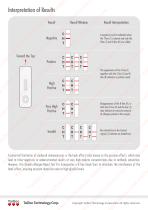
High Positive Very High Positive The appearance of the T line (T) together with the C line (C) and H line (H) indicates a positive result. Disappearance of the H line (H), or both the H line (H) and the line (T), may indicate an excessive amount of allergen protein in the sample. No colored line in the Control region (C) indicates an invalid test. A negative result is indicated when the T line (T) is absent and only the Cline (C) and H line (H) are visible. Result Interpretation Result Window A potential limitation of sandwich immunoassays is the hook effect (also known as the prozone effect),...
Open the catalog to page 3All TaiDoc Technology catalogs and technical brochures
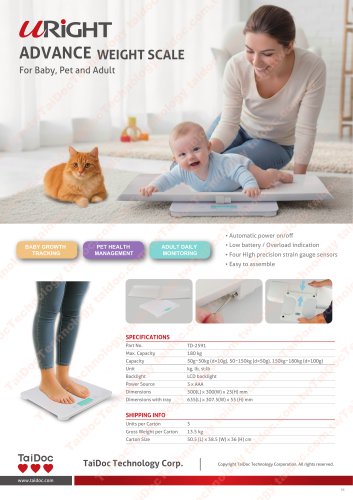 TD-2591
1 Page
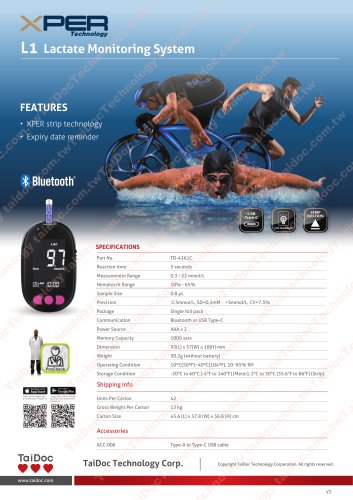 TD-4261
1 Page
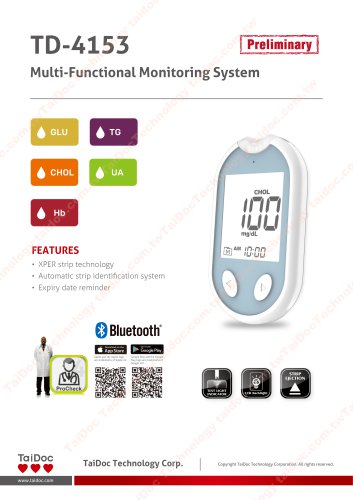 TD-4153
2 Pages
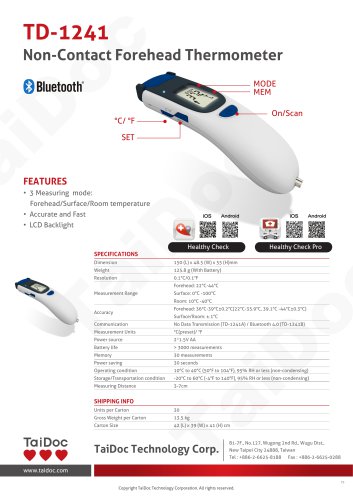 TD-1241
1 Page
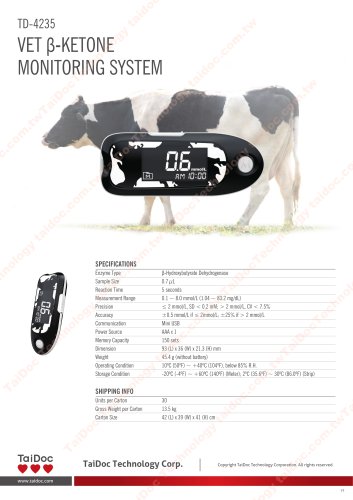 TD-4235E
1 Page
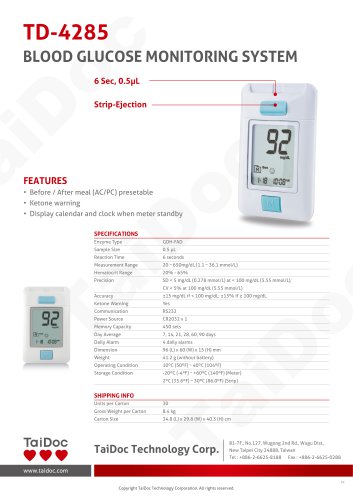 TD-4285
1 Page
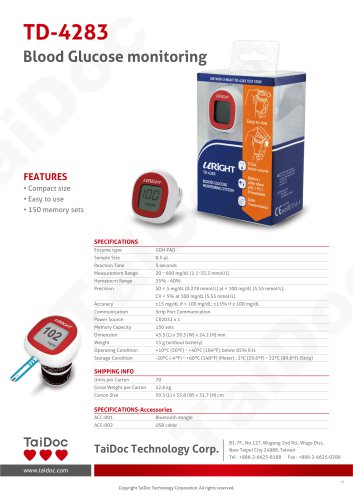 TD-4283
1 Page
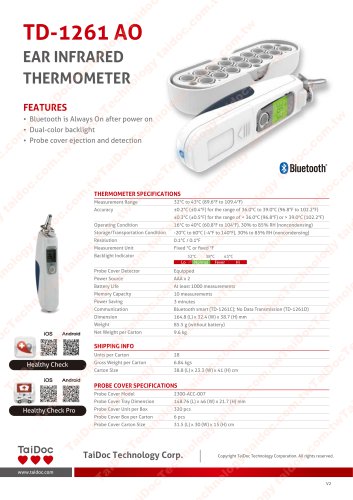 TD-1261 AO
1 Page
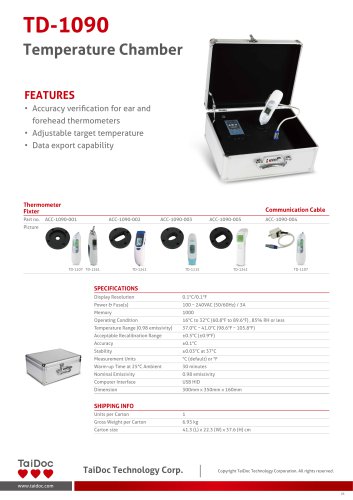 TD-1090
2 Pages
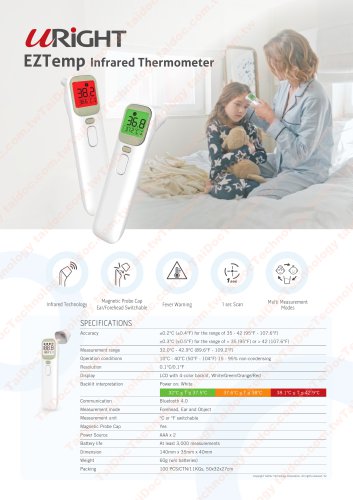 URiGHT EZTemp
1 Page
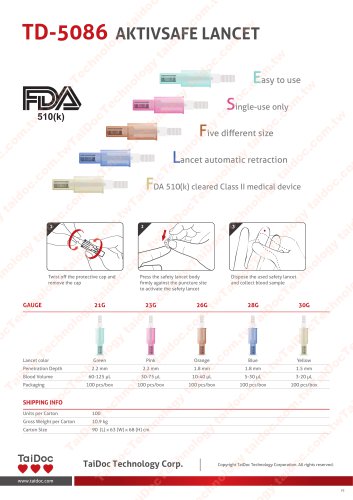 TD-5086
1 Page
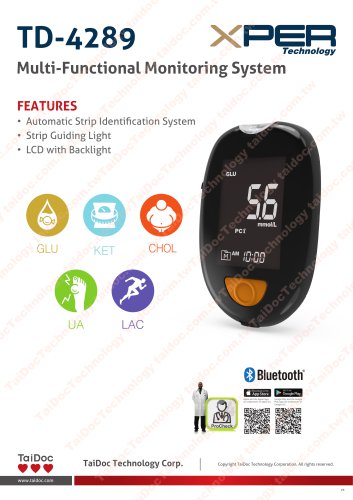 TD-4289
2 Pages
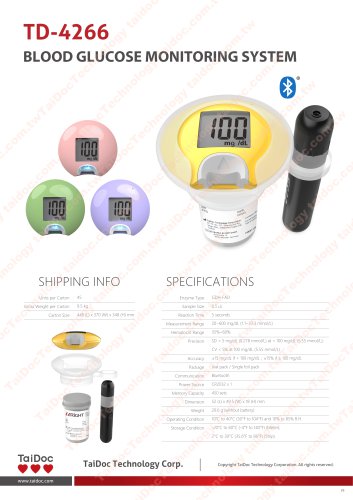 TD-4266
1 Page
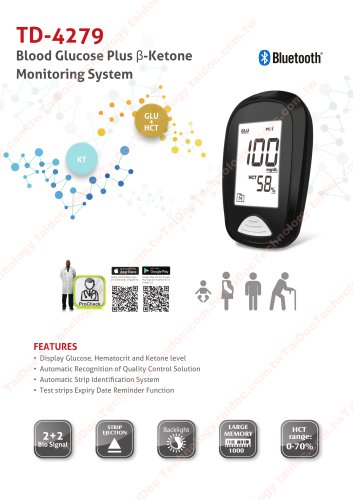 TD-4279
4 Pages
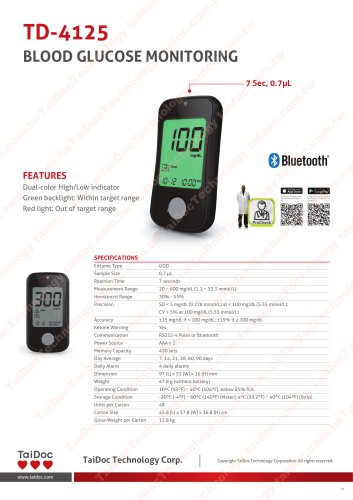 TD-4125
1 Page
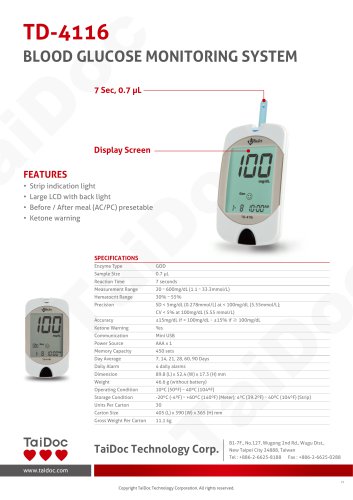 TD-4116
1 Page
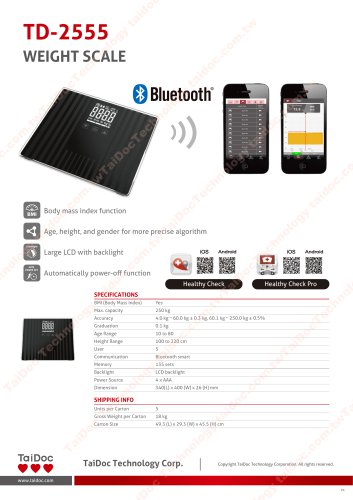 TD-2555
1 Page
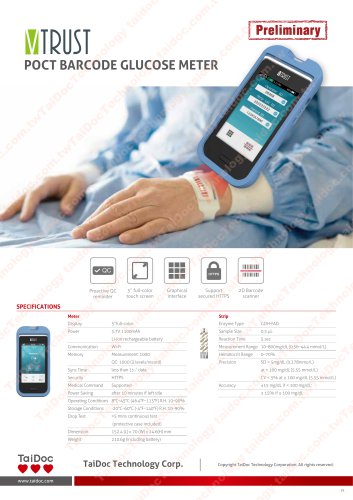 TD-4259_DM_WiFi
1 Page
 ES-2020
2 Pages
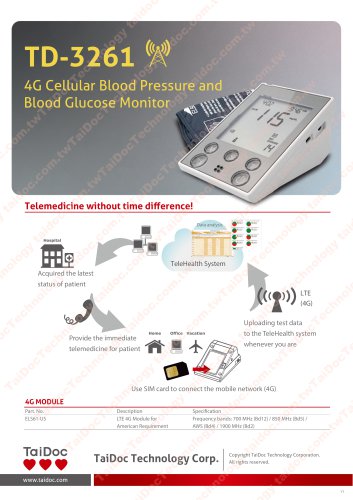 TD-3261
2 Pages
 TD-4261
1 Page
 TD-4257
1 Page
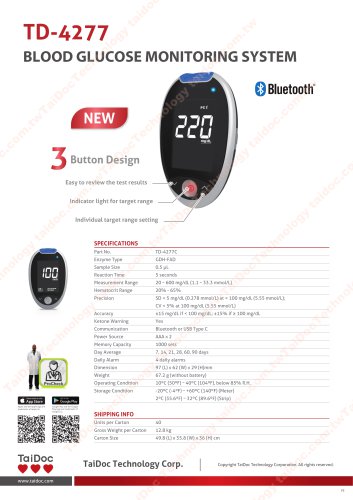 TD-4277
1 Page
 Procheck Witty
1 Page
 Procheck Smart
1 Page
 TD-3128
1 Page
 TD-4183
1 Page
 TD-4216
2 Pages
 TD-4268
3 Pages
 TD-5083
1 Page
 TD-5052
1 Page
 TD-4141
1 Page
 TD-2300
5 Pages
 TD-2300
5 Pages
 TD-1242
1 Page
 TD-8255
1 Page
 TD-4206
2 Pages
 TD-4280
1 Page
 TD-4611 HbA1c auto analyzer
2 Pages
 TD-5010
2 Pages
 TD-5011
2 Pages
 TD-5220
1 Page
 TD-8201
2 Pages
 TD-1035
1 Page
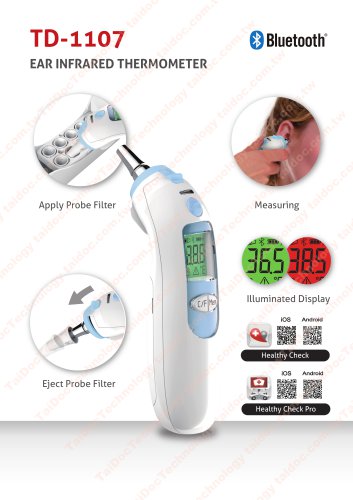 TD-1107
3 Pages
 TD-7013
1 Page
 TD-7014
2 Pages
 TD-3140
2 Pages
 TD-3124
1 Page
 TD-3127
1 Page
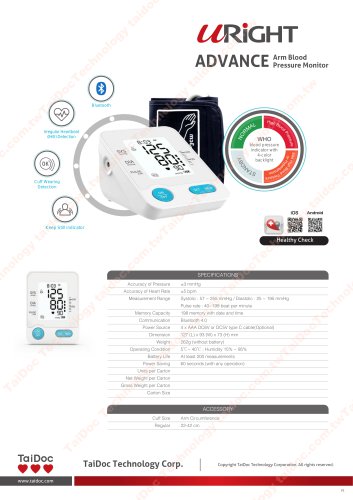
Archived catalogs
 TD-4206A
5 Pages

- Rapid chromatographic immunoassay test
- Rapid immunologic test
- Cassette rapid test
- Thermometer
- Blood pressure monitor
- Automatic blood pressure monitor
- Medical thermometer
- Digital thermometer
- Automatic balance
- Test strip
- Blood glucose meter
- Patient scale
- Temperature test cabinet
- Blood pressure monitor with adult cuff
- Infrared thermometer
- Stethoscope
- Oscillometric blood pressure monitor
- Electronic patient scale
- Forehead thermometer
- Laboratory test cabinet