
- Catalogs
- technotrans systems GmbH
- central.cooling

- Company
- Products
- Catalogs
- News & Trends
- Exhibitions
central.cooling
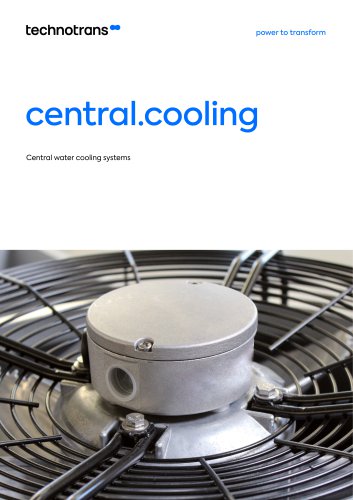
central.cooling
- Water cooling is preferred over air cooling due to its higher efficiency and smaller pipe diameter requirements.
- Free cooling, using a water/glycol mixture, is cost-effective and reliable, eliminating the need for refrigeration.
- Central water cooling systems offer controlled air temperature, reduced dust distribution, lower maintenance, and energy savings.
- Pumping and control cabinets are available in various sizes, equipped with speed-controlled pumps for energy efficiency.
- Free cooling units discharge heat using fans and can be installed horizontally or vertically.
- Adiabatic cooling is used for high-temperature conditions, utilizing evaporative cooling to maintain system efficiency.
- Excess heat can be used directly for heating production halls or integrated into existing systems.
- Heat recovery modules range from 50 kW to 200 kW, reducing CO2 emissions and conventional heating needs.
- Initial investment in water cooling systems is higher but results in long-term savings due to reduced operational costs and improved ambient conditions.
- System capacity increases lead to decreased specific investment costs per kW.
Catalog excerpts
Central water cooling systems
Open the catalog to page 1
central.cooling central water cooling systems › Air-cooled peripheral units discharge this hot waste air directly into the printing room. An apparently easy and inexpensive solution that however causes severe changes of the room climate. › By adding waste air ventilation and exhaust ducting, the heat can be removed but the extra air needed for pressurisation permanently disturbs the climate of the printing room. Success factor: stable pressroom climate Stable humidity and temperature are a prerequisite for producing high quality print, especially when printing periodicals. Any heat source negatively...
Open the catalog to page 2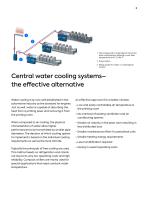
1 Free cooling with a water/glycol mixture for press configurations allowing a max. feed temperature of 40 °C/104 °F 2 Pump station 3 Piping system for water- or water/glycol mixture Central water cooling systems– the effective alternative Water cooling is by now well established in the automotive industry as the standard for engines. Just as well, water is capable of absorbing the heat from a printing press and removing it from the printing room. An effective approach for a better climate: When compared to air cooling, the physical characteristics of water allow higher performances to be transmitted...
Open the catalog to page 3
central.cooling Central water cooling systems - Efficient operation by frequencycontrolled pump and intelligent free cooler air control - CO2 and reduction of operational costs - Special operating mode for the free cooler operation of hybrid cooling systems such as e. g. the beta.c eco - Special operating mode for heat recovery operation - Functional design The pumping and control cabinet is available in different sizes with one or two circulation pumps and also includes the control equipment for free cooling with glycol. The new series beta.ps eco is always equipped with an infinitely variable...
Open the catalog to page 4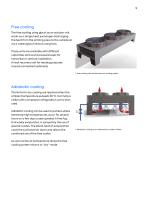
Free cooling The free cooling using glycol as an outdoor unit works as a simple heat exchanger discharging the heat from the printing press to the outside air via a water/glycol mixture using fans. These units are available with different capacities and sound pressure levels for horizontal or vertical installation. A heat recovery unit for heating purposes may be connected optionally. › Free cooling with technotrans re-cooling system Adiabatic cooling The limits for dry cooling are reached when the ambient temperature exceeds 38 °C. Normally a chiller with compressor refrigeration unit is then...
Open the catalog to page 5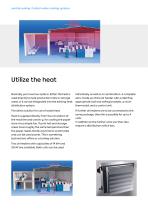
central.cooling Central water cooling systems Utilize the heat Basically you have two options. Either the heat is used directly to heat production halls or storage areas or it can be integrated into the existing heat distribution system. individually as well as in combination. A complete set is made up of the air heater with outlet flap, appropriate wall and ceiling brackets, a room thermostat and a control unit. The direct solution for use of waste heat If further air heaters are to be connected to the same package, then this is possible for up to 4 units. In addition to the further units you...
Open the catalog to page 6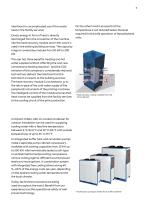
Interface for uncomplicated use of the waste heat in the facility services Excess energy in form of heat is directly discharged from the circulation of the machine into the heat recovery module and in this way it is used in the existing building services. The capacity range is covered by modules from 50 kW to 200 kW. On the other hand it ensures that the temperature is not reduced below the level required for the safe operation of the peripheral units. The user has three benefits: heating and hot water supplied without affecting the cost, less conventional heating required - and the CO2 emission...
Open the catalog to page 7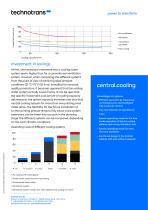
power to transform Operating costs of different cooling systems › Air-conditioners › Ventilation › Compressor typ chiller › Free cooling Investment in savings At first, the necessary investment into a cooling water system seems higher than for a conventional ventilation system. However, when comparing the different systems from the point of view of achieving ideal ambient conditions (21 °C/70 °F/55 % rel. humidity) for constant quality production, it becomes apparent that the cooling water system actually saves money. It can be seen that the specific investment cost per kW of cooling capacity...
Open the catalog to page 8All Technotrans systems GmbH catalogs and technical brochures
 The eco.line
13 Pages
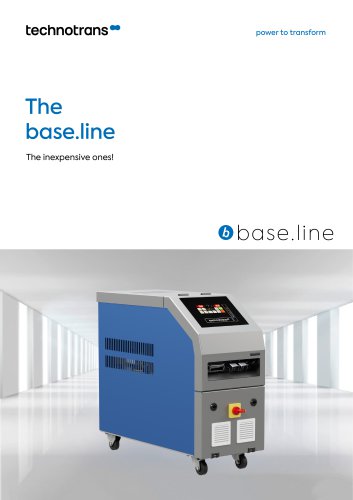 The base.line
9 Pages
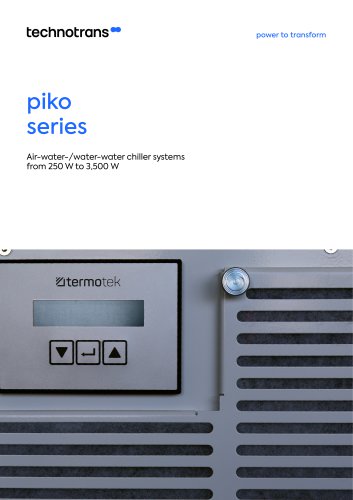 piko series
2 Pages
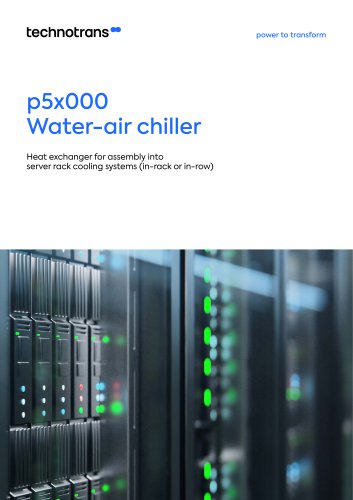 p5x000 Water-air chiller
2 Pages
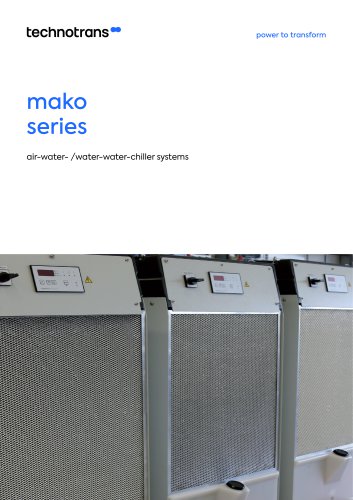 mako series
2 Pages
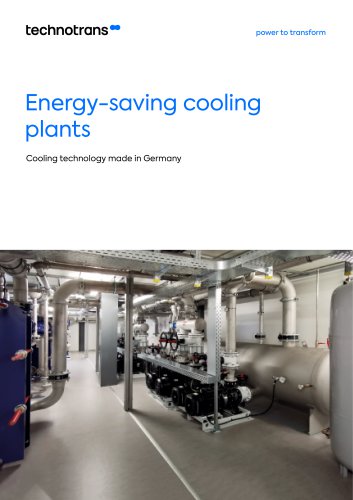 Energy-saving cooling plants
15 Pages
 ECOtec.chiller
9 Pages
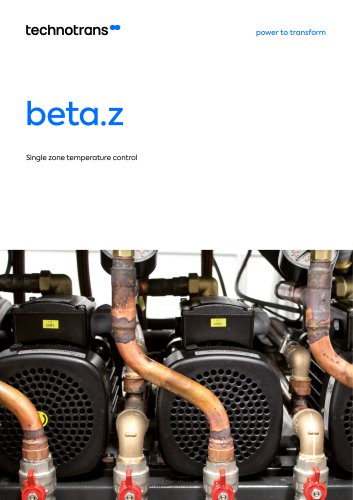 beta.z
4 Pages
 battery.cooling
4 Pages
 charging.cool
3 Pages
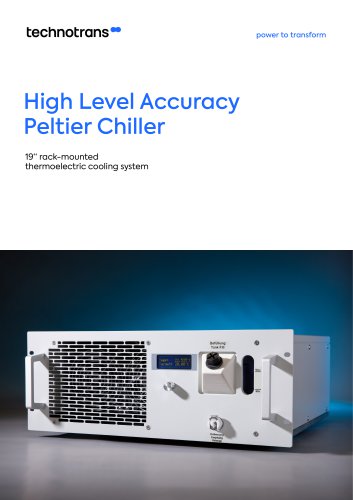 Peltier Chiller
2 Pages
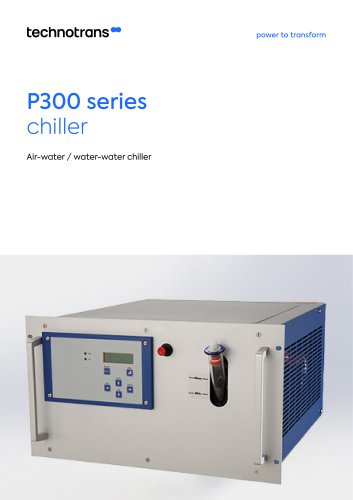 P300 series chiller
2 Pages
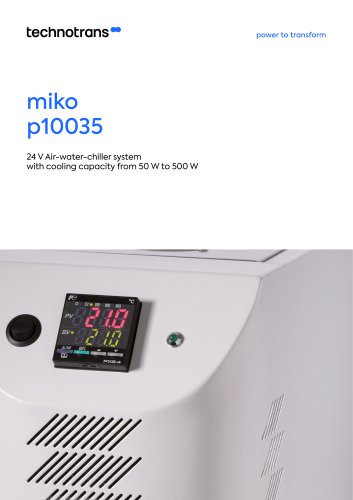 miko p10035
2 Pages
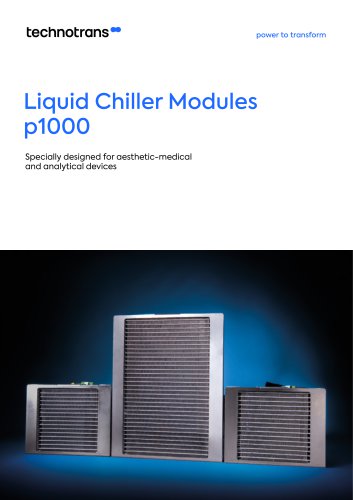 P1000 Chiller
2 Pages
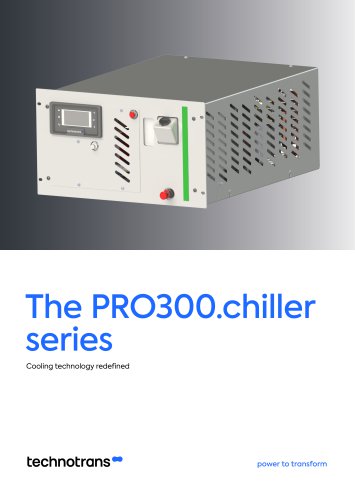 PRO 300 Chiller
6 Pages
- Laboratory chiller
- Temperature control system
- Laboratory control system
- Compact laboratory chiller
- Flow control panel
- Air-cooled laboratory chiller
- Control system with touchscreen
- Floor-standing laboratory chiller
- Laboratory cooler on casters
- Water-cooled laboratory chiller
- Modular laboratory chiller
- Heating laboratory chiller