

MasterFluxPLUS

MasterFluxPLUS
This document addresses the legal and medical-legal considerations of using conscious sedation with nitrous oxide in dentistry. It emphasizes the interest among dentists in sedation techniques and the primary concern regarding medical-legal aspects.
Key Legal Considerations
At a congress organized by the Italian Society of Dental Anesthesia, experts discussed the legal framework for sedation in dentistry. It was noted that there are no legal restrictions for dental specialists to perform sedation, except in public settings where specific specializations are required.
Conscious Sedation with Nitrous Oxide
Nitrous oxide is suitable for non-cooperative patients, such as those with dental phobia. Its effects are short-lived, resolving within 20 minutes, and it is considered safer than local anesthesia.
Contraindications
Contraindications include nasal stenosis, severe cardio-respiratory diseases, first-trimester pregnancy, non-cooperative mentally ill patients, and young children unable to cooperate.
Informed Consent
Obtaining explicit and documented informed consent is crucial. Patients must be informed about the procedure, and consent can be revoked at any time.
Equipment and Safety
Appropriate resuscitation equipment, such as an Ambu bag and oxygen cylinder, must be available to handle complications. Dentists must ensure technical and instrumental adequacy to monitor clinical parameters.
Discharge Protocol
Patients must be fully recovered before discharge to avoid liability for post-treatment incidents. Retaining the patient until optimal psychological and physical conditions are restored is advised.
Conclusion
The document affirms the dentist's right to use nitrous oxide sedation under the law, emphasizing caution and rigorous operational standards to prevent risks and complications.
This section discusses the importance of assessing anxiety in dental patients, particularly children, and the role of psychological approaches versus sedation in managing dental anxiety.
Definition and Assessment of Anxiety
Accurate anxiety assessment is crucial for effective dental treatment. The document highlights the need for clear criteria to evaluate a child's cooperation and the potential long-term effects of negative dental experiences.
Fear and Dentist Behavior
Fear in dental settings is expressed through verbal discomfort, avoidance behavior, and motor agitation. The document discusses the challenges dentists face in managing children's fear and the influence of parental dental phobia.
Subjective Anxiety
Information from adult patients helps identify anxiety levels, but children's behavior during sessions is a more accurate indicator of their fear.
National Consensus Development Conference
The conference highlighted that dentists often underestimate the effectiveness of psychological approaches in reducing patient anxiety. The document calls for better training in behavioral techniques.
Methodological Needs and Behavioral Research
The document outlines the need for behavioral evaluation criteria and tools to assess the necessity of sedation or analgesia in children.
This section discusses the importance of identifying non-collaborative behavior in dental patients, particularly children, and the role of sedation in managing dental anxiety.
Behavior Assessment Criteria
Various measurement scales are available to assess children's behavior during dental treatments. The tickling test is noted as an effective method to avoid local anesthesia in children aged 6 to 14.
Psychological Results
Research shows that psychological excitability in children is altered by narcotics, affecting their response to sedation. Continuous monitoring using biofeedback techniques is essential.
Sedative Analgesia
Sedation using oxygen and nitrous oxide is common in the US, Canada, and Europe. It reduces emotional stress and anxiety, facilitating patient cooperation.
Master Flux Plus
The Master Flux Plus is a sedation machine developed by Tecno Gaz S.p.A., featuring automatic flow control and designed to minimize negative visual and psychological impacts on patients.
Conclusion
The document emphasizes the need for further research into behavioral strategies in dental treatments.
The Master Flux Plus is a sedation machine designed for centralized gas delivery in dental workstations. It features an extendable arm, separate gas couplings, and a flow control box.
Specifications:
- Width: 230 mm
- Height: 1305 mm
- Depth: max. 500 mm
- Weight: 1182.5 mm
Components Included:
- Flow control box
- Breath control bag
- Circuit and mask package
- OX and N2O reducers
- Multiple adapter with outlets
- Articulated arm
Flow Control Box (AS 3000):
The AS 3000 includes safety features such as automatic N2O cut-off when O2 pressure is zero and a minimum 30% oxygen concentration to prevent hypoxia.
Safety and Usability:
The system is designed for easy and quick flow administration, with clear flow columns for fast reading.
Optional Accessories:
- O2 - N2O 5 and 10 litre bottle kits
- Complete resuscitation kit
- Disposable silicon masks
Disclaimer:
Tecno-Gaz S.p.A. is not responsible for any inaccuracies in the information provided.
Catalog excerpts
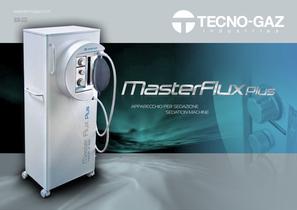
MasterFlux Plus sulP xulFretsaM APPARECCHIO PER SEDAZIONE SEDATION MACHINE
Open the catalog to page 1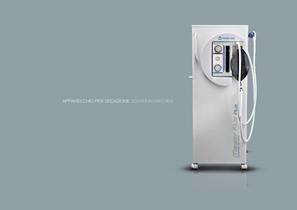
APPARECCHIO PER SEDAZIONE SEDATION MACHINE
Open the catalog to page 3
PROBLEMI GIURIDICI E MEDICO-LEGALI NELL ’USO DELLA SEDAZIONE CONSCIA IN ODONTOSTOMATOLOGIA L ’interesse degli odontoiatri verso la sedazione è molto elevato, ma spesso vi sono aspetti che “congelano”questo interesse. L ’aspetto primario su cui gli odontoiatri vogliono avere informazioni e rassicurazioni è quello medico-legale. Ecco allora che pubblichiamo gli atti di un congresso, organizzato dall’Italian SAD, svoltosi qualche tempo fa, in qui sono intervenuti il prof. Paolo Martini, allora direttore di scienze medico legali e criminologiche dell’Università di Siena, il dr. Luigi Falcone, allora...
Open the catalog to page 4
Diversamente occorre procedere nel caso che il consenso non possa essere validamente prestato (incapaci o minori d’età). In tali frangenti l’informazione dovrà essere fornita a chi esercita la patria potestà, che dovrà esprimere un consenso inderogabile: ovvio è che la decisione negativa in tal caso, preclude ogni possibilità d’intervento che però si ergerà come momento imprescindibile allorchè si verserà in uno stato di necessità, cioè in una situazione clinica la cui immediata drammaticità rende ineludibile prestare la propria assistenza anche in assenza di un valido consenso (casi di rarissima...
Open the catalog to page 5
DEFINIZIONE E VALUTAZIONE DELL’ANSIA La corretta valutazione dell’ansia La paura ed il comportamento del dentista È un requisito essenziale per poter intervenire in maniera adeguata alle necessità del paziente. L’obiezione mossa sottolinea il fatto che i criteri di valutazione della collaborazione o meno del bambino non sarebbero ben specificati. Nel valutare la collaborazione di un piccolo paziente, uno degli aspetti principali, che si rifà a criteri di sicurezza, è che questi stia seduto tranquillamente con la bocca aperta. Alcuni studi evidenziano che il bambino seduto sulla poltrona con le...
Open the catalog to page 6
DEFINITION AND ASSESSMENT OF ANXIETY Accurate assessment of anxiety Subjective anxiety: information provided by patients The information provided by adult patients on their fears enable the dentist to identify subjects who are more or less anxious. This, in turn, enables him to foresee and correct avoidance behaviour and severe discomfort. In the case of children, on the other hand, it is their actual behaviour during the sessions, rather than directly supplied information, which indicates their real level of fear. It is typical for smaller children to declare openly that they are very frightened...
Open the catalog to page 7
ESIGENZE METODOLOGICHE E RICERCA COMPORTAMENTALE NEL TRATTAMENTO DEI PICCOLI PAZIENTI Il congresso nazionale per la diffusione e lo sviluppo di sedazione e anestesia in odontoiatria (National Consensus Development Conference on Anesthesia and Sedation in the Dental Office) ha fatto emergere un dato assai significativo. È risultato infatti che gli odontoiatri sottovalutano spesso l’efficacia dell’approccio psicologico per ridurre l’ansia del paziente. Un corretto approccio psicologico renderebbe infatti superflue in molti casi sia la sedazione che l’anestesia generale. Perchè gli odontoiatri non...
Open the catalog to page 8
METHODOLOGICAL REQUIREMENTS AND BEHAVIOURAL RESEARCH IN THE TREATMENT OF YOUNG PATIENTS Thanks to the work of the National Consensus Development Conference on Anesthesia and Sedation in the Dental Office an extremely significant fact has been brought to light. It has, in fact, emerged that dentists often underestimate the efficacy of the psychological approach in reducing patient anxiety. The right psychological approach would, in fact, make both sedation and general anesthesia superfluous in a large number of cases. Why don’t dentists take this technique into consideration? First of all, because-let’s...
Open the catalog to page 9
La sedazione e una tecnica da anni ampiamente diffusa negli Stati Uniti, In Canada e diversi paesi europei. La somministrazione controllata di ossigeno e protossido d’azoto per via inalatoria, induce un senso di rilassatezza, riducendo la carica emotiva, la percezione del dolore e lo stato ansioso, aumentando la trattabilità del paziente e facilitandone la collaborazione con il medico, mantenendo tuttavia inalterati i riflessi tutelari. È bene ricoridare che la sedazione non produce effetti collaterali e presenta solo generiche controindicazioni. Pedodonzia Notoriamente i bambini sono i soggetti...
Open the catalog to page 10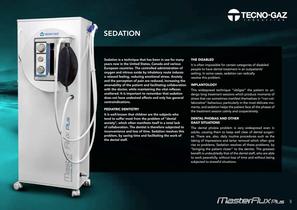
Pediatric dentistry It is well-known that children are the subjects who tend to suffer most from the problem of “dental anxiety”, which often manifests itself in a total lack of collaboration. The dentist is therefore subjected to inconvenience and loss of time. Sedation resolves this problem, by saving time and facilitating the work of the dental staff. The disabled It is often impossible for certain categories of disabled people to have dental treatment in an outpatients’ setting. In some cases, sedation can radically resolve this problem. Implantology This widespread technique “obliges” the...
Open the catalog to page 11
xulFretsaM APPARECCHIO PER SEDAZIONE SEDATION MACHINE Apparecchio per sedazione con controllo flussi automatico. Master Flux PLUS è l’unica apparecchiatura per sedazione interamente studiata e realizzata in Italia. Sedation machine with automatic flow control. The master flux automatic as 3000 is the only sedation machine entirely researched and developed in italy. Tutti i particolari sono prodotti dalla Tecno-Gaz e subiscono uno scrupoloso controllo individuale. Per evitare al paziente un negativo impatto visivo e psicologico è stato adottato un elegante mobile che può contenere le bombole di...
Open the catalog to page 12
Product info Master Flux Plus Larghezza | Widht Altezza | Height Profondità | Depth Peso senza bombole Weight without bottles Peso con bombole capacità 5 Lt Weight with bottles 5 Lt Peso con bombole capacità 10 Lt Weight with bottles 10 Lt
Open the catalog to page 13All Tecno-Gaz catalogs and technical brochures
 Furnitures For Sterilization
2 Pages
 Onyx B
20 Pages
 Bunsen with thermocouple
6 Pages
 ASM 30 with Argon
16 Pages
 ASM 30
6 Pages
 Air-Ox
1 Page
 Algimix
2 Pages
 techno B 16
4 Pages
 Orma
Orma12 Pages
 First_Aid
8 Pages
 Focus
Focus4 Pages
 Pearl
Pearl3 Pages
 Monitor_MD
2 Pages
 Oxicase
2 Pages
 Pura_2, Pura_10
2 Pages
 Biological Risk
21 Pages
 TecnoHeart
2 Pages
 Vital_Test
2 Pages


- Medical dolly
- Sterilizer
- Treatment cart
- Medical device trolley
- Surgical lighting system
- Steam sterilizer
- LED surgery light
- Medical kit
- Ceiling-mounted surgical light
- Benchtop sterilizer
- Automatic sterilizer
- Stainless steel sterilizer
- SpO2 monitor
- Emergency trolley
- Medical pulse oximeter
- Surgical suction pump
- Mobile surgical light
- Dental sterilizer
- Electric surgical suction pump
- Ultrasonic bath