


TREO®
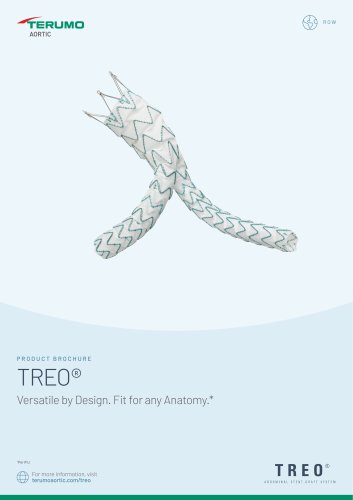
TREO®
The TREO® Abdominal Stent-Graft System is engineered for the endovascular treatment of infrarenal abdominal aortic and aorto-iliac aneurysms, offering a versatile design that accommodates various anatomies to ensure high technical success and patient safety.
Specifications
- Fabric: Made from woven polyester, it features a low profile, high strength, and low permeability.
- Suture: Utilizes 5-0 braided polyester surgical suture with PTFE for enhanced wear resistance and tensile strength.
- Radiopaque Markers: Composed of Platinum Iridium for improved visibility and corrosion resistance.
- Stents: Constructed from electropolished Nitinol, known for its super-elastic properties and fatigue endurance.
Key Features
- Low profile delivery system for precise graft delivery.
- Multiple size options and flexible graft design for versatile treatment.
- Dual active fixation and optimized proximal seal for improved outcomes.
Performance and Outcomes
- 0% rupture, Type III/IV endoleak, and conversion to open repair over 3 years.
- 100% technical success and freedom from aneurysm-related mortality over 3 years.
- 92% overall survival rate after 5 years.
Design and Technology
- Long main bodies reduce displacement forces and enhance stability.
- Enhanced proximal fixation and sealing with suprarenal and infrarenal active fixation.
- Unique limb lock stent technology prevents limb disconnection and Type III endoleaks.
Procedural Advantages
- Intuitive mechanical advantage for controlled device deployment.
- Low-profile delivery system minimizes access vessel trauma and procedural time.
- Proximal clasp allows safe graft re-positioning and delivery system removal.
Clinical Studies and Results
- High sac regression and low sac expansion rates in multiple studies.
- 32% aneurysm size reduction at 1 year without adjunctive devices.
Ordering Information
Comprehensive product ordering details are provided, including device types, diameters, lengths, and catalogue numbers.
Conclusion
The TREO® system provides a comprehensive EVAR solution, integrating advanced technology with proven clinical outcomes to address both current and future needs.
Catalog excerpts
AORTIC PRODUCT BROCHURE For more information, visit TREO® ABDOMINAL STENT-GRAFT SYSTEM
Open the catalog to page 1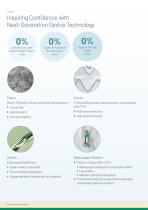
Inspiring Confidence with Next-Generation Device Technology 0% 0% Conversion to open Type III/IV Endoleak repair through 3 years 1 through 3 years 1 Fabric Woven Polyester with an optimised weave pattern 5-0 braided polyester surgical suture impregnated with PTFE ► High wear resistance ► High tensile strength Stents Electropolished Nitinol: ► Proven fatique endurance ► Suprarenal stent is laser-cut for durability > Radiopaque material for enhanced visibility > Galvanic corrosion resistance ► Positioned to aid device placement and easier contralateral gate cannulation References available on page...
Open the catalog to page 2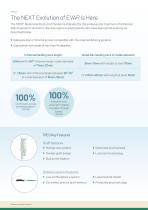
The NEXT Evolution of EVAR is Here The TREO® Abdominal Stent-Graft System is indicated for the endovascular treatment of infrarenal abdominal aortic and aorto-iliac aneurysms in adult patients who have appropriate anatomy as described below: ► Adequate iliac or femoral access compatible with the required delivery systems ► Suprarenal neck angle of less than 45 degrees Technical Success 100% Freedom from aneurysm related mortality through 3 years 1 (150/150) Infrarenal landing neck length Distal Iliac landing neck of inside diameter TREO Key FeaturesGraft features ► Optimised proximal seal ► Lock...
Open the catalog to page 3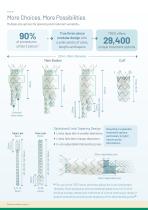
More Choices, More Possibilities Multiple size options for planning and treatment versatility. True three-piece modular design with a wide variety of sizes, lengths and tapers of procedures utilise 3 pieces 2 TREO offers unique treatment options Optimised Limb Tapering Design Overlap Zone چLimbs taper late in smaller diameters چLimbs flare late in larger diameters Seal Zone چIn-situ adjustable limb landing zones References available on page 15 Main Bodies Resulting in expanded treatment options, particularly in tight/ narrow aortic bifurcations. The use of the TREO stent graft also allows...
Open the catalog to page 4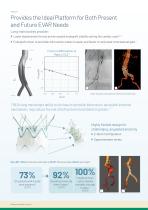
Provides the Ideal Platform for Both Present and Future EVAR Needs Long main bodies provide: چLower displacement forces and increased endograft stability during the cardiac cycle 3, 5 چEndograft closer to aortoiliac bifurcation makes it easier and faster to cannulate contralateral gate 4 Force on Bifurcation vs Ratio L1/L2 5 L1 Ease of gate cannulation with long main body TREO’s long main body’s ability to sit close to aortoiliac bifurcation, along with limb lock mechanism, may reduce the risk of both proximal and distal migration. 5 Highly flexible design for challenging, angulated anatomy...
Open the catalog to page 5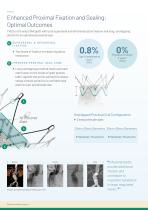
Enhanced Proximal Fixation and Sealing: Optimal Outcomes TREO is the only EVAR graft with both suprarenal and infrarenal active fixation and long, overlapping stents for an optimised proximal seal. A SUPRARENAL & INFRARENAL F I X AT I O N چTwo levels of fixation increase migration resistance. B IMPROVED PROXIMAL SEAL ZONE Migration through 3 years 1 Type 1a endoleak at 1 year 1 چLong overlapping proximal stents and seal stent sewn on the inside of graft pushes fabric against the aortic wall and increases vessel contact points for a confident seal and low type 1a endoleak rate. Overlapped...
Open the catalog to page 6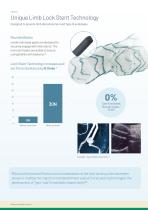
Designed to prevent limb disconnection and Type III endoleaks. Type III endoleak through 3 years' (0/150) Rounded Barbs inside main body gates are designed to securely engage with limb stents. The lock stent barbs are dulled to ensure compatibility with balloons.10 Without Lock Stent With Lock Stent “Dual active proximal fixation and rounded barbs at the limb docking sites have been shown to multiply the migration and detachment pullout forces and might mitigate the development of Type I and III endoleaks respectively ”1 References available on page 15
Open the catalog to page 7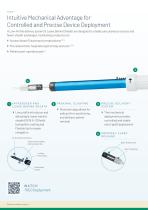
Intuitive Mechanical Advantage for Controlled and Precise Device Deployment A Low-Profile delivery system & Leave Behind Sheath are designed to enable percutaneous access and fewer sheath exchanges, facilitating a reduction in: چAccess Vessel Trauma and complications 13,14 چProcedural time, hospital length of stay and cost 13,14 چPatient post-operative pain 14 چLow profile introducer and detachable, leave-behind sheath (18/19 Fr OD) with hydrophilic coating and Flexible tip for easier navigation 2 PROXIMAL CL ASPING چProximal clasp allows for safe graft re-positioning and delivery...
Open the catalog to page 8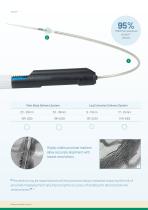
Main Body Delivery System Leg Extension Delivery System Highly visible proximal markers allow accurate alignment with lowest renal artery “The device maybe repositioned until the proximal clasp is released reducing the risk of proximol misdeployment and improving the accuracy of landing the device below the renal arteries ”10 References available on page 15
Open the catalog to page 9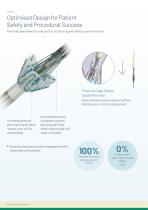
Optimised Design for Patient Safety and Procedural Success Proximal clasp allows for safe graft re-positioning and delivery system removal. Proximal Clasp Simple Caudal Removal Easily withdraw delivery system without added steps or risk of entanglement Infrarenal barbs are obscured in graft fabric “valleys” prior to final clasp release Suprarenal barbs are completely covered allowing graft to be safely repositioned until clasp is released چProximal clasp prevents barb engagement with vessel wall until released Technical Success 2 (at index procedure; 150/150) References available on page 15...
Open the catalog to page 10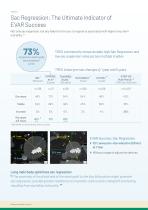
Not only sac expansion, but any failure for the sac to regress is associated with higher long-term mortality. 18 of patients with hostile : TREO consistently shows durable high Sac Regression and low sac expansion rates across multiple studiesTREO Aneurysm sac changes @ 1 year and 5 years Decrease EVAR VQI Multi Manuf. 18 (TREO not incl) (1 year) * TREO US PAS is an all-comers study, follow-up on-going EVAR Success: Sac Regression ► 32% aneurysm size reduction (23mm) at 1 Year ► Without usage of adjunctive devices Long main body optimises sac regression “ The proximity of the distal end of the...
Open the catalog to page 11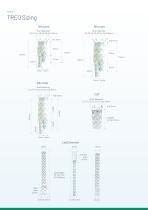
TREO Sizing Bifurcate
Open the catalog to page 12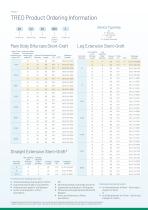
Product Id. Device Type Diameter Device Product Id. Aortic Outer Proximal Landing Diameter Zone Minimum (proximal neck Length (neck Proximal Contralateral Profile Catalogue angle < 60°) angle 60°) Diameter Length OD MTQA Number Proximal aortic landing zone with: ► Infrarenal landing neck length of >10mm ► Suprarenal neck angle of < 45 degrees ► Infrarenal neck angle of < 60 degrees ► Aortic neck diameters >17mm and <32mm ► Infrarenal landing neck length of >15mm ► Suprarenal neck angle of < 45 degrees ► Infrarenal neck angle between 60 and 75 degrees ► Aortic neck diameters >16mm and <30mm Distal...
Open the catalog to page 13All Terumo Aortic catalogs and technical brochures
 Custom-Made Relay® Branch
8 Pages
 Thoraflex Hybrid
4 Pages
 Gelweave™ Gelsoft™ Plus
4 Pages
Archived catalogs
 Gelsoft™ Plus
8 Pages
 Relay®Plus
8 Pages
 Treovance Reference Guide
12 Pages
 RELAY NBS PLUS Brochure
8 Pages
 Deployment Poster
1 Page
 Thoraflex™ Hybrid
8 Pages
 GELWEAVE™
2 Pages
 RELAY PLUS Brochure
8 Pages
 Treovance patient brochure
8 Pages
 Treovance Brochure
8 Pages
