

Refa

Refa
This document provides technical specifications for various configurations of the Refa device, supplementing the User Manual. It assists users in locating device labels and using the table of contents to find specific device specifications.
The document details multiple Refa device models, each identified by a unique REF code. Key specifications include unipolar ExG inputs for EEG, ECG, EOG, EMG, etc., with varying numbers of channels (e.g., 24, 32), RMS noise levels of less than 1 µV at the lowest sample frequency, gain settings typically 20x or 26.55x, input signal differences ranging from -150 mV to +150 mV, input impedance greater than 100 MΩ, and CMRR over 90 dB. Sampling frequencies reach up to 2048 Hz, with resolutions of 22 bits.
Devices feature digital inputs with isolation over 4000 V and auxiliary inputs with specific RMS noise and gain characteristics. Connectors vary by model, including safety DIN, subD37, and micro coaxial options.
Each device model includes a detailed channel list, specifying the function, resolution, and range for each input. Connector pin assignments are provided for digital inputs and headcap connections, ensuring proper setup and usage.
Resolution and Sampling Frequency: The document specifies a resolution of 24 bits for ExG and BIP inputs with a sensitivity of 0.01839 µV per bit, and for AUX inputs, 0.48828 µV per bit. Sampling frequencies available are 20000 Hz, 10000 Hz, 5000 Hz, 2500 Hz, and 1250 Hz.
Unipolar ExG Inputs: The system supports 32 unipolar ExG inputs suitable for EEG, ECG, EOG, and EMG measurements. These inputs have a gain of 26.55x, an input signal range of -150 mV to +150 mV, and an input impedance greater than 100 MΩ. The common mode rejection ratio (CMRR) is over 90 dB, ensuring high noise immunity. Connectors include active shielded micro coax per channel and subD37 female unshielded per 32 channels.
Sampling and Resolution: The document outlines the sampling capabilities of a device with 40 to 72 channels, depending on the model. The resolution for ExG and BIP inputs is 24 bits, with specific microvolt per bit values for ExG, BIP, and AUX inputs. Sampling frequencies range from 128 Hz to 4000 Hz.
1. Unipolar ExG Inputs:
- Number of Channels: 64
- RMS Noise: Less than 1 µV at the lowest sample frequency
- Gain: 26.55x
- Input Signal Difference: -150 mV to +150 mV at 0 V common signal
- Input Common Mode Range: -2 V to +2 V at 0 V differential signal
- Input Impedance: Greater than 100 MΩ
- CMRR: Greater than 90 dB
- Connectors: Active shielded micro coax per channel, subD37 female unshielded per 32 channels
- Number of Channels: 4
- RMS Noise: Less than 1 µV at the lowest sample frequency
- Gain: 26.55x
- Input Signal Difference: -150 mV to +150 mV at 0 V common signal (no positive overflow)
- Input Common Mode Range: -2 V to +2 V at 0 V differential signal
- Input Impedance: Greater than 100 MΩ
- CMRR: Greater than 90 dB
- Connector: 4 pin plastic connector, active shielding
- Number of Channels: 4
- RMS Noise: Less than 20 µV at the lowest sample frequency
- Gain: 1x
- Input Signal Difference: -3 V to +3 V at 0 V common signal
- Input Common Mode Range: -4 V to +4 V at 0 V differential signal
- Input Impedance: Greater than 100 MΩ
- CMRR: Greater than 70 dB
- Output Voltage: +5 V & -5 V, max. 20 mA for all channels together
- Connector: 5 pin plastic connector
- Input Turn-On Current: 2 mA at 3 V input, max. input = 5 V
- Isolation: Greater than 4000 V, by means of optocoupler (H11L1)
- Connector: 8 bit via DB25 female, shared first bit via BNC female
- Number of Channels: 72 channels simultaneously
- Resolution: 24 bits, ExG & BIP 0.01839 µV per bit, AUX 0.48828 µV per bit
- Sample Frequency: 4000 Hz, 2000 Hz, 1000 Hz, 500 Hz, 250 Hz
- Unipolar Inputs: 64 channels with a resolution of 0.01839 µV and a range of -150 mV to +150 mV
- Bipolar Inputs: 4 channels with a resolution of 0.01839 µV and a range of -150 mV to +150 mV
- Auxiliary Inputs: 4 channels with a resolution of 0.48828 µV and a range of -3 V to +3 V
- Digital Channel: 1 bit with a range of 0 to 255
- Sawtooth Test Signal: 1 bit with a range of 0 to 32767
- Digital Input DB25 Connector: Pins for bits 0 to 7 and common ground
- Headcap Connector: Describes the relation between signal channel numbers and headcap connector pin numbers
1. Input Channels:
- Unipolar Inputs: 128 channels, resolution of 0.01839 µV, range from -150 mV to +150 mV.
- Bipolar Inputs: 4 channels, same resolution and range as unipolar inputs.
- Auxiliary Inputs: 4 channels, resolution of 0.48828 µV, range from -3 V to +3 V.
- Digital Inputs: 8 bits, range from 0 to 255.
- Unipolar and Bipolar: Active shielded micro coax per channel, subD37 female unshielded per 32 channels.
- Auxiliary: 5 pin plastic connector.
- Digital: DB25 female, shared first bit via BNC female.
- RMS Noise: Less than 1 µV for ExG inputs, less than 20 µV for AUX inputs.
- Gain: 26.55x for ExG inputs, 1x for AUX inputs.
- Input Impedance: Greater than 100 MΩ.
- CMRR: Greater than 90 dB for ExG, greater than 70 dB for AUX.
- Simultaneous sampling of 136 channels.
- Resolution of 24 bits.
- Sample frequencies: 2048 Hz, 1024 Hz, 512 Hz, 256 Hz, 128 Hz.
- Isolation: Greater than 4000 V via optocoupler.
- Output Voltage: +5 V & -5 V, max. 20 mA for all channels together.
- Detailed mapping for DB25 and DB37 connectors provided for channel and pin number associations.
1. Unipolar Inputs
Inputs ExG54 to ExG128 are unipolar inputs with a resolution of 0.01839 µV and a range from -150 mV to +150 mV.
Inputs BIP129 to BIP132 are bipolar inputs with the same resolution and range as the unipolar inputs.
Inputs AUX133 to AUX136 are auxiliary inputs with a resolution of 0.48828 µV and a range from -3 V to +3 V.
Digital channel 'Digi' operates with 1-bit resolution and a range from 0 to 255. It includes digital input bits 0 to 7, with bits 8 to 15 reserved.
The 'Saw' channel provides a sawtooth test signal with 1-bit resolution and a range from 0 to 32767.
Pin assignments for digital inputs are provided, with pin 2 corresponding to bit 0 and pin 9 to bit 7 (MSB). Pin 25 is the common ground.
The table describes the relationship between signal channel numbers and headcap connector pin numbers across four connectors, detailing the channel numbers associated with each DB37 pin.
Catalog excerpts

Refa Technical Specifications
Open the catalog to page 1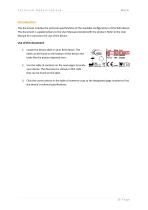
Technical Specifications Introduction This document includes the technical specifications of the available configurations of the Refa device. This document is supplementary to the User Manual provided with the product. Refer to the User Manual for instructions for use of the device. Use of this document 1. Locate the device label on your Refa device. The label can be found on the bottom of the device and looks like the picture depicted here: 2. Use the table of contents on the next pages to locate your device. The document is sorted on REF code that can be found on the label. 3. Click the correct...
Open the catalog to page 2
Technical Specifications
Open the catalog to page 3
Technical Specifications
Open the catalog to page 4
Technical Specifications
Open the catalog to page 5
Technical Specifications Headcap connector This table describes the relation between signal channel numbers and headcap connector pin numbers.
Open the catalog to page 6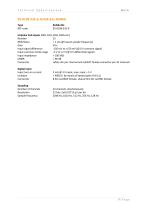
Technical Specifications
Open the catalog to page 7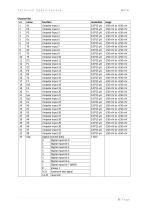
Technical Specifications Channel list:
Open the catalog to page 8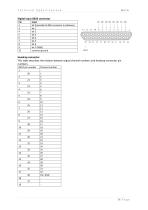
Technical Specifications Headcap connector This table describes the relation between signal channel numbers and headcap connector pin numbers.
Open the catalog to page 9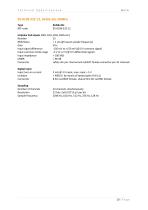
Technical Specifications
Open the catalog to page 10
Technical Specifications Channel list:
Open the catalog to page 11
Technical Specifications Headcap connector This table describes the relation between signal channel numbers and headcap connector pin numbers.
Open the catalog to page 12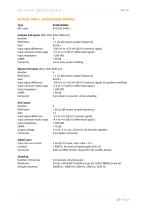
Technical Specifications
Open the catalog to page 13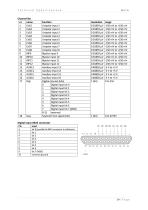
Technical Specifications Channel list:
Open the catalog to page 14
Technical Specifications RMS Noise Gain Input signal difference Input common mode range Input impedance CMRR Connectors
Open the catalog to page 15
Technical Specifications Channel list:
Open the catalog to page 16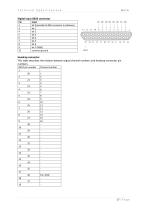
Technical Specifications Headcap connector This table describes the relation between signal channel numbers and headcap connector pin numbers.
Open the catalog to page 17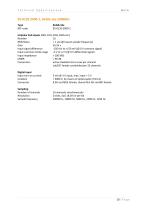
Technical Specifications RMS Noise Gain Input signal difference Input common mode range Input impedance CMRR Connectors
Open the catalog to page 18
Technical Specifications Channel list:
Open the catalog to page 19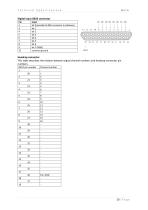
Technical Specifications Headcap connector This table describes the relation between signal channel numbers and headcap connector pin numbers.
Open the catalog to page 20
Technical Specifications Unipolar ExG inputs (EEG, ECG, EOG, EMG etc): RMS Noise < 1 pV (@ lowest sample frequency) Input signal difference -150 mV to +150 mV (@ 0 V common signal) Input common mode range -2 V to +2 V (@ 0 V differential signal) Input impedance > 100 MQ active shielded micro coax per channel subD37 female unshielded per 32 channels Digital input Input turn-on current Isolation Connector 2 mA @ 3 V input, max. input = 5 V > 4000 V, by means of optocoupler (H11L1) 8 bit via DB25 female, shared first bit via BNC female Sampling: Number of channels Resolution Sample...
Open the catalog to page 21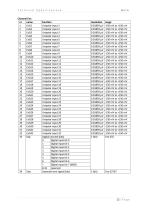
Technical Specifications Channel list:
Open the catalog to page 22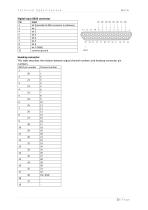
Technical Specifications Headcap connector This table describes the relation between signal channel numbers and headcap connector pin numbers.
Open the catalog to page 23
Technical Specifications Unipolar ExG inputs (EEG, ECG, EOG, EMG etc): RMS Noise < 1 pV (@ lowest sample frequency) Input signal difference -150 mV to +150 mV (@ 0 V common signal) Input common mode range -2 V to +2 V (@ 0 V differential signal) Input impedance > 100 MQ active shielded micro coax per channel subD37 female unshielded per 32 channels Digital input Input turn-on current Isolation Connector 2 mA @ 3 V input, max. input = 5 V > 4000 V, by means of optocoupler (H11L1) 8 bit via DB25 female, shared first bit via BNC female Sampling: Number of channels Resolution Sample...
Open the catalog to page 24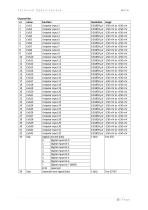
Technical Specifications Channel list:
Open the catalog to page 25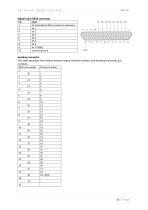
Technical Specifications Headcap connector This table describes the relation between signal channel numbers and headcap connector pin numbers.
Open the catalog to page 26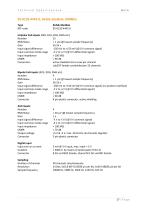
Technical Specifications
Open the catalog to page 27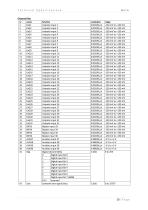
Technical Specifications
Open the catalog to page 28
Technical Specifications Headcap connector This table describes the relation between signal channel numbers and headcap connector pin numbers.
Open the catalog to page 29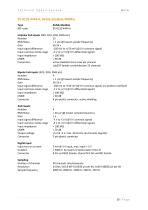
Technical Specifications
Open the catalog to page 30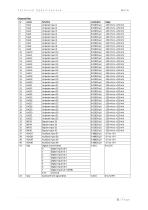
Technical Specifications
Open the catalog to page 31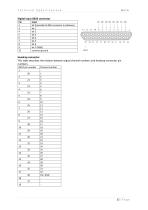
Technical Specifications Headcap connector This table describes the relation between signal channel numbers and headcap connector pin numbers.
Open the catalog to page 32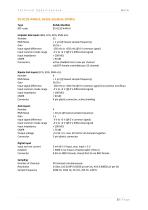
Technical Specifications
Open the catalog to page 33
Technical Specifications
Open the catalog to page 34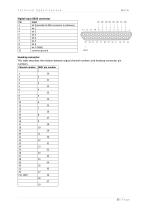
Technical Specifications Headcap connector This table describes the relation between signal channel numbers and headcap connector pin numbers.
Open the catalog to page 35
Technical Specifications
Open the catalog to page 36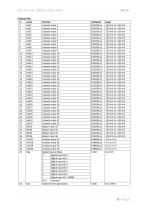
Technical Specifications
Open the catalog to page 37
Technical Specifications Headcap connector This table describes the relation between signal channel numbers and headcap connector pin numbers.
Open the catalog to page 38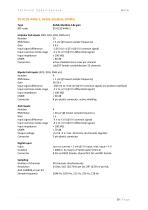
Technical Specifications
Open the catalog to page 39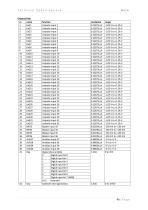
Technical Specifications
Open the catalog to page 40
Technical Specifications Headcap connector This table describes the relation between signal channel numbers and headcap connector pin numbers.
Open the catalog to page 41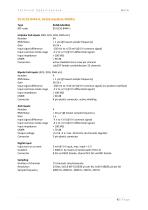
Technical Specifications
Open the catalog to page 42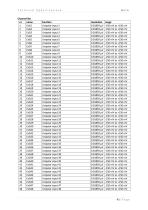
Technical Specifications Channel list:
Open the catalog to page 43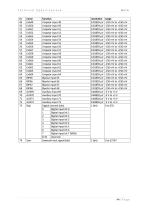
Technical Specifications
Open the catalog to page 44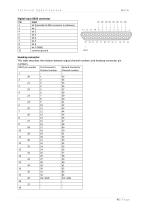
Technical Specifications Headcap connector This table describes the relation between signal channel numbers and headcap connector pin numbers.
Open the catalog to page 45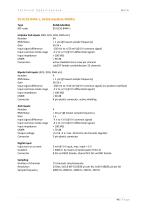
Technical Specifications
Open the catalog to page 46
Technical Specifications Channel list:
Open the catalog to page 47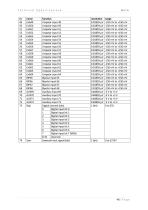
Technical Specifications
Open the catalog to page 48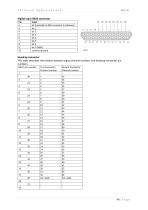
Technical Specifications Headcap connector This table describes the relation between signal channel numbers and headcap connector pin numbers.
Open the catalog to page 49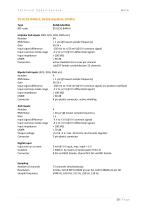
Technical Specifications
Open the catalog to page 50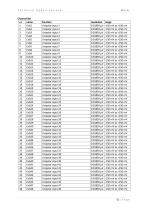
Technical Specifications Channel list:
Open the catalog to page 51
Technical Specifications
Open the catalog to page 52
Technical Specifications Headcap connector This table describes the relation between signal channel numbers and headcap connector pin numbers.
Open the catalog to page 53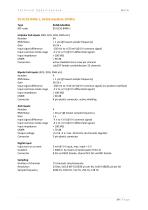
Technical Specifications
Open the catalog to page 54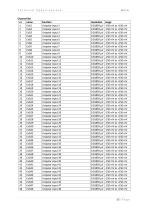
Technical Specifications Channel list:
Open the catalog to page 55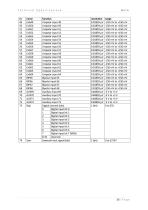
Technical Specifications
Open the catalog to page 56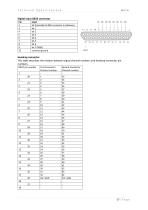
Technical Specifications Headcap connector This table describes the relation between signal channel numbers and headcap connector pin numbers.
Open the catalog to page 57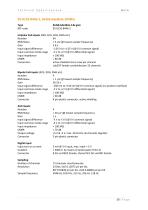
Technical Specifications
Open the catalog to page 58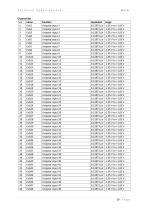
Technical Specifications Channel list:
Open the catalog to page 59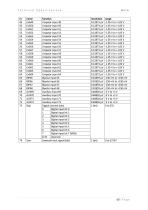
Technical Specifications
Open the catalog to page 60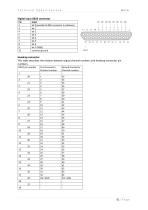
Technical Specifications Headcap connector This table describes the relation between signal channel numbers and headcap connector pin numbers.
Open the catalog to page 61
Technical Specifications
Open the catalog to page 62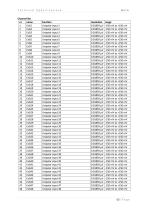
Technical Specifications Channel list:
Open the catalog to page 63
Technical Specifications
Open the catalog to page 64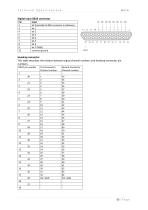
Technical Specifications Headcap connector This table describes the relation between signal channel numbers and headcap connector pin numbers.
Open the catalog to page 65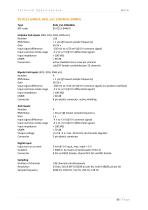
Technical Specifications
Open the catalog to page 66
Technical Specifications
Open the catalog to page 67
Technical Specifications Headcap connector This table describes the relation between signal channel numbers and headcap connector pin numbers.
Open the catalog to page 70All TMSi systems catalogs and technical brochures
 Measuring respiration
13 Pages
 Mobi
Mobi16 Pages
 Porti 7
153 Pages

- Analysis software
- Visualization software
- ECG cable
- Straight electrode
- Monitoring sensor
- Acquisition software
- Electrophysiological exploration electrode
- Sharing software
- Import software
- EMG electrode
- Medical web application
- Electrophysiology amplifier
- EEG amplifier
- EMG amplifier
- 32-channel electrophysiology amplifier
- Electrophysiology software
- Tablet PC web application
- 64-channel electrophysiology amplifier
- Cutaneous electrode
- Windows web application