

- Products
- Catalogs
- News & Trends
- Exhibitions
Airseal
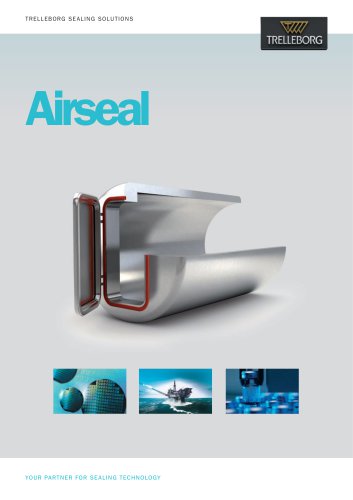
Airseal
Catalog excerpts
Your Partner for Sealing Technology Trelleborg Sealing Solutions is a major international sealing Facilities are certified to ISO 9001:2008 and ISO/TS 16949:2009. Trelleborg Sealing Solutions is backed by the experiences and development from our market-leading product and material resources of one of the world‘s foremost experts in polymer portfolio: a one-stop-shop providing the best in elastomer, technology: the Trelleborg Group. thermoplastic, PTFE and composite technologies for applications in aerospace, industrial and automotive industries. With 50 years of experience, Trelleborg Sealing...
Open the catalog to page 2
Latest information available at www.tss.trelleborg.com Edition Se
Open the catalog to page 3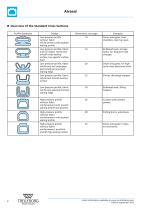
■ Overview of the Standard Cross Sections Latest information available at www.tss.trelleborg.com SEALING SOLUTIONS
Open the catalog to page 4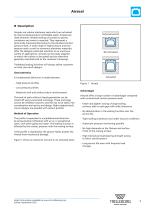
Airseals are tubular elastomer seals which are activated by internal pressurization (inflatable seals). Airseals are used wherever reliable sealing of accesses to plants, containers and rooms is required. They represent a technically improved alternative to the standard contact pressure seals. A wide range of high-pressure and low-pressure seals, as well as numerous elastomer materials, offer the designer potential solutions to an enormous variety of applications. Airseals can be easily adapted to match the surface to be sealed and are therefore generally manufactured to the customer's drawings....
Open the catalog to page 5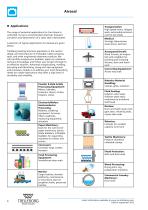
■ Applications The range of potential applications for the Airseal is unlimited. Its use is recommended wherever frequent activation and deactivation of a static seal is demanded. A selection of typical applications for Airseals are given below. Trelleborg Sealing Solutions specializes in the custom design and manufacture of inflatable rubber products, seals, and other engineered elastomer products. We will carefully analyze your problem, apply our extensive technical knowledge, and follow your project through to an effective solution. Advanced compounding, molding, extruding and fabricating,...
Open the catalog to page 6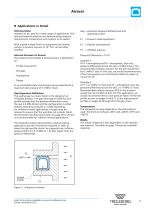
n Applications in Detail Technical Data Airseals can be used for a wide range of applications. The seal and material selection are determined by pressure requirements, temperature and medium to be sealed. Gap = Clearance between deflated seal and opposing surface P1 = Pressure inside equipment With a good surface finish on the groove and mating surface, a dynamic vacuum of 10-3 Torr can be safely handled. Internal Pressure of Airseal The maximum permissible internal pressure is dependent on: -- Profile cross-section -- Seal gap -- Chambering -- Design In an uninstalled state, the Airseal may...
Open the catalog to page 7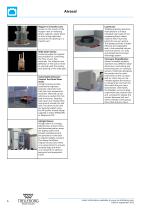
Hopper to Transfer Cart: Airseal on the mouth of the hopper valve or metering device expands axially down to form a leak-tight seal around the fill opening in a transfer cart. Airseal provides the tightest seal possible for controlling the flow of very fine materials. The inflation and deflation of the seal is timed to coincide with the closing and opening of the slide gate. Airtight enclosures help automotive engineers evaluate carburetor and fuel tank vent evaporative emissions. Warmed up test vehicles are pushed into hot soak enclosures. Escaping fuel vapors are measured by instruments outside...
Open the catalog to page 8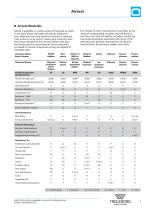
■ Airseal Materials The ratings of other manufacturers may differ as the result of compounding variables and end product use. Also note that the addition of fabric reinforcing overcomes drawbacks associated with some of the relatively poor physical characteristics of silicone, fluorosilicone, fluorocarbon rubber, and nitrile. Airseal is available in a wide variety of materials as noted in the table below, although the specific elastomers vary somewhat from one profile to another. If required, cross sections can be custom made using materials other than those indicated in this manual. Please note...
Open the catalog to page 9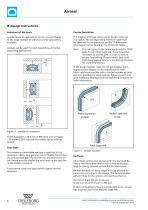
n Design Instructions Selection of the seals Corner Formation A wide range of applications can be covered thanks to the large number of different profile geometries available. The simplest and least costly corner design is the use of a radius. The corresponding minimum radii must be observed for the particular profile. The necessary information can be found in the dimension tables. Airseals can be used for axial-expanding and radialexpanding applications. Note: The radii given in the tables apply only for VMQ seals. For all other materials, these should be increased by at least 20% in order to...
Open the catalog to page 10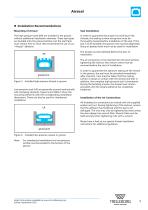
n Installation Recommendations Mounting of Airseal Seal Installation The high-pressure seals (HP) are installed in the groove without additional installation elements. These seal types are bonded onto the groove bottom, but the seal flank must remain free to move. We recommend the use of our “Airgrip“ adhesive. In order to guarantee the proper functioning of the Airseals, the sealing surface and groove must be thoroughly cleaned before installation of the seal. If the seal is to be bonded, the groove root must be degreased. Sharp or peaked tools must not be used for installation. The Airseal...
Open the catalog to page 11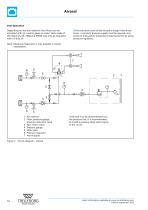
Seal Operation Depending on the seal material, the Airseal can be activated with air, neutral gases or water. Seals made of the materials CR, VMQ and EPDM may only be operated with oil-free air. If the activation cycle of the Airseal is longer than three hours, a constant pressure supply must be assured. Any pressure fluctuations should be compensated for by using pressure regulators. Note: Maximum Expansion is only possible in closed installations. 1 Air reservoir 2 Filter, pressure gauge, pressure reduction valve 3 Non-return valve 4 Pressure gauge 5 Slide valve 6 Pressure regulator 7 Alarm...
Open the catalog to page 12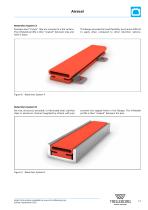
Retention System A Stainless steel “Z-style“ clips are screwed to a flat surface. The inflatable profile is then “snaked“ between clips and held in place. This design provides the most flexibility, but is more difficult to apply when compared to other retention options. Retention System B Bar size, structural, extruded, or fabricated steel, stainless steel or aluminum channel (supplied by others) with pins screwed into tapped holes in the flanges. The inflatable profile is then “snaked“ between the pins. Latest information available at www.tss.trelleborg.com Edition September
Open the catalog to page 13All Trelleborg Sealing Solutions Germany GmbH catalogs and technical brochures
 FlatSeal™ HMF30 Series
16 Pages
 FlatSeal™ HMF20
2 Pages
 FlatSeal™ HMF18
12 Pages
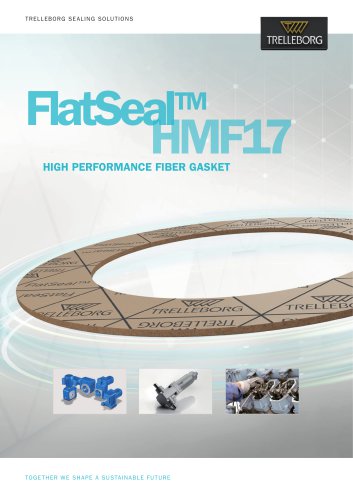 FlatSeal™ HMF17
12 Pages
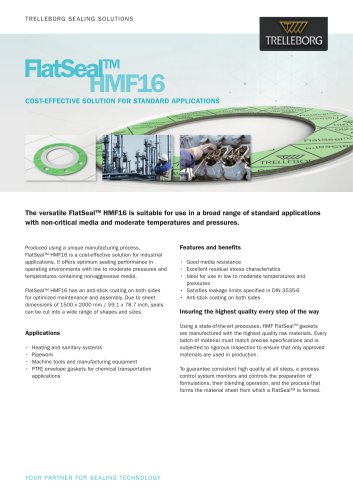 FlatSeal™ HMF16
2 Pages
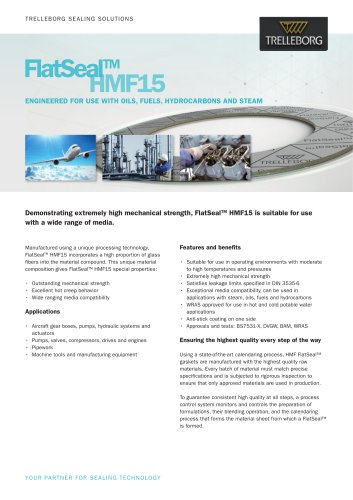 FlatSeal™ HMF15
2 Pages
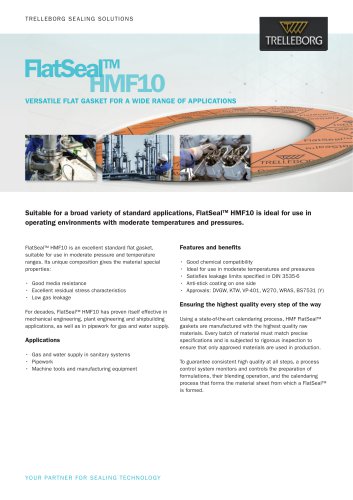 FlatSeal™ HMF10
2 Pages
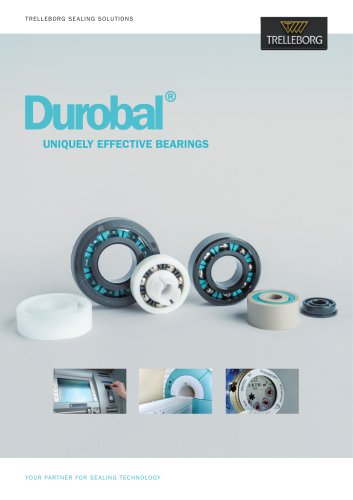 Durobal®
8 Pages
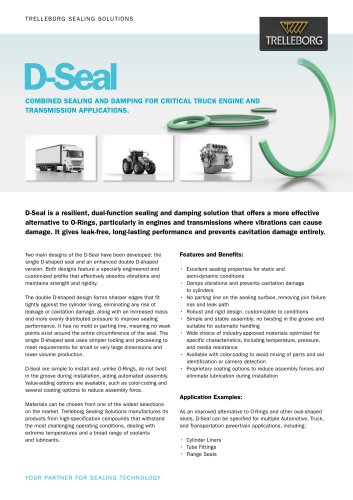 D-Seal
2 Pages
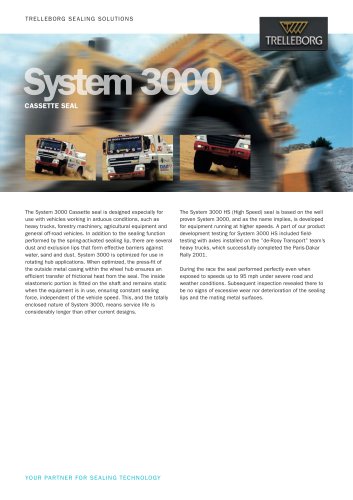 System 3000
2 Pages
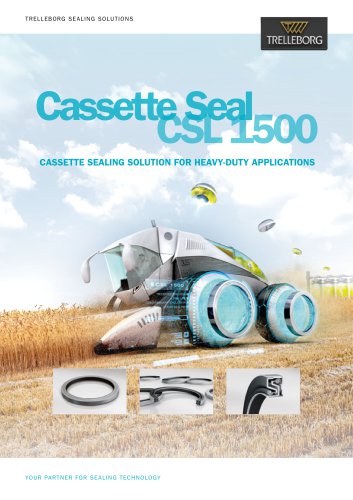 Cassette Seal CSL 1500
6 Pages
 BioPharmaPro™
16 Pages
 Advanced Composite Solutions
2 Pages
 Advanced Air Mobility
12 Pages
 Kantseal
36 Pages
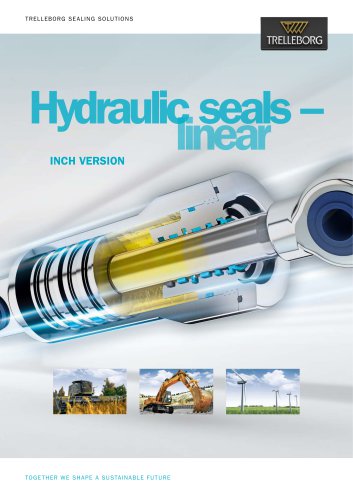 Hydraulic Seals - linear
354 Pages
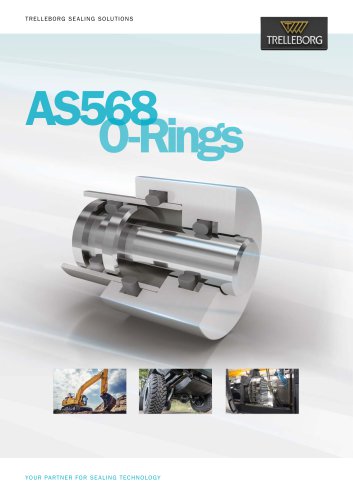 AS568 O-Rings
28 Pages
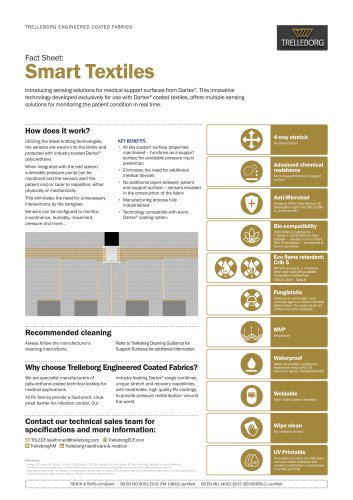 Dartex® Smart Textiles
1 Page
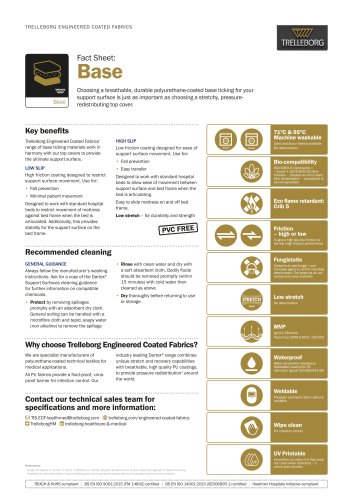 Dartex® Base
1 Page
 Surgical & Treatment Cuffs
4 Pages
- Unisex medical clothing
- Blue medical clothing
- Breathable medical clothing
- Blood pressure cuff
- Surgical gown
- Unisex surgical gown
- Transparent tubing
- Waterproof medical clothing
- Flexible tubing
- Straight tubing
- Blue surgical gown
- Silicone tubing
- Sterile medical clothing
- Breathable surgical gown
- Waterproof protective cover
- Medical mattress protective cover
- Sterile surgical gown
- Fabric cuff
- Waterproof surgical gown
- Washable cuff