
- Catalogs
- Truemed Group
- Pertrochanteric Hip Device

Pertrochanteric Hip Device

Pertrochanteric Hip Device
The Pertrochanteric Hip Device (PHD) is engineered to enhance surgical outcomes for pertrochanteric fractures by reducing operative trauma and blood loss while preserving walking ability. It is applicable for both stable and unstable fractures, providing improved rotational stability and bone conservation. The system supports immediate postoperative weightbearing and minimizes complications such as fracture collapse.
Key Principles
- Closed Fracture Reduction: Achieves a 135° shaft/neck angle for optimal fracture healing.
- Minimally Invasive Surgery: Reduces operative complications by avoiding fracture exposure.
- Rotational Stability: Double-axis telescoping fixation enhances stability and prevents complications like femoral head "cut out."
- Prevention of Collapse: Protects the lateral wall to prevent fracture collapse, crucial for stabilization.
Equipment Required
The PHD system includes a plate, neck screws, cortical screws, and various surgical instruments such as drill bits, screwdrivers, and aiming guides. The system is designed for ease of use and effective fracture stabilization.
Cleaning and Sterilization
Immediate cleaning post-procedure is essential, using hot water and mild detergent. Instruments should be sterilized according to validated methods, with specific parameters for gravity-displacement and prevacuum steam sterilization.
Operative Technique
The procedure involves precise fracture reduction using a fracture table and image intensification. The PHD system is introduced through minimally invasive incisions, with careful positioning and fixation to ensure stability and prevent complications. The technique emphasizes maintaining the integrity of the lateral wall and achieving correct alignment for optimal healing.
This document provides a detailed procedural guide for the surgical fixation of a femoral fracture using a plate and screw system. The procedure involves precise manipulation and positioning of the bone and hardware to ensure proper alignment and stabilization.
Bone Jaw Orientation and Positioning
The bone jaw is oriented and manipulated to grasp the femur firmly without the need for X-ray guidance. The handle's orientation indicates the jaw's position, and adjustments are made to ensure the plate jaw clears the plate before grasping it.
Plate Positioning and Stabilization
The plate's position is verified using lateral image intensification. Adjustments are made by twisting or pulling the plate to align it correctly with the femoral neck and shaft. Once satisfactory, the bone hook jaws are tightened to secure the plate.
Guide and Sleeve Insertion
The main sleeve and neck trocar are introduced through the introducer, locked into position, and the trocar is withdrawn. The first neck sleeve is inserted and screwed into the plate, with adjustments made if soft tissue interposition occurs.
Main Guide Positioning
The main guide is inserted and monitored using AP and lateral views to ensure correct positioning. Adjustments are made by withdrawing the guide and altering fracture table traction. Guidelines for correcting excessive varus or valgus are provided.
Butterfly Pin and Additional Stabilization
Once the main guide is correctly positioned, the butterfly pin is inserted for two-point fixation. Additional stabilization may be provided with a fixation wire under lateral image intensification.
Neck Screw Measurement and Insertion
The length of the neck screw is measured using the main guide. The neck screw is attached to the Screwdriver and inserted into the femoral neck and head, with adjustments made to compress the fracture.
Drilling and Screw Insertion
Drilling is performed with 7mm and 9.3mm drill bits, monitored under lateral image intensification. The neck screw is inserted and secured, with care taken to avoid disturbing alignment.
Shaft Screw Insertion
The shaft sleeve and trocar are used to predrill the bone, and the correct length shaft screw is inserted using a power tool or manually in osteoporotic bone.
Final Steps and Post-Operative Care
The bone hook and butterfly pin are removed, and additional screws are inserted. The wound is irrigated, and a suction drain is applied. Post-operatively, full weight bearing is allowed with support.
Catalog excerpts
ARZZT Techniques Hip Device Introduction Equipment Required Cleaning and Sterilization Operative Technique
Open the catalog to page 2
ARZZT Techniques Pertrochanteric Hip Device Introduction Percutaneous Compression Plating was developed by considering each of the stages in the surgical procedure for pertrochanteric fractures and the ways in which these might be improved. Primary objectives were that there should be minimal operative trauma and blood loss in patients whose general condition is frequently compromised by severe concomitant medical or surgical conditions, and that walking ability should be maintained. Its use in both stable and unstable pertrochanteric hip fractures has resulted in improved outcomes This new system...
Open the catalog to page 3
ARZZT Techniques Pertrochanteric Hip Device Introduction Provision of Rotational Stability: Single-axis fixation provides poor control of rotational stability. The PHD System provides double-axis telescoping fixation, which also increases the projection area within the femoral head. Biomechanical studies with the system have revealed a significant increase in rotational stability which is critical for providing “controlled fracture impaction”. This is the post-surgical compression, passively exerted by the patient, and is provided by a fixation device which has a sliding capability, as well as...
Open the catalog to page 4
ARZZT Techniques Pertrochanteric Hip Device Introduction No lateral wall damage and no fracture collapse have been reported with use of the PHD System. This is attributed to the small diameter of the holes at the drilling site with PHD System following incremental drilling from 7 to 9.3 mm, compared with the 16-32 mm drilling required for the screw barrel of the dynamic/compression hip screw. Equipment Required PHD Plate This is of one size only; the head will be connected to the introducer, while the chisel-like end will pass through the tissues and on the surface of the periosteum. There are...
Open the catalog to page 5
ARZZT Techniques Supplementary Equipment - No. 10 Scalpel Blade - 18 Gauge Spinal Needle - Metzenbaum scissors - Mallet Cleaning and Sterilization Cleaning Cleaning should be performed immediately after each procedure, before blood, saline and debris are dry. Rinse with running hot water or immerse and agitate in a mild detergent bath with near neutral pH (7.0 to 8.0) and, whenever possible, distilled or demineralized water. Avoid the use of abrasive pads.Ultrasonic cleaning in a hot detergent bath with the same pH limits will provide the most efficient cleaning. After cleaning, rinse and dry...
Open the catalog to page 6
ARZZT Techniques Lubrication by dipping in water - soluble antimicrobial lubricant will help protect instruments against staining and corrosion. Follow lubricant manufacturer's instructions. These lubricants will not affect the sterilization process. After cleaning, disinfection may be performed by immersion in a disinfectant solution such as Activated Glutaraldehyde (CIDEX) followed by rinsing and drying. Note: As disinfection alone is not adequate, instruments should be sterilized before each procedure. Sterilization Prior to surgical use, the Instruments, Plates and Screws should be cleaned...
Open the catalog to page 7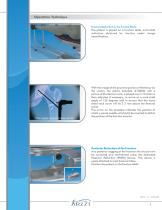
Operative Technique Fracture Reduction in the Frontal Plane The patient is placed on a fracture table, and initial reduction obtained by traction under image intensification. With the image of the proximal portion of the femur on the screen, the plastic template (210000) with a picture of the device in situ, is placed over it. Traction is then adjusted if necessary, to arrive at a neck-shaft angle of 135 degrees and to ensure that the more distal neck screw will lie 2-3 mm above the femoral calcar. The arrow on the template indicates the position at which a spinal needle will shortly be inserted...
Open the catalog to page 8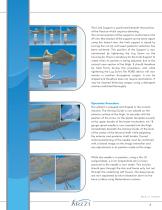
The Limb Support is positioned beneath that portion of the fracture which requires elevating. The correct position of the support is confirmed on the AP view (the shadow of the support can be seen).Again using the lateral view, the limb support is raised by turning the nut (a) until exact posterior reduction has been achieved. The position of the Support is now maintained by tightening the Lug Screw on the housing (b). There is tendency for the Limb Support to rotate when its position is being adjusted, due to the conical cross-section of the thigh. It should therefore be held firmly during this...
Open the catalog to page 9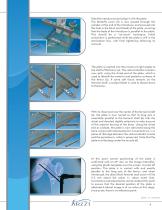
Take the introduce (a) and align it with the plate. The Butterfly screw (b) is now passed through the cylinder at the end of the Introducer, and screwed into the hole in the blunt end (head) of the plate, ensuring that the body of the Introducer is parallel to the plate. This should be a “no-touch” technique. Initial connection is performed while the plate is still in the sterilization box, with final tightening following its removal. The plate is inserted into the incision at right angles to the shaft of the femur (a). The vastus lateralis muscle is now split, using the chisel end of the plate,...
Open the catalog to page 10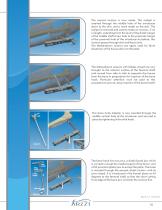
The second incision is now made. The scalpel is inserted through the middle hole of the introducer down to the skin, and a mark made on the skin. The scalpel is removed and used to make an incision, 2 cm in length, extending from the level of the distal margin of the middle shaft screw hole to the proximal margin of the proximal hole of the introducer.As before, this incision passes through skin and fascia only. The Metzenbaum scissors are again used for blunt dissection of the tissues down to the plate. The Metzenbaum scissors with blades closed are now brought to the anterior surface of the...
Open the catalog to page 11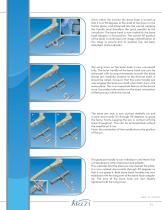
Once within the incision the bone hook is turned so that it is at 90 degrees to the shaft of the femur in the frontal plane, and advanced into the wound, keeping the handle (and therefore the jaws) parallel to the introducer. The bone hook is now locked to the bone hook adaptor in this position. The correct AP position of the plate is confirmed with image intensification at this stage to ensure that its position has not been disturbed. (Lock and look). The wing screw on the bone hook is now unscrewed fully. The outer handle of the bone hook can now be advanced with turning movements to push the...
Open the catalog to page 12All Truemed Group catalogs and technical brochures
 Intramedullary Tibial Nail
2 Pages
 Intramedullary Humerus Naif
2 Pages
 Intramedullary Femoral Nail
2 Pages
 Surgical Technique
24 Pages
 ZHS1 Cementless Hip System
13 Pages
 Bein System 5.0 mm
6 Pages
 Ins Hilden Humerus
15 Pages
 Ins Hilden Femoral
11 Pages
 Dohler System: Halses
9 Pages
 Dohler System: Spalte
16 Pages
 HALSES PLA TE
9 Pages
 Cementless Hip System
13 Pages
 LCP 5.0 mm Plates
6 Pages
 Intramedullary Nail tibia
8 Pages
 Intramedullary Nail for Humerus
15 Pages


- Bone plate
- Compression plate
- Metallic compression plate
- Locking compression plate
- Surgery forceps
- Orthopedic surgery instrument kit
- Distal compression plate
- Compression bone screw
- Metallic compression bone screw
- Proximal compression plate
- Arthrodesis nail
- Forearm compression plate
- Lateral compression plate
- Medial compression plate
- Tibia compression plate
- Metallic intramedullary nail
- Humerus compression plate
- Radius compression plate
- Cannulated compression bone screw
- Toothed forceps