
- Catalogs
- UNO Life Science Solutions
- UNO Euthanasia Unit

UNO Euthanasia Unit
1 /11Pages

UNO Euthanasia Unit
1 /11Pages
Catalog excerpts
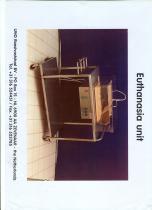
UNO Roestvaststaal BV - PO Box 15 - NL 6900 AA ZEVENAAR - the Netherlands Tel. +31 316 524451 / Fax. +31 316 523785 Euthanasia unit
Open the catalog to page 1
t ■ ‘ ~ Laboratory Animal Science ( Copyright 1999 > ! by the American Association for Laboratory Animal Science Dorothy Mae Jones, Jill Arters, and Joanne Berger-Sweeney* Ensuring a humane death for laboratory animals used in research experiments is important to the experimenter. Ib aid researchers in such decisions, the American Veterinary Medical Association (AVMA) convenes panels to set guidelines for selection of appropriate methods of euthanasia. The AVMA Panel on Euthanasia suggests that several criteria be considered in choosing an appropriate method of euthanasia, the principal criterion...
Open the catalog to page 2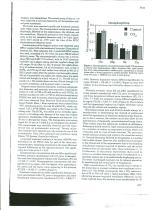
location, were decapitated. The second group of mice (n = 6) were subjected to cervical dislocation and decapitation without prior anesthesia. The brain was removed rapidly and dissected immediately while on ice. The frontoparietal cortex was dissected bilaterally, followed by the hippocampus, the striatum, and the cerebellum. Dissected specimens were frozen immediately on dry ice; complete dissection took 2 to 3 min. Specimens were stored at -70°C until the time of the HPLC electrochemical detection assay. Concentrations of the biogenic amines were measured, using HPLC coupled with electrochemical...
Open the catalog to page 3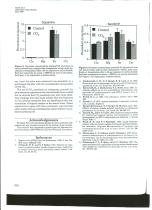
Vol 49, No 3 Laboratory Animal Science June 1999 sec (until the mice were observed to be immobile) in a precharged chamber with the recommended concentration of 70% C02. The use of C02 anesthesia in euthanasia protocols for neurochemical experiments has conventionally been avoided due to concerns that C02 anesthesia may alter brain chemistry. Findings from this study indicate that brief exposure to C02-induced anesthesia does not significantly alter concentrations of biogenic amines in the mouse brain. Values reported here agree with those previously reported from other studies of brain catecholamine...
Open the catalog to page 4
A. M. L. Coenen1, W. H. I. M. Drinkenburg1, R. Hoenderken2 & E. L. J. M. van Luijtelaar1 1NICI, Department of Psychology, University of Nijmegen, PO Box 9104, 6500 HE Nijmegen, and 2Ministry of Welfare, Health and Culture, Veterinary Public Health Inspectorate, PO Box 9013, 6800 DR Arnhem, The Netherlands Summary This paper records the effects of carbon dioxide when used for euthanasia, on behaviour, electrical brain activity and heart rate in rats. Four different methods were used. Animals were placed in a box (a) that was completely filled with carbon dioxide; (b) into which carbon dioxide...
Open the catalog to page 5
Carbon dioxide euthanasia in rats breathed whereas others, such as carbon monoxide, prevent binding of oxygen to the haemoglobin in the blood. However, carbon monoxide is seldom used because it is also toxic for those who must administer it. There are also problems with nitrogen because of its lower efficacy in young animals (Glass et al. 1944). Gases, such as nitrous oxide, directly affect the central nervous system, whereas carbon dioxide has a 2-fold function: it acts both on the removal of oxygen from the breathing air as well as directly on the central nervous system. In the last few years,...
Open the catalog to page 6
11.251 oxygen (C02-02) per min. The addition of oxygen was restricted to the first 90 sec (Van den Bogaard et al. 1985). The box in which euthanasia took place, was made of glass and had a volume of 18 1 (23 x 26 x 33 cm). Humidified gas was introduced in all conditions through a perforated inlet tube at the bottom of the chamber. The chamber was carefully cleaned and dried after finishing each animal. The EEG (1-70 Hz) and the ECG (1-30 Hz) were recorded throughout the experiment using FETs to prevent movement artifacts, and both signals were written with a speed of 1 cm/sec on chart paper of...
Open the catalog to page 7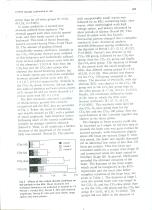
Carbon dioxide euthanasia in rats group than for all other groups (F = 8.03, (if3,26, P<0.001). In some conditions it seemed that animals suffered from asphyxia. The animals gasped with their mouths opened wide, and their heads turned up and backward. This kind of forced breathing pattern occurred during Phase II and Phase III. The amount of gasping differed considerably among conditions. Animals in the COi-lOO group showed most evidence of this behaviour and undoubtedly suffered from serious asphyxia (mean score with SD of the observers: 2.0 ±0.0). Rats from the C02-fast and the C02-slow groups...
Open the catalog to page 8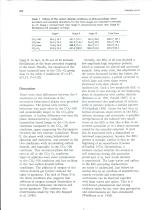
Table 1 Effects of the carbon dioxide conditions on ECG-recordings. Mean durations and standard deviations for the three stages are indicated in seconds (n = 7). Stage I: normal heart rate; Stage II: abnormal low heart rate; Stage III: fibrillations till cessation of heart. Stage I Stage II Stage III Total time Stage II. In fact, in 25 out of 28 animals fibrillations of the heart preceded stopping of the heart. Finally, the cessation of the heart occurred later in the C02-02 group than in the other 3 conditions (F = 4.87, df3,19, P<0.02). Discussion There were clear differences between...
Open the catalog to page 9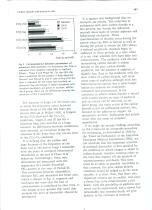
Fig 3 Correspondence between parameters of behaviour, EEG and ECG. For behaviour the time is indicated until complete immobility is reached (Phase I, Phase II and Phase III). For the EEG the time is indicated till the pattern is fully aberrant (Period I and Period II) and in case of the ECG the time is indicated till the heart rate reached an abnormal low rate (Stage I). Mean durations and standard deviations are given in seconds. Within the 4 groups there are no differences among the durations of the 3 parameters The duration of Stage I of the heart rate, in which the frequency varies between normal...
Open the catalog to page 10
discomfort over that of speed. This implies that we prefer the mixture of carbon dioxide and oxygen for inhalation euthanasia. When euthanasia is induced with such a mixture, signs of discomfort are minimal in a period during which the possibility of consciousness cannot be fully excluded. References American Veterinary Medical Association (AVMA) (1963) Report of the A.V.M.A. Panel on Euthanasia. Journal of the American Veterinary Medical Association 142, 162-4 American Veterinary Medical Association (AVMA) (1986) Report of the A.V.M.A. Panel on Euthanasia. Journal of the American Veterinary Medical...
Open the catalog to page 11All UNO Life Science Solutions catalogs and technical brochures
 SYRINGE PUMPS
9 Pages
 Laboratory animal infusion
16 Pages
 Sigma Delta
2 Pages
 UNO Micro Ventilator-03
1 Page
 Bedding Disposal Station
4 Pages
 OPEN ACCESS STATIONS
4 Pages
 UNO rabbit cage rack
1 Page
 UNO Drinking Supply
1 Page
 UNO RABBIT CAGE RACK
1 Page
 UNO Rodent Cages
1 Page
 cage and wire lids
1 Page
 cage racks
5 Pages
 Stereotaxic Instruments
26 Pages
 MouseMonitor™
7 Pages


- Retractor
- Rack
- Veterinary anesthesia system
- Storage rack
- Animal research cage
- Modular animal research cage
- Tabletop veterinary anesthesia system
- Rodent animal research cage
- Mobile rack
- UNO laboratory stereotactic frame
- Animal spreader
- UNO rodent laboratory stereotactic frame
- Animal research veterinary anesthesia workstation
- UNO bench-top laboratory stereotactic frame
- Rack on casters
- Digital laboratory stereotactic frame
- Animal enrichment device
- Metabolic cage
- Modular metabolic cage
- USB RFID reader