


R711
R711
- Sample Processing: Flash freeze tissues, grind into powder, and lyse with FreeZol Reagent. For cells, collect by centrifugation and lyse with FreeZol Reagent.
- RNA Extraction: Add Dilution Buffer, centrifuge to remove impurities, precipitate RNA with isopropanol, wash with ethanol, and dissolve in RNase-free ddH2O.
Catalog excerpts
FreeZol Reagent is widely applicable to the extraction of total RNA from cultured cells, animal tissues, and simple plant tissues. Compared with the conventional Trizol method, this product features a simple procedure that can be performed at room temperature with no need to use chloroform for phase separation. In addition, this product ensures the integrity and purity of the extracted RNA by precipitating proteins, DNA, polysaccharides and other impurities in the organic phase while retaining RNA in the upper aqueous phase. The whole procedure can be completed in 1 h. The obtained total RNA...
Open the catalog to page 3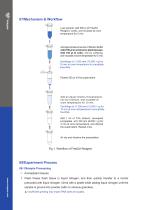
07/Mechanism & Workflow Lyse sample: add 500 μl of FreeZol Reagent, vortex, and incubate at room temperature for 5 min. Add appropriate amounts of Dilution Buffer (Add 100 μl to anmimal or plant tissuses. Add 150 μl to cells), mix by vortexing, and incubate at room temperature for 5 min. Centrifuge at 11,200 rpm (12,000 × g) for 15 min at room temperature to precipitate impurities. Add an equal volume of isopropanol, mix by inversion, and incubate at room temperature for 10 min. Centrifuge at 11,200 rpm (12,000 × g) for 10 min at room temperature to precipitate the RNA. Add 1 ml of 75% ethanol,...
Open the catalog to page 4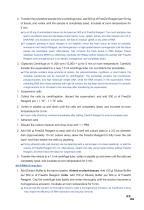
2. Transfer the powdered sample into a centrifuge tube, add 500 μl of FreeZol Reagent per 50 mg of tissue, and vortex until the sample is completely lysed. Incubate at room temperature for 5 min. ▲ Up to 50 mg of animal/plant tissue can be lysed per 500 μl of FreeZol Reagent. Too much samples may lead to insufficient lysis and decrease product purity. Liver, spleen, kidney and other tissues are rich in DNA/RNA, and excessive sample inputs will lead to residual gDNA or low yield of RNA. ▲ If cryogenic grinding in liquid nitrogen is not feasible, mince the fresh tissue as finely as possible, immerse...
Open the catalog to page 5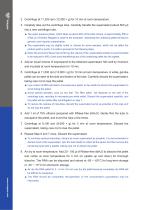
2. Centrifuge at 11,200 rpm (12,000 x g) for 15 min at room temperature. 3. Carefully take out the centrifuge tube. Carefully transfer the supernatant (about 500 pl) into a new centrifuge tube. ▲ The upper aqueous phase, which takes up about 90% of the total volume, is approximately 550 pl if 500 pl of FreeZol Reagent is used for the extraction. Absorbing the underlying pellet will lead to genomic and impurity contamination. ▲ The supernatant may be slightly turbid or colored for some samples, which will not affect the product yield or purity. It is safe to proceed to the following steps. ▲ When...
Open the catalog to page 6
W'v&zymeVazyme Biotech Co.,Ltd. www.vazyme.com 400-600-9335 (China) +86 400-168-5000 (Global) [email protected]
Open the catalog to page 8All Vazyme catalogs and technical brochures
Archived catalogs
 2020 Product Catalogue
32 Pages

- Solvent reagent
- Molecular biology reagent
- Diagnostic reagent
- Enzyme reagent
- Histology reagent
- Dye reagent kit
- Cytology reagent
- Buffer solution reagent
- Immunoanalysis reagent kit
- Quality control reagent
- Antibody
- Microtiter plate
- PCR reagent
- Bacteria reagent
- Virus reagent
- Pipette tip
- Tissue reagent
- 96-well microplate
- PCR system
- Microbiology reagent