
- Catalogs
- vTitan Corporation
- HIGHNOON

HIGHNOON
HIGHNOON
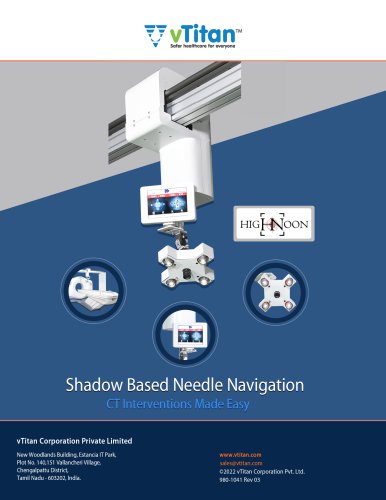
vTitan Corporation introduces India's first shadow-based, CT-guided instrument positioning assistant designed to aid clinicians in performing high-risk and high-precision percutaneous medical interventions. This technology aims to enhance the accuracy of needle placement, which is crucial for diagnostic yield and treatment success, especially in proximity to vulnerable anatomy.
Challenges with Conventional Techniques
Traditional methods often require multiple needle adjustments and intra-procedural imaging, leading to prolonged procedure duration, increased patient pain, radiation exposure, and procedural risk.
Workflow
- Mark entry and target point in the planning station.
- Take a CT scan of the patient with markers.
- Insert the needle through the planned entry point using shadow-based guidance.
Clinical Efficacy
- Target accuracy: 1 mm
- Angulation error: 2.2 degrees
- Manipulations: 3%
- Time to place needle: 11 minutes
- Average wheel in and out time: 26 minutes (based on 55 patient data)
Advantages
- User-friendly planning station with real-time guidance.
- Reduces dependency on physician skill and experience.
- Targets lesions of any size and location.
- Facilitates seamless procedures for beginners.
- Ensures accurate instrument placement with minimal iterations.
- Reduces patient puncture and radiation exposure.
- Improves procedure speed and scanner utilization.
- Enhances patient and clinician comfort.
Three-Level Confirmation
- Laser crosshair alignment to the center of the needle hub.
- Alignment of all four needle shadows to the laser crosshair.
- Needle hub alignment to the center of the green circle on the monitor.
Case Studies
- Pain Management: Thoracic paravertebral block for intractable pleuritic pain, with precise needle placement between the aorta and T7 vertebra.
- Tru Cut Biopsy: Biopsy of a small FDG avid node in front of the SVC, accessed with craniolateral angulation between internal mammary vessels and aorta.
Catalog excerpts
rvlitan® er healthcare for everyone Shadow Based Needle Navigation vTitan Corporation Private Limited New Woodlands Building, Estancia IT Park, Plot No. 140,151 Vallancheri Village, Chengalpattu District, Tamil Nadu - 603202, India.
Open the catalog to page 1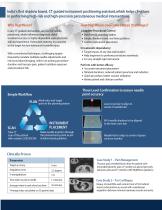
WhyHigHNoon? In any CT guided intervention, accuracy of needle placement, which influences diagnostic yield/ treatment success, is highly dependent upon physician skill and experience. Vulnerable anatomy in proximity to the target has low tolerance for needle injury. With conventional techniques, challenging targets frequently mandate multiple needle adjustments and intra-procedural imaging, which can prolong procedure duration and increase pain, patient radiation exposure and procedural risk. How HigHNoon overcomes these challenges? Complete Procedural Control • User friendly planning station...
Open the catalog to page 2All VTitan Corporation catalogs and technical brochures
 Accuflow®
2 Pages
 IntelliICU
2 Pages
 Accuflow® Uro
2 Pages
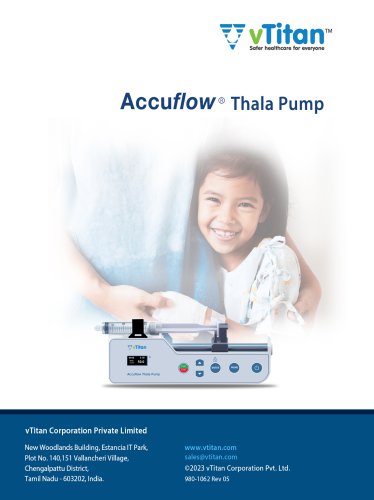 Accuflow®Thala
2 Pages
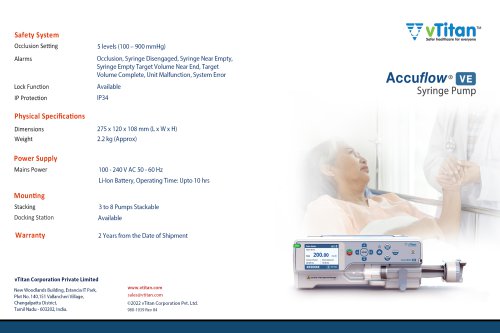 Accuflow® VE
2 Pages
- Tablet computer software
- Tablet PC software
- Reporting software
- Monitoring software
- Planning software
- Syringe pump
- Hospital software
- 1-way syringe pump
- Medical software on site
- Programmable syringe pump
- Medical monitoring system
- Treatment planning software
- Urinary flow meter
- Digital urinary flow meter
- Wireless monitoring system
- Flow monitoring system
- Intensive care software
- Thalassemia syringe pump