- Catalogs
- Waters Ges.m.b.H
- Optimum Bed Density (OBD) Columns: Enabling Technology for Laboratory-Scale Isolation and Purification

- Products
- Catalogs
- News & Trends
- Exhibitions
Optimum Bed Density (OBD) Columns: Enabling Technology for Laboratory-Scale Isolation and Purification

Optimum Bed Density (OBD) Columns: Enabling Technology for Laboratory-Scale Isolation and Purification
The document explores advancements in liquid chromatography, particularly focusing on Optimum Bed Density (OBD™) columns. These columns are designed to enhance stability, lifetime, efficiency, peak shape, and reproducibility, which are critical for laboratory-scale isolation and purification in pharmaceutical research.
Drug Discovery Challenges
In pharmaceutical research, efficient isolation and purification of numerous compounds are essential. Preparative liquid chromatography (prep LC) is crucial in high-throughput environments, requiring systems capable of high-pressure and high-flow-rate operations. Traditional prep LC columns often suffer from short lifetimes, leading to inefficiencies.
Column Packing Techniques
The document reviews both historical and modern packing techniques for LC columns, highlighting the shift from dry packing to dynamic compression methods like radial and axial compression, which aim to create uniform packed beds. Radial compression is particularly effective in maintaining bed homogeneity.
Slurry Packing and Dynamic Compression
Slurry packing is favored for smaller particles, forming more uniform beds through high-pressure filtration. The document discusses the evolution of packing methods and the challenges in achieving optimal bed density, especially in larger-diameter columns.
Development of OBD Columns
Waters scientists developed OBD columns to address premature column failure. They found that silica particles exhibit elastic behavior under pressure, affecting bed structure. The OBD process combines high-pressure slurry packing with controlled axial compression to achieve uniform density.
Performance and Stability
OBD columns show improved stability and performance, with efficiency nearing that of analytical LC columns. Extensive testing confirmed their long-term stability and reproducibility, making them suitable for high-throughput pharmaceutical applications.
Conclusion
Waters' OBD columns represent a significant advancement in preparative LC technology, offering enhanced performance and reliability for pharmaceutical research.
An accelerated lifetime test demonstrated the outstanding bed stability and performance of new OBD columns, with minimal variation in reduced plate height and USP peak tailing factor over 7-8 weeks. A reduced plate height near 2 indicates a high-quality column.
Improved Reproducibility and Column Lifetime
Four XTerra Prep MS C18 OBD columns were tested with 1000 DMSO sample injections, showing only a 4% decrease in efficiency and minimal change in USP tailing factors, indicating excellent lifetime and reproducibility.
Effective Maintenance of Efficiency and Resolution
Experiments showed that OBD columns maintained an average resolution of 1.77 with a standard deviation of 0.07 over multiple cycles, demonstrating superior stability.
Increased Productivity
Improved efficiency allows for faster prep separations, increasing productivity by 33% without compromising separation quality, as evidenced by a 50% increase in flow rate reducing cycle time from 15 to 10 minutes.
Scale-Up with Confidence
OBD columns ensure performance equivalent to analytical columns, simplifying the scale-up process from analytical to prep LC. An example demonstrated easy scale-up with a factor based on column cross-sectional area.
Summary
Research indicates that high-throughput prep LC columns can achieve optimum bed density and uniformity, improving column lifetime, efficiency, peak shape, and back pressure. A survey showed that only 6% of chromatographers experienced 1000 or more injections, highlighting the significant improvement with OBD columns.
References
The document includes references to various studies and patents related to liquid chromatography and column design.
Catalog excerpts
TOPICS IN LIQUID CHROMATOGRAPHY Part 2. Optimum Bed Density [OBD™] Columns: Enabling Technology for Laboratory-Scale Isolation and Purification Dramatic improvement in stability, lifetime, efficiency, peak shape, and reproducibility results from continuing investigation of, and innovation in, the design of particles, columns, and packing processes.
Open the catalog to page 1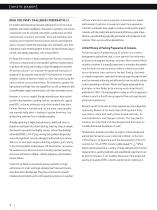
DRUG DISCOV ERY CHALL ENGES P REPA RAT IV E LC For modern pharmaceutical research laboratories to fill new drug pipelines with viable candidates, thousands of synthetic and natural compounds must be isolated, identified, synthesized, purified, characterized, screened, and tested. Tools and techniques that optimize and streamline these processes shorten development cycles, increase competitive advantage, and, ultimately, save lives. Laboratory-scale chromatographic isolation and purification plays a central, and rapidly expanding, role in these efforts. Purifying the contents of huge combinatorial...
Open the catalog to page 2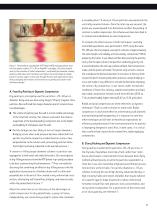
a movable piston.8 A slurry of 10-µm particles was poured into the vertically-mounted column. Once the inlet cap was secured, the piston was moved upward from the bottom to effect the packing. In contrast to radial compression, this scheme was later described in its commercial embodiment as axial compression. Figure 1. These hitherto unpublished 1975 Waters R&D prototype photos show how thin-plastic-walled, 5.7 x 30 cm PrepPak® cartridges, the initial embodiment of the invention of radial compression,5 could easily be dissected, making directly visible what never had been seen before: the actual...
Open the catalog to page 3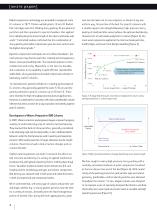
As manufacturers gained confidence in creating good analytical LC columns, they generally applied the same 5-10 µm-particle packing methods to prep LC columns up to 50 mm I.D. T hese were intended for high-throughput pharmaceutical applications. However, as stated earlier, frustration with short unpredictable column lifetimes has led to a search for a way to produce consistently superior prep LC columns. 0.700 Optimum Packed-Bed Density Dynamic compression techniques are not without drawbacks. Too much pressure may fracture particles, creating less homogeneous, denser, lower-permeability beds....
Open the catalog to page 4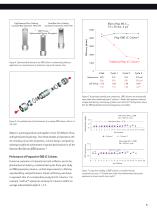
High-Pressure Slurry Packing Localized Bed Expansion Near Inlet Axial-Ram Slurry Packing Localized Compression Near Inlet OBD Process Optimum Bed Density Throughout Efficiency [plates] Figure 4. Optimized bed density in an OBD column is achieved by judicious application of a tuned amount of axial force only at the column inlet. Traditional Prep LC Column* Waters is a primary producer and supplier of over 30 different silicaand hybrid-particle packings. Over three decades of experience with the interplay of particle properties, column design, and packing technique enable the achievement of optimal...
Open the catalog to page 5
C. Effective Maintenance of Efficiency and Resolution An accelerated lifetime test was devised to punish small particle prep LC columns with cycles of solvent viscosity changes. As can be seen in Figure 6, the bed stability and performance of the new OBD columns is outstanding. A similar longer-term test [Figure 7] demonstrates little variation in reduced plate height and USP peak tailing factor over a 7–8 week period. Note that a reduced plate height value near 2 indicates a high-quality well-packed column. Once a baseline separation is achieved, the real challenge in a high-throughput environment...
Open the catalog to page 6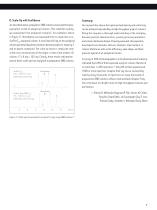
D. Scale-Up with Confidence As described above, preparative OBD columns ensure performance equivalent to that of analytical columns. This simplifies scalingup a separation from analytical to prep LC. An example is shown in Figure 11. Nimodipine was separated from its impurities on a SunFire C18 analytical column. A total load of 6 mg on the analytical column permitted baseline resolution between peaks for impurity 2 and its parent compound. The scale-up factor is simply the ratio of the cross-sectional area of the larger- to that of the smaller-I.D. column; 17 x 6 mg = 102 mg. Clearly, these...
Open the catalog to page 7
References: NOTE: Where indicated below, use bold search term following * to access PDF document in Waters Library at . 1. A.J.P. Martin and R.L.M. Synge, Biochem. J. 35: 1358–1368 [1941] 2. P.D. McDonald, James Waters and His Liquid Chromatography People: A Personal Perspective, Waters Whitepaper *WA62008: 20 pp [2006] 3. P.D. McDonald and B.A. Bidlingmeyer, Strategies for Successful Preparative Liquid Chromatography, Chap. 1 in: J. Chromatogr. Lib. 38: 1–103 [1987], see esp. pp. 82–88 and references therein 4. U.D. Neue, HPLC Columns: Theory, Technology, and Practice, New York: Wiley-VCH [1997]...
Open the catalog to page 8Archived catalogs
 XBridge™
12 Pages
 Torus™
7 Pages
 Enzymate BEH Pepsin Columns
5 Pages
 Viridis®
6 Pages
 Protein-Pak™
6 Pages
 Trefoil™
7 Pages
 ACQUITY UPLC M-Class
3 Pages
 Preparative OBD Columns Brochure
12 Pages
 2432
24322 Pages
 ACQUITY UPLC I-Class PLUS
6 Pages
 ACQUITY UPLC H-Class PLUS
6 Pages
 ProteinWorks
6 Pages
 PoraPak Rxn Brochure
8 Pages
 HPLC Column Performance
30 Pages
 Food Testing Solutions Brochure
14 Pages