- Catalogs
- Waters Ges.m.b.H
- XBridge™

- Products
- Catalogs
- News & Trends
- Exhibitions
XBridge™

XBridge™
XBridge™ columns are designed for high-performance chromatography, providing excellent peak shape, efficiency, and stability for both acidic and basic mobile phases. They are manufactured in a cGMP, ISO 9001:2000 certified facility, ensuring reproducibility and performance through rigorous testing.
- Column Installation: Follow specific flow rate guidelines based on column dimensions, ensure proper solvent flow direction, and avoid air entry into the detection system.
- Column Equilibration: Columns are shipped in acetonitrile and require equilibration with the intended mobile phase, with special procedures for HILIC and Amide columns.
- Initial Column Efficiency Determination: Conduct efficiency tests using a suitable solute mixture to establish a baseline for future performance comparisons.
- Guard Columns: Use matching guard columns to protect the main column without affecting resolution, replacing them regularly based on contamination indicators.
- Sample Preparation: Prepare samples in the operating mobile phase or a weaker solvent, ensuring miscibility and filtering samples to remove particulates.
- Operating pH Limits: Recommended pH and temperature limits vary by column type, affecting column lifetime.
- Solvents: Use high-quality solvents and filter aqueous buffers to prevent clogging and pressure issues.
- Pressure and Temperature: Operate within specified pressure and temperature ranges to maximize column life.
Formulas are provided for scaling up or down while maintaining linear velocity, affecting flow rate, sample loading, and injection volume.
Common issues like changes in retention time or backpressure often indicate contamination. Cleaning and regeneration procedures are available for solutions.
- Cleaning and Regeneration: Use appropriate solvents and procedures based on the type of contamination, increasing temperature to enhance cleaning efficiency.
- Storage: Proper storage conditions are essential to maintain column performance.
Guidelines for column connectors, system tubing, and measuring system volumes are provided to ensure optimal performance.
- Gradient and Backpressure: Note that backpressure increases rapidly with higher aqueous concentrations; reduce flow rate when operating above 60% aqueous.
- Cleaning and Regeneration: Use low organic solvent content to avoid precipitating buffers.
- Store reversed-phase XBridge columns in 100% acetonitrile for periods longer than four days at room temperature. Avoid storing in highly aqueous mobile phases to prevent bacterial growth.
- If the mobile phase contained a buffer salt, flush the column with 10 column volumes of HPLC grade water and replace with 100% acetonitrile for storage.
- Correct connection of 1/16 inch outer diameter stainless steel tubing is essential for high-quality chromatographic results.
- Use appropriate wrenches to ensure proper fit and avoid leaks.
- Ensure tubing touches the bottom of the column endfitting to avoid voids that can affect separation.
- Ensure compatibility of ferrule types to avoid voids and leaks.
- Use SLIPFREE® connectors for a void-free connection and compatibility with all commercially available endfittings.
- Measure system bandspreading volume and variance using the 5-sigma method.
- For gradient-method transfers, measure gradient delay volumes using a specific method to ensure consistency across systems.
- Use narrow-bore columns to minimize extra column effects and maximize performance.
- Optimize system to reduce bandspreading and improve sensitivity and resolution.
- For fast chromatography, consider using Waters columns with 2.5 µm particles for efficient separations.
- Operate within a pH range of 1 to 9 and temperatures up to 45 °C.
- Proper column equilibration is crucial to avoid drifting retention times.
- Maintain at least 5% polar solvent and 40% organic solvent in the mobile phase to ensure hydration of the XBridge particle.
- Use phosphoric acid to avoid precipitation in HILIC mobile phases.
- Ammonium formate or ammonium acetate buffers provide more reproducible results than formic or acetic acid. Use 0.2% additives instead of 0.1%.
- Maintain a buffer concentration of at least 10 mM for optimal peak shape.
- Preferably use 100% organic solvents like acetonitrile, isopropanol, or methanol. Avoid water and DMSO.
- A 75:25 acetonitrile:methanol mix is recommended for a balance between solubility and peak shape.
- If necessary, replace water or DMSO with acetonitrile using reversed-phase SPE.
- XBridge HILIC columns are less retentive than Atlantis HILIC Silica HPLC columns.
- Water is the strongest solvent in HILIC and should be minimized.
- For initial scouting, use a gradient from 95% to 50% acetonitrile.
Operating Ranges
- Suitable for pH 2 to 11 and temperatures up to 90°C.
- Extreme conditions may reduce column lifespan.
- Flush with 60% acetonitrile:40% aqueous for 50 column volumes initially.
- Equilibrate with 20 column volumes of initial mobile phase before first injection.
- Maintain at least 5% polar solvent and 40% organic solvent in the mobile phase.
- Use lower flow rates for aqueous concentrations over 60% to avoid high backpressure.
- Match injection solvents to mobile phase composition.
- A 75:25 acetonitrile:methanol mix is recommended, with higher aqueous content acceptable for saccharides.
- For reducing sugars, use elevated temperatures and high pH to collapse anomers.
- Typical conditions for mono- and disaccharides include 75% acetonitrile with 0.2% TEA at 35°C.
- For complex sugar mixtures, use gradient conditions with TEA or NH4OH modifiers.
- Liquid samples: Dilute with 50:50 ACN/H2O and filter if necessary.
- Solid samples: Homogenize in 50:50 ACN/H2O, centrifuge, and filter.
- Consider additional preparation steps for complex samples or low analyte concentrations.
Catalog excerpts

XBridge Columns Thank you for choosing a Waters XBridge ™ column. The XBridge ™ packing materials were designed to provide excellent peak shape, high efficiency, and excellent stability for acidic and basic mobile phases. The XBridge ™ tested chromatographically with acidic, basic and neutral analytes and fied plant using ultra pure reagents. Each batch of XBridge ™ material is packing materials are manufactured in a cGMP, ISO 9001:2000 certi- c. Initial Column Efficiency Determination the results are held to narrow specification ranges to assure excellent, with the Certificate of Acceptance. Performance Test Chromatogram is provided with each column along reproducible performance. Every column is individually tested and a III. Scaling U p/ Dow n Isoc rat ic Met hods IV. T roubl eshoot ing V. Column C l eaning, REGENERAT ION and Storage V I. Connec t ing t he Column to t he HPLC a. Column Connectors and System Tubing Considerations b. Measuring System Bandspreading Volume and System Variance c. Measuring Gradient Delay Volume (or Dwell Volume) V II. Addit ional Informat ion b. Impact of Bandspreading Volume on c. Non-Optimized vs. Optimized LC/MS/MS System: System Modification Recommendations d. Waters Small Particle Size (2.5 µm) Columns – Fast Chromatography e. Getting Started with XBridge HILIC Columns f. Getting Started with XBridge Am
Open the catalog to page 1
Each XBridge column comes with a Certificate of Analysis and a Perfor- XBridge™ columns are shipped in 100% acetonitrile. It is important to ensure mance Test Chromatogram. The Certificate of Analysis, located on the technical mobile phase compatibility before changing to a different mobile phase sys- information CD, is specific to each batch of packing material contained in tem. Equilibrate the column with a minimum of 10 column volumes of the the XBridge column and includes the batch number, analysis of unbonded mobile phase to be used (refer to Table 1 for a listing of empty column particles,...
Open the catalog to page 2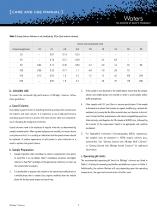
Table 1: Empty Column Volumes in mL (multiply by 10 for flush solvent volumes) Column internal diameter (mm) Column Length (mm) 3. If the sample is not dissolved in the mobile phase, ensure that the sample, To ensure the continued high performance of XBridge columns, follow solvent and mobile phases are miscible in order to avoid sample and/or these guidelines: buffer precipitation. 4. Filter sample with 0.2 µm filters to remove particulates. If the sample is dissolved in a solvent that contains an organic modifier (e.g., acetonitrile, Use a Waters guard column of matching chemistry and particle...
Open the catalog to page 3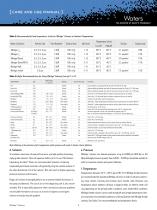
Table 2: Recommended pH and temperature Limits for XBridge™ Columns at Ambient Temperatures Name of Column Particle Size Pore Diameter Surface Area XBridge Phenyl XBridge Shield RP18 XBridge HILIC Temperature Limits Carbon Load XBridge Amide 3.5 µm 130Å 185 m /g Table 3: Buffer Recommendations for Using XBridge™ Columns from pH 1 to 12 2 Buffer Range (±1 pH unit) Used for Mass Spec Ion pair additive, can suppress MS signal, used in the 0.02-0.1% range. Acetic Acid Maximum buffering obtained when used with ammonium acetate salt. Used in 0.1-1.0% range. Formic Acid Maximum buffering obtained when...
Open the catalog to page 4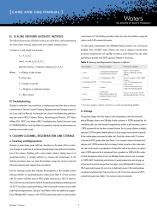
III. Scaling U p/ Dow n Isoc rat ic Met hods contaminants. If this flushing procedure does not solve the problem, purge the The following formulas will allow scale up or scale down, while maintaining column with 5:95 acetonitrile:water. the same linear velocity, and provide new sample loading values: To clean polar contaminants from XBridge Amide columns, run a 25 minute gradient from 0-100% water. Please note that as aqueous concentration If column i.d. and length are altered: increases, backpressure will rapidly increase as well. Reduce flow rate when operating at greater than 60% aqueous....
Open the catalog to page 5
Figure 1: Waters and Parker Ferrule Types Note: If a column has been run with a mobile phase that contains for ate m Waters Ferrule Setting (e.g., ammonium formate, formic acid, etc.) and is then flushed with 100% Parker Ferrule Setting acetonitrile, slightly longer equilibration times may be necssary when the e column is re-installed and run again with a formate-containing mobile phase. slightly longer equilibration times may be necessary when the column is .130” re-installed and run again with a formate-containing mobile phase. Due to the absence of an industry standard, various column manufactur-...
Open the catalog to page 6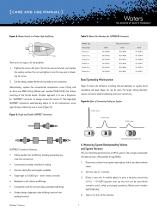
Figure 4: Waters Ferrule in a Parker Style Endfitting Table 5: Waters Part Numbers for SLIPFREE® Connectors SLIPFREE® Type Tubing Internal Diameter Tubing Length Tighten the screw a bit more. The ferrule moves forward, and reaches the sealing surface. Do not overtighten since this may end in break- There are two ways to fix the problem: 1. Band Spreading Minimization Cut the tubing, replace the ferrule and make a new connection. Figure 6 shows the influence of tubing internal diameter on system band Alternatively, replace the conventional compression screw fitting with spreading and peak shape....
Open the catalog to page 7
Figure 8: Determination of Gradient Delay Volume Measure the peak width at 4.4% of peak height (5-sigma method): 5-sigma Bandspreading (µL) = Peak Width (min) x Flow Rate (mL/min) x (1000 µL/1 mL) Figure 7: Determination of System Bandspreading Volume Using 5-Sigma Method System Volume 6. Determine the dwell time by first locating the time at the midpoint of the formed gradient (t1/2) (half the vertical distance between the initial and final isocratic segments as shown in Figure 8). 7. Subtract half the gradient time (1/2 tg) (10 min/2 = 5 min in this 4.4 %h example) from the gradient midpoint...
Open the catalog to page 8
b. Impact of Bandspreading Volume on 2.1 mm i.d. Column Performance d. Waters Small Particle Size (2.5 µm) Columns – Fast Chromatography System with 70 µL bandspreading: Waters columns that contain 2.5 µm particles provide faster and more effi- System with 130 µL bandspreading: 8,000 plates (same column) cient separations without sacrificing column lifetime. This section describes five parameters to consider when performing separations with columns Note: Flow splitters after the column will introduce additional Note: Columns that contain 2.5 µm particles have smaller outlet frits to retain System...
Open the catalog to page 9Archived catalogs
 Torus™
7 Pages
 Enzymate BEH Pepsin Columns
5 Pages
 Viridis®
6 Pages
 Protein-Pak™
6 Pages
 Trefoil™
7 Pages
 ACQUITY UPLC M-Class
3 Pages
 Preparative OBD Columns Brochure
12 Pages
 2432
24322 Pages
 ACQUITY UPLC I-Class PLUS
6 Pages
 ACQUITY UPLC H-Class PLUS
6 Pages
 ProteinWorks
6 Pages
 PoraPak Rxn Brochure
8 Pages
 HPLC Column Performance
30 Pages
 Food Testing Solutions Brochure
14 Pages