- Catalogs
- Weber Medical
- Science behind the WeberBrain®

- Company
- Products
- Catalogs
- News & Trends
- Exhibitions
Science behind the WeberBrain®
Science behind the WeberBrain®
Brain Photobiomodulation (PBM) is a non-invasive therapy using near-infrared light to enhance brain health. The presentation by Martin Junggebauer aims to explain the regenerative and protective effects of light on the brain, particularly in relation to brain and mood disorders, and to introduce state-of-the-art technology in this field.
Global Burden of Neurological Disorders
Neurological disorders are a leading cause of disability worldwide, affecting nearly half the global population. In 2021, these conditions accounted for 443 million years of healthy life lost due to illness, disability, and premature death.
Mechanisms of Brain PBM
PBM improves mitochondrial function, cerebral blood flow, and lymphatic flow. Downstream effects include angiogenesis, antioxidant effects, improved cerebral oxygenation, reduced neuroinflammation, increased neurogenesis and synaptogenesis, and epigenetic regulation of gene expression.
Mitochondrial Function in the Brain
Mitochondria play a crucial role in energy supply, calcium regulation, neurotransmitter production, hormone regulation, and inflammation control. They act as a mitochondrial information-processing system, integrating environmental signals to regulate gene expression and cell behavior.
Case Studies and Protocols
Dementia and Alzheimer's Disease: PBM improves mitochondrial function and cerebral perfusion, decreases neuroinflammation, and increases neuroplasticity. Recommended protocols include brain PBM sessions 4-5 times a week and intravenous PBM 1-2 times a week.
Parkinson's Disease: Similar protocols are suggested, with additional neck PBM to target the basal ganglia.
Depression: PBM boosts mitochondrial function, decreases neuroinflammation, and increases neuroplasticity. Mindfulness practices are recommended to complement PBM.
Conclusion
Brain PBM shows promise in treating various neurological and mental disorders by enhancing mitochondrial function and reducing inflammation. Further research and clinical application could benefit patients significantly.
Sources
The presentation references several studies and articles on mitochondrial signaling, neurodegenerative disorders, and the metabolic theory of mental disorders.
Catalog excerpts
Brain Photobiomodulation -Mechanisms, Scientific Evidence, and Case Studies Martin Junggebauer, M.Sc. | PG Diploma
Open the catalog to page 1
Brain PhotobiomodulationGoals of today's lecture - Explain how light induces regenerative and protective effects on the brain - Explain how these effects are connected to the pathophysiology of different brain and mood disorders => Deep dive into mitochondrial science - Summarize key findings from pivotal studies in the field - Introduce state-of-the-art-technology -> Enable you to determine whether tPBM could benefit your patients and practice
Open the catalog to page 2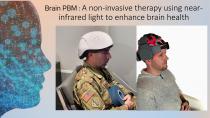
Brain PBM : A non-invasive therapy using near- infrared light to enhance brain health
Open the catalog to page 3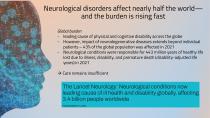
Neurological disorders affect nearly half the worldand the burden is rising fast Global burden - leading cause of physical and cognitive disability across the globe - However, impact of neurodegenerative diseases extends beyond individual patients - 43% of the global population was affected in 2021 - Neurological conditions were responsible for 443 million years of healthy life lost due to illness, disability, and premature death (disability-adjusted life years) in 2021 ^ Care remains insufficient The Lancet Neurology: Neurological conditions now leading cause of ill health and disability globally,...
Open the catalog to page 4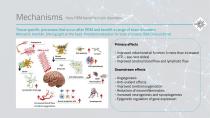
Tissue specific processes that occur after PBM and benefit a range of brain disorders Michael R. Hamblin, Shining light on the head: Photobiomodulation for brain disorders, BBA Clinical (2016) Increased blood flow Cerebral oxygenation * Neuron progenitor cells ^ - Improved mitochondrial function (=more than increased ATP - see next slides) - Improved cerebral blood flow and lymphatic flow - Anti-oxidant effects - Improved cerebral oxygenation - Increased neurogenesis and synaptogenesis - Epigenetic regulation of gene expression
Open the catalog to page 5
Case Study I - Dementia
Open the catalog to page 6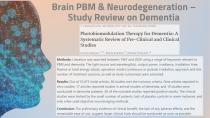
Brain PBM & Neurodegeneration -Study Review on Dementia > J Alzheimers Dis. 2021;83(4):1431-1452. doi: 10.3233/JAD-210029. Methods: Literature was searched between 1967 and 2020 using a range of keywords relevant to PBM and dementia. The light source and wavelength(s), output power, irradiance, irradiation time, fluence or total energy (dose), operation mode (continuous or pulsed) irradiation, approach and site, number of treatment sessions, as well as study outcome(s) were extracted. Results: Out of 10,473 initial articles, 36 studies met the inclusion criteria. Nine articles reported in vitro...
Open the catalog to page 7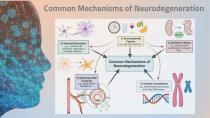
Common Mechanisms of Neurodegeneration ROS astroglia subtypes. dysfunction, increased Common Mechanisms of Neurodegeneration 4) Neurovascular e.g., GWAS-linked risk factors, sex-linked differences...
Open the catalog to page 8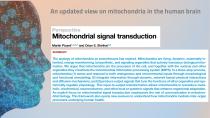
human brain An updated view on mitochondria in the Perspective The analogy of mitochondria as powerhouses has expired. Mitochondria are living, dynamic, maternally inherited, energy-transforming, biosynthetic, and signaling organelles that actively transduce biological information. We argue that mitochondria are the processor of the cell, and together with the nucleus and other organelles they constitute the mitochondrial information processing system (MIPS). In a three-step process, mitochondria (1) sense and respond to both endogenous and environmental inputs through morphological and functional...
Open the catalog to page 9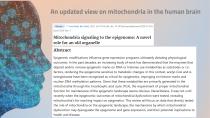
An updated view on mitochondria in the human brain Review > Free Radie Biol Med. 2021 Jul:170:59-69. doi: 10.1016/j.freeradbiomed.2020.11.016. Epigenetic modifications influence gene expression programs ultimately dictating physiological outcomes. In the past decades, an increasing body of work has demonstrated that the enzymes that deposit and/or remove epigenetic marks on DNA or histones use metabolites as substrates or cofactors, rendering the epigenome sensitive to metabolic changes. In this context, acetyl-CoA and a-ketoglutarate have been recognized as critical for e pi genetics, impinging...
Open the catalog to page 10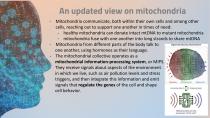
Mitochondria communicate, both within their own cells and among other cells, reaching out to support one another in times of need: - healthy mitochondria can donate intact mtDNA to mutant mitochondria - mitochondria fuse with one another into long strands to share mtDNA Mitochondria from different parts of the body talk to one another, using hormones as their language. The mitochondrial collective operates as a mitochondrial information-processing system, or MIPS. Sensing integration Signaling Incoming data >)) >)) Outgoing data They receive signals about aspects of the environment in which we...
Open the catalog to page 11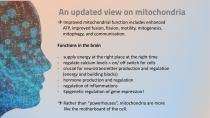
An updated view on mitochondria -> Improved mitochondrial function includes enhanced ATP, improved fusion, fission, motility, mitogenesis, mitophagy, and communication. - supply energy at the right place at the right time - regulate calcium levels = on/ off switch for cells - crucial for neurotransmitter production and regulation (energy and building blocks) - hormone production and regulation - Epigenetic regulation of gene expression! -> Rather than "powerhouses", mitochondria are more like the motherboard of the cell.
Open the catalog to page 12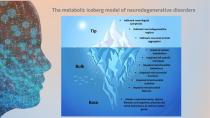
The metabolic iceberg model of neurodegenerative disorders
Open the catalog to page 13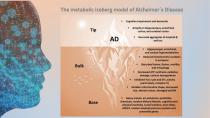
The metabolic iceberg model of Alzheimer´s Disease
Open the catalog to page 14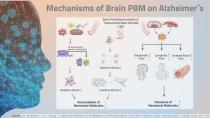
NF-kp upregulates genes for antioxidants Cerebral Blood Flow Oxidative Stress Cytokine Storms Accumulation of Neurotoxic Molecules Clearance of Neurotoxic Molecules Figure by Su, M., Nizamutdinov, D., Liu, H., & Huang, J. H. (2023). Recent Mechanisms of Neurodegeneration and Photobiomodulation in the Context of Alzheimer's Disease. International journal of molecular sciences, 24(11), 9272
Open the catalog to page 15
Case Study II – Alzheimer´s
Open the catalog to page 16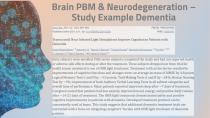
Brain PBM & Neurodegeneration -Study Example Dementia Aaina Pis. 2021 Jul; 12(4): 954-963. PMCID: PMC8219492 Published online 2021 Jul 1. doi: 10.14336/AD.2021.0229 PMID: 34221541 Transcranial Near Infrared Light Stimulations Improve Cognition in Patients with Dementia Sixty subjects were enrolled. Fifty-seven subjects completed the study and had not reported health or adverse side effects during or after the treatment. Three subjects dropped out from trial for health issues unrelated to use of tNIR light treatment. Treatment with active device resulted in improvements of cognitive functions...
Open the catalog to page 17All Weber Medical catalogs and technical brochures
 Endolight Band
11 Pages
 Mental Health Workshops
8 Pages
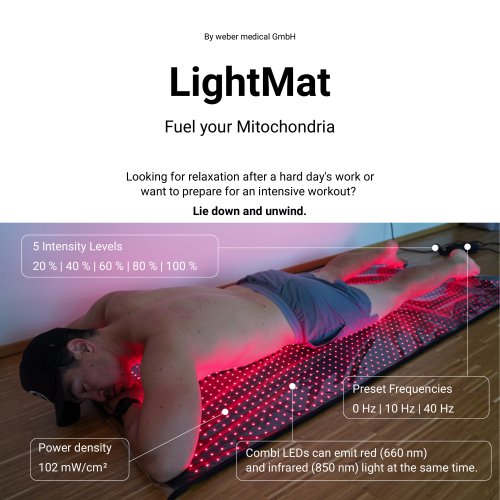 Light Mat
2 Pages
 Product Flyer Endolaser
9 Pages
 WeberMedical
34 Pages