
- Catalogs
- Welch Allyn
- RetinaVue700

- Products
- Catalogs
- News & Trends
- Exhibitions
RetinaVue700

RetinaVue700
The Welch Allyn RetinaVue 700 Imager is a high-resolution ophthalmic camera for capturing, saving, and transmitting digital images of the eye. It is intended for prescription use and is safe when used as instructed.
The device captures images of anterior and posterior ocular structures, including the retina, macula, and optic disc.
Users must adhere to warnings and cautions to prevent injury, equipment damage, or data loss. Key warnings include avoiding unapproved accessories, flammable environments, and unauthorized batteries. Cautions include avoiding exposure to vibration, dust, and liquids, and ensuring proper installation and service by authorized personnel.
Instructions for initial setup include unpacking, startup, and camera registration via USB and Wi-Fi. Advanced options like Static IP and FIPS Wi-Fi are also covered.
The device offers Auto Exam and Manual Exam modes, with guidance on image quality, exam protocols, and patient management. Users can perform retina exams, manage patient data, and update software.
Regular maintenance includes cleaning and disinfection, with troubleshooting guidance for wireless connectivity and other issues.
The manual outlines device specifications, radio compliance, and standards adherence, ensuring users are informed of technical and regulatory aspects.
A comprehensive list of symbols aids in understanding warnings, power indicators, connectivity, and environmental conditions.
The device must connect to computers complying with IEC 60950-1, EN 60950-1, UL 60950-1 standards for USB safety. Avoid turning off the device while saving data to prevent loss.
The device should not be submerged in liquid or used with automatic cleansing machines. Cleaning and disinfection should follow manufacturer instructions. It can be used on patients with eye implants, but images may be blurry with cataracts or other opacities.
Caution is advised near implanted devices due to magnetic fields. Design measures limit interference, but risks cannot be excluded.
The face cup and Anterior Imaging Spacer use magnets and should be used cautiously with patients having cranial implants. Clean and disinfect the face cup after each use.
Do not open or repair the battery charger. Use approved batteries and accessories to avoid fire, explosion, or damage. The power plug should be easily accessible for emergency disconnection.
The package includes the device, USB cable, wall adapter, battery, Anterior Imaging Spacer, wrist strap, instructions, and lens cloth. Report missing items to Hillrom Technical Support.
Install and charge the battery before use. Proper disposal and recycling of batteries are essential to avoid hazards.
Insert the power supply connector gently to avoid damage. The device requires a 5-hour charge before first use.
The power button is multifunctional, and the device performs a self-test on startup. Configure language, date, and time settings during initial setup. Firmware updates require a computer connection and safe ejection methods.
Ensure files are fully copied before ejecting the device. Remove the USB cable and confirm firmware installation. The update process takes a few minutes, and a successful update will prompt a device restart. Upon reboot, select language, date, time, continent, and location settings. Choose between practice mode or proceed to camera registration.
Practice mode allows users to familiarize themselves with the camera without registration. Data collected in this mode is not preserved. To exit, follow prompts to complete camera registration.
Registration is required to send exams for overread via the RetinaVue Network. Choose between USB or Wi-Fi registration based on connectivity preferences.
For Static IP Wi-Fi registration, manually enter network IP information. Complete registration through the RetinaVue Network Customer Portal.
Optional Device Access Code can be set for additional security. Resetting registration settings will delete saved exams.
Detailed instructions for setting up and registering the device are provided, including steps for completing the initial setup and resetting the device to factory settings if necessary.
The device supports secure Wi-Fi authentication types such as WPA2-PSK and WPA2 Enterprise. Instructions are provided for enabling FIPS mode and completing Wi-Fi camera registration.
The document outlines how to use the device for performing exams, creating new patients, and capturing images. It describes the Auto exam mode, which includes features like exam protocol selection and automatic image capture.
Images are scored based on quality: good quality (green, scores of 40+), acceptable quality (yellow, scores 20-39), and unacceptable quality (red, scores 0-19).
The face cup is used to align the patient's eyes and block ambient light. Warnings are provided regarding the use of magnets in the face cup, especially for patients with cranial implants.
Available exam protocols include Retina (RET) and Anterior (ANT). Instructions for selecting and using these protocols are provided.
A tutorial guides users through starting an exam, aligning the camera, and capturing images. Instructions for preparing patients, including having them sit in a dark room to dilate pupils and removing glasses, are provided.
Detailed steps for conducting a retina eye exam are provided, emphasizing image quality and guidance on handling low-quality images.
Instructions for creating new patients, editing patient data, and searching for scheduled patients are included. The document also covers saving and submitting exams to the RetinaVue Network Customer Portal.
To search for a patient, access the main Patients screen and use the on-screen keyboard to enter the patient's last name, first name, or Patient ID. Patients created on the camera are considered 'scheduled' once saved.
Instructions for performing Retina and Anterior Image eye exams are provided. Exams can be deleted or submitted from the Exam summary screen.
Images are assessed for quality, with scores indicating likelihood of being read. Low-quality images should be deleted. Additional images can be captured using the existing protocol.
Patients and exams can be deleted from the device, but this action is irreversible.
To update the software, download the update from the RetinaVue website and transfer it to the device using a USB cable.
The main Patients screen includes areas for device status, patient list, and navigation. The device status area displays model, clinic name, time, connection status, and battery condition.
Practice mode allows users to practice using the device without affecting patient data. Exiting practice mode deletes all practice exams.
Instructions for using practice mode include selecting the patient name or number, positioning the device, and capturing images.
Access the Navigation Menu to select or change clinics. Ensure Wi-Fi connection is available to switch clinics.
Modify Wi-Fi settings, adjust device defaults, and access advanced settings for firmware updates and network configurations.
Options to power down, enter sleep mode, or exit sleep mode are available.
Set a Device access code for additional security, with a numeric code between 1 and 18 digits.
Administrators can set and reset the Device Access Code via the RetinaVue Network Customer Portal. This code enhances security by preventing unauthorized access to patient information.
The Advanced Settings Code provides additional security for accessing advanced settings on the device.
Users can manage wireless network settings by saving, updating, or forgetting network credentials directly from the device.
Manual mode allows advanced users to control image capture settings such as focus, brightness, and lens movement.
For anterior imaging of ocular structures, the Anterior Imaging Spacer must be attached to the device.
Steps for conducting an anterior image exam are provided, including selecting the protocol, inserting the spacer, and capturing images.
Clean and disinfect the face cup after each use to prevent cross-contamination. Avoid direct contact of the imaging spacer with patients having cranial implants.
Enable NTP for automatic date and time updates via Wi-Fi. Wireless certificate support allows loading of client and CA certificates for secure connections.
Common issues include dirty lenses, small pupils, and low battery levels. Solutions involve cleaning lenses, adjusting room lighting, and ensuring the device is charged.
Guidance for resolving USB connection, battery issues, wireless connectivity, and network errors is provided.
Instructions for cleaning and disinfection, including approved cleaners and disinfection process, are provided.
The device has a field of view of 60 degrees horizontally and 45 degrees vertically, with a working distance of 19-21 mm. It supports both auto and manual capture with a 5-megapixel resolution.
The device complies with various international standards including IEC 60601-1 and ISO 10940.
Follow the manual's instructions for cleaning and disinfection. Ensure all patient-related data is deleted, with an option for data backup before deletion.
Disassemble components for recycling based on material type. Adhere to local laws for safe disposal of medical devices.
The product complies with standards for electromagnetic interference, mechanical safety, performance, and biocompatibility. However, risks remain from electromagnetic hazards, mechanical hazards, misuse, and biological triggers.
Use wireless features according to manufacturer instructions. The device complies with FCC rules for Class B digital devices.
The device meets IEC 60601-1-2 standards for electromagnetic compatibility.
The device uses RF energy for internal functions and complies with CISPR 11 standards.
Lists various accessories and parts for the device, including batteries, chargers, power supplies, and service programs.
Comprehensive and Premium Service Programs are available for different durations.
Includes part numbers for the Startup Guide, Technique Guide, Pedestal Stand Assembly Instructions, and Premium Hard Storage Case.
The product is warranted to be free from defects in material and workmanship for one year from the date of purchase. The warranty covers repair or replacement of defective products but excludes shipping costs and damages caused by improper handling, unauthorized repairs, or accidents.
Catalog excerpts

Instructions for use Software version 1.40.XX
Open the catalog to page 1
© 2022 Welch Allyn. All rights are reserved. To support the intended use of the product described in this publication, the purchaser of the product is permitted to copy this publication, for internal distribution only, from the media provided by Welch Allyn. No other use, reproduction, or distribution of this publication, or any part of it, is permitted without written permission from Welch Allyn. Legal Statement. Welch Allyn, Inc. (“Welch Allyn”) assumes no responsibility for any injury to anyone that may result from (i) failure to properly use the product in accordance with the instructions,...
Open the catalog to page 2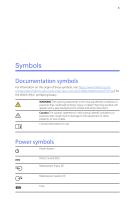
Symbols Documentation symbols For information on the origin of these symbols, visit https://www.hillrom.com/ content/dam/hillrom-aem/us/en/sap-documents/LIT/80022/80022945LITPDF.pdf for the Welch Allyn® symbols glossary. WARNING The warning statements in this manual identify conditions or practices that could lead to illness, injury, or death. Warning symbols will appear with a grey background in a black and white document. Caution The caution statements in this manual identify conditions or practices that could result in damage to the equipment or other property, or loss of data. Consult instructions...
Open the catalog to page 5
Rechargeable battery Connectivity symbols USB Wireless Wireless radio symbols Non-ionizing electromagnetic radiation Wireless signal strength Best (4 bars) • Good (3 bars) • Fair (2 bars) • Weak (1 bar) • No signal (no bars) • FCC ID The identification number assigned by the Federal Communication Commission Australian Communications and Media Authority (ACMA) Radio Compliance Mark (RCM) Shipping, storing, and environment symbols Temperature limit
Open the catalog to page 6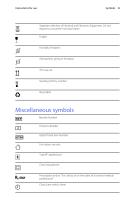
Separate collection of Electrical and Electronic Equipment. Do not dispose as unsorted municipal waste. Fragile Humidity limitation Atmospheric pressure limitation Stacking limit by number Miscellaneous symbols Reorder Number Product Identifier Global Trade Item Number For indoor use only Type BF applied part Prescription only or "For Use by or on the order of a licensed medical professional" Clock; time switch; timer
Open the catalog to page 7
Serial Number Medical Device Process indicator for activities like connecting to network or connecting to computer Battery charge level indicators Device is running on battery and charge is between 75 and 100 percent. Device is running on battery and charge is below 75 percent. Device is running on battery and charge is below 50 percent. Device is running on battery and charge is below 25 percent. Device is running on battery and charge is near 0 percent. Device is connected to a power supply.
Open the catalog to page 8
Introduction Intended use The Welch Allyn RetinaVue® 700 Imager (RV700) is a high-resolution ophthalmic camera used to acquire, save and transmit digital images of the human eye. Anterior and posterior ocular structures such as the surface of the eye, cornea, and fundus including retina, macula and optic disc can be imaged. It is a prescription use only medical device. About warnings and cautions The RetinaVue 700 Imager system includes the camera and any related applications or servers. Please read all instructions for use to ensure you understand all related warnings. Please also read any...
Open the catalog to page 9
General warnings, cautions, and notes WARNING When manually entering patient information, do not use the same patient identifier for multiple patients. This may result in inaccurate data association. WARNING Operating the device in the presence of a flammable anesthetic mixture with air, oxygen, or nitrous oxide; in oxygenenriched environments; or in any other potentially explosive environment may cause a fire and explosion hazard. WARNING Do not use batteries from other sources. This may result in excessive temperatures, fire, or explosion. WARNING To prevent fire or electrical shock, do not...
Open the catalog to page 10
CAUTION Do not sterilize the device. CAUTION All servicing of this equipment is to be performed by Welch Allyn, Inc. or by a center approved by Welch Allyn, Inc. CAUTION This device needs to be installed and put into service according to the EMC information provided herein. CAUTION Portable and mobile RF communications equipment can affect the RetinaVue 700 Imager performance. CAUTION Input overload can occur in proximity to defibrillator or electrocautery devices. CAUTION This device is not protected against the ingress of water and should not be used in the presence of liquids which may enter...
Open the catalog to page 11
CAUTION Do not submerge the device in liquid or allow liquid to enter the interior of the device. CAUTION Do not use automatic cleansing machines or sterilization. CAUTION Consult the cleaning and disinfection agent manufacturer instructions for their proper use and germicidal efficacy, prior to their use. CAUTION Consult your facility's procedures and the cleaning and disinfection agent manufacturer instructions for recommended Personal Protective Equipment and other safety precautions such as ventilation, etc.. NOTE The RetinaVue 700 Imager can be used on patients with eye implants and intraocular...
Open the catalog to page 12
WARNING Patient injury risk. The face cup of the RetinaVue 700 Imager uses magnets to attach to the device. If your patient has any type of cranial implant, it is advisable to reduce direct contact of the face cup's magnets with the patient's skin surface containing the implant. Warnings and cautions related to accessories Cautions related to the pedestal CAUTION To avoid camera damage, remove camera from pedestal prior to transport. CAUTION To avoid camera damage, position the pedestal on a stable surface to reduce the likelihood of shock, bump, or vibration hazards. Warnings and cautions related...
Open the catalog to page 13
WARNING Electric shock hazard. Before cleaning the battery charger, disconnect the AC power cord from the mains outlet and the power source. WARNING Do not use batteries from other sources. This may result in excessive temperatures, fire, or explosion. CAUTION Do not modify this equipment without authorization of the manufacturer. CAUTION Use appropriate power plug for your country. NOTE The removal of the plug from the socket provides the means of isolation from the mains power supply. The user is reminded to keep this means of disconnection easily accessible in case of emergency. Caution related...
Open the catalog to page 14All Welch Allyn catalogs and technical brochures
 Diagnostic Cardiology Suite
8 Pages
 SYNCLARA COUGH SYSTEM
5 Pages
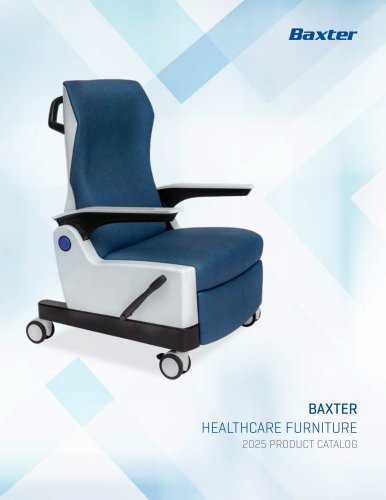 HEALTHCARE FURNITURE
11 Pages


Archived catalogs
 ABPM 6100
4 Pages
 Durashock
2 Pages
 ABPM 7100
12 Pages
 SURVEYOR™ S4
3 Pages
 SCALE-TRONIX®
3 Pages
 SureTemp® Plus
34 Pages
 Welch Allyn ABPM 7100
4 Pages
 Ophthalmoscope and iExaminer
2 Pages
 Connex® Spot Monitor
4 Pages
 Advancing Frontline Care
12 Pages
 Insight™
2 Pages
 KleenSpec®
3 Pages
 Connecting Health o meter
3 Pages
 Integrated Wall System
3 Pages
 CP 150 Electrocardiograph
4 Pages
 Protecting Patient Privacy
2 Pages
 GS 777 Veterinary, Brochure
2 Pages
 Spot LXI Wireless Module
2 Pages
 Spot Vital Signs LXI
2 Pages
 Green Series Lights for Vets
2 Pages
 Lighting Products
8 Pages
 Cardiopulmonary Solutions
4 Pages
 PC-Based Resting ECG
4 Pages
 Holter Monitor
2 Pages
 CP 200 Electrocardiograph
4 Pages
 CP 100 Electrocardiograph
2 Pages
 CP 50 Electrocardiograph
2 Pages
 CP 50 - Hospitals
2 Pages
 Connex VM
4 Pages
 Veterinary Stethoscope
1 Page
 SET ME UP Program Rewards
4 Pages
 READY. SET. SAVE
5 Pages
 EpiScope
2 Pages
 Welch Allyn Stethoscopes
2 Pages
 Women's Health
8 Pages
 Ambulatory Surgery Solutions
5 Pages
 Endoscopy, Full Line Catalog
10 Pages
 Stethoscopes, Full Line Catalog
12 Pages
 Ear Wash System
4 Pages
 AM 282 Manual Audiometer
2 Pages
 LumiView?
3 Pages
 Laryngoscope Brochure
8 Pages
 Harvey? Elite® Stethoscope
4 Pages
 SureSight? Vision Screener
4 Pages
 Elite? Retinoscope
2 Pages
 PanOptic? Ophthalmoscope
2 Pages


- Hospital bed
- Hospital wardrobe
- Surgical lighting system
- Inclinable bed
- LED surgery light
- Trendelenburg bed
- Thermometer
- Ceiling-mounted surgical light
- Medical thermometer
- Patient monitor
- Endoscope
- Wardrobe with drawer
- Digital thermometer
- Surgical light with control panel
- 1-unit wardrobe
- Blood pressure patient monitor
- Digital electrocardiograph
- EKG
- Stethoscope
- 96 surgical light