
- Catalogs
- Xylem Analytics
- Laboratory Products Catalog 2012


Laboratory Products Catalog 2012
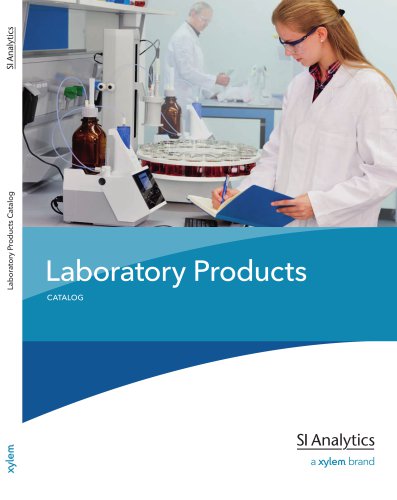
Laboratory Products Catalog 2012
Xylem is a global leader in water solutions, employing 12,500 people to develop technologies for water use, conservation, and reuse. They serve over 150 countries with a strong legacy of innovation.
The catalog includes a wide range of laboratory products such as electrochemical meters, electrodes, titrators, spectrophotometers, and viscometry products, essential for science, research, and production monitoring.
From 1997 to 2012, key developments included the introduction of electrodes, titration systems, and viscosity measurement systems, with notable products like the BlueLine range and TitroLine series.
- Electrochemistry: Laboratory and portable meters, various electrodes, and accessories.
- Titration: TitroLine and TITRONIC series, sample changers, and TitriSoft software.
- Spectrophotometry: Spectrophotometers for various applications.
- Viscometry: Automatic viscosity measurement systems and capillary viscometers.
SI Analytics offers optimized measurement systems with electrodes and meters for precise measurements, setting standards in electrochemical measurement technology.
SI Analytics values customer feedback in product development and aims to maintain strong client relationships.
The document details various laboratory instruments, focusing on specifications, features, and advantages, including models like Lab 8xx, Lab 9xx, and ProLab series, highlighting capabilities in pH, ISE, conductivity, and D.O. measurements.
- Lab 8xx Series: Reliable results with features like sensor recognition and GLP documentation.
- Lab 9xx Series: Conductivity measurement with wireless sensor recognition.
- ProLab 1000: High precision pH measurements with automatic calibration.
- ProLab 2000: Multi-parameter instrument for simultaneous measurements.
- ProLab 3000 and 4000: Advanced measurement features with user-friendly interfaces.
- High precision and reliable measurements with GLP documentation.
- Wireless sensor recognition enhances security.
- USB and RS232 interfaces for data communication.
- User recognition with electronic ID cards for secure usage.
Each instrument comes with a comprehensive kit including electrodes, buffer solutions, and power supply.
The document emphasizes the advanced features and capabilities of SI Analytics' laboratory instruments, highlighting their precision and reliability.
The document provides detailed specifications for laboratory measurement devices, focusing on parameters like mV, ISE, conductivity, pH, and temperature measurements.
The document provides specifications and features of laboratory and portable meters, including pH meters, conductivity meters, and multi-parameter meters from the Lab and ProLab series.
- Lab 860 and 870: Laboratory pH meters with data storage and interfaces.
- Lab 960 and 970: Conductivity meters with salinity and TDS measurement.
- ProLab 1000: Digital pH meter with GLP conformity.
- ProLab 2000: Multi-meter for various measurements.
- ProLab 3000 and 4000: Advanced features with menu-based operation.
- Handylab pH 11 and 12: Portable pH meters for fieldwork.
- Handylab LF 11 and 12: Portable conductivity meters.
- Handylab OX 12: Oxygen meter with data memory.
The document provides comprehensive information on the specifications, features, and accessories of the Lab, ProLab, and handylab series meters.
Battery-powered meters allow for independent operation with calibration data retention.
A range of precision pH electrodes is available for various applications.
pH range of -2.000 to +19.999 with high accuracy and data storage.
Measure conductivity, TDS, salinity, and temperature with data storage.
Conductivity measurement ranges with temperature compensation.
Suitable for oxygen measurements with data memory and automatic compensation.
Oxygen concentration range with high accuracy.
Measure multiple parameters with data memory and automatic calibration.
Wide range of measurement capabilities with high accuracy.
The document highlights the unique features, applications, and advantages of IoLine electrodes, emphasizing their stability, fast response times, and high accuracy.
- Iodine/Iodide Reference System: Offers unmatched stability and accuracy.
- Metal Ion-Free Reference System: Prevents contamination.
- Exchangeable Bridge Electrolyte: Allows optimal results.
- Wide Application Area: Suitable for various industries.
- Platinum Junction: Ensures high stability and fast response.
- ID Electrodes: Feature automatic recognition for precise measurements.
- GLP Compliance: Ensures complete documentation of calibrations and measurements.
The document provides specifications and ordering information for various pH combination electrodes, designed for different applications.
- Reference System: Iodine/Iodide and Silamid®.
- pH Range: 0 to 14.
- Temperature Range: -5 to +100°C.
- Shaft Material: Glass, with some plastic options.
- Membrane Shape: Sphere, cylindrical, spear, and flat.
- Connection Types: DIN, BNC, Metrohm, and others.
- IoLine pH Combination Electrodes: Include temperature sensors.
- ScienceLine pH Combination Electrodes: Feature plug heads and fixed cables.
- Micro, Spear Tip, and Surface Electrodes: Designed for specific applications.
- Metal Combination Electrodes: Suitable for titrations.
- Different membrane glass types and resistances.
- Integrated temperature sensors in some models.
- Various electrolytes depending on the application.
The document provides specifications and descriptions of various electrodes and sensors used in scientific measurements.
- pH Glass Electrodes: Glass shaft with specific membrane shape.
- Metal Electrodes: Various types with specific temperature ranges.
- Use different electrolytes depending on the reference system.
- Equipped with temperature sensors and available in various configurations.
- Available with different connection types and sensors.
- Include ammonia, sodium, and oxygen electrodes.
- Robust electrodes for general applications.
- Specified by order number, type, length, and temperature range.
- Various connection options and materials used.
- BlueLine 13 pH: Glass shaft, KCl electrolyte, suitable for -5 to +100°C.
- BlueLine 16 pH: Micro electrode with platinum junction.
- BlueLine 21 pH: Spear tip electrode with Referid® electrolyte.
- BlueLine 27 pH: Surface electrode with KPG® annular gap junction.
- BlueLine 54/56 pH: Combination electrodes with plastic shaft.
- BlueLine 31/32 Rx: Redox electrodes with glass or plastic shaft.
- BlueLine 48 LF: Conductivity cell for low ionic media.
- Various connection cables available with different plug types.
- FIOLAX® ampoules with high reliability and long shelf life.
- Standard and technical buffer solutions available.
- Available for reference electrodes and specific measurements.
- Bridge and standard solutions for various ions.
The document provides information on solutions and accessories for conductivity and pH measurements.
The document provides a guide on pH measurement systems, focusing on calibration procedures and potential errors.
- One-point Calibration: Quick but only suitable for comparative measurements.
- Two-point Calibration: Determines both zero point and slope of the electrode.
- Multipoint Calibration: Provides a more accurate calibration curve.
Alkali ions can interfere with pH measurements, known as sodium error, affecting accuracy.
The document provides specifications, applications, and advantages of ProcessLine electrodes and titration equipment.
- Designed for heavy-duty process applications.
- Low maintenance with high accuracy and durability.
- Includes TITRONIC® 500 and TitroLine® series titrators.
- Features high visibility displays and multiple connectivity options.
- Ideal for challenging conditions, offering stable measurements and cost savings.
The document provides information on titration methods and applications using the TitroLine® series.
Rinse electrodes and titration tips after each use for accuracy.
The document provides specifications and features of titration devices, including the TitroLine® series and TITRONIC® universal.
The document provides specifications and ordering information for laboratory equipment, including titration systems and spectrophotometers.
The document provides specifications and applications of spectrophotometers and viscometry systems.
- QuickLock System: Allows easy exchange of accessories.
- Automatic Accessories: Includes cell changers and sippers.
The document provides information on AVS® 470 and AVS® 370 systems for viscosity measurements.
The document provides specifications and operational procedures for AVS® Pro III systems.
The document provides specifications and guidelines for viscometers and thermostats.
The document provides specifications and usage guidelines for various viscometers.
SI Analytics has been a pioneer in electrochemical measuring methods and capillary viscometry, contributing significantly to science and research.
- 1997: Launch of BlueLine laboratory electrodes and Visco-Clock.
- 1998: Development of TitriSoft 2.0 software.
- 1999: Introduction of industrial electrodes and AVS®Pro system.
- 2000: New series of piston burettes and titrators.
- 2001: Development of SteamLine process electrodes.
- 2002: Launch of 'plus' product line and TitriSoft 2.5 software.
- 2003: Introduction of AVS® 370 system and company name change.
- 2004: Development of ScienceLine product line and AVS® 470 system.
- 2005: Introduction of Lab meters family with wireless sensor recognition.
- 2006: Launch of ProLab family of multifunctional instruments.
- 2007: Introduction of ProLab 3000 and 4000 instruments.
- 2008: Launch of IoLine electrodes with a patented reference system.
- 2009: Company becomes SI Analytics GmbH.
- 2010: SI Analytics becomes part of ITT, USA.
- 2011: Introduction of new titrators and TITRONIC® burette.
- 2012: Expansion of TitroLine® series and introduction of Memosens® electrodes.
SI Analytics, part of Xylem Inc., focuses on innovative solutions for water management, with a presence in over 150 countries.
For North America: SI Analytics, College Station, Texas, USA. For Germany: SI Analytics GmbH, Mainz, Germany.
Catalog excerpts

What can Xylem do for you? We’re 12,500 people unified in a common purpose: creating innovative solutions to meet our world’s water needs. Developing new technologies that will improve the way water is used, conserved, and re-used in the future is central to our work. We move, treat, analyze, and return water to the environment, and we help people use water efficiently, in their homes, buildings, factories and farms. In more than 150 countries, we have strong, long-standing relationships with customers who know us for our powerful combination of leading product brands and applications expertise, backed by a legacy of innovation. Hattenbergstrasse 10 55122 Mainz Germany Phone: Fax: E-Mail: Internet: P.O. Box 9010 151 Graham Road College Station, Texas 77842-9010 USA Toll-free: Local: E-Mail: Internet: Laboratory Products Catalog For customers in North America: SI Analytics For more information on how Xylem can help you, go to www.xyleminc.com Laboratory Products CATALOG SI Analytics is a trademark of Xylem Inc. or one of its subsidiaries. © 2012 Xylem, Inc.
Open the catalog to page 1
With this new catalogue we are offering a broader selection of New BlueLine range of laboratory electrodes and VP plug system. Electrodes with certified pressure and temperature range. Market launch of the Visco-Clock for capillary viscosity measurement. Development of TitriSoft 2.0 software (as of WIN 95). Range of industrial electrodes up to 10 bar and 135 °C, SMEK plug system in IP 68 version. New Type A pH glass, rapid reaction in drinking water. Market launch of the fully automatic AVS®Pro viscosity measurement system for high sample throughput. Introduction of a completely new series of...
Open the catalog to page 2
Laboratory meters Portable meters for field analysis Laboratory electrodes ScienceLine electrodes Resistance thermometers BlueLine electrodes Connection cables Electrolyte bridges, other accessories Notes for successful measurement Index laboratory electrodes ProcessLine electrodes for analytics in process TW alpha plus sample changer and TW 7450 Specifications TitroLine® and TITRONIC® TitroLine® universal TitroLine® easy Capillary viscometry Automatic viscosity measurement systems Capillary viscometers www.si-analytics.com - your information platform Innovative electrochemistry, innovative viscometry...
Open the catalog to page 3
NEW: The titrator series TitroLine® and the piston burette TITRONIC® 500 TITRONIC® 500 Intelligent interchangeable modules with 5, 10, 20 and 50 ml volume capacity. ® TITRONIC Connect to a printer and/or an analytical balance. Remote control access via RS232 or USB interface. High visibility, full color display that can be easily viewed from a distance and at extreme angles. Versatile and exible for a variety of applications.
Open the catalog to page 4
NEW: TitroLine® 7500 KF and 7500 KF trace KF titrators TitroLine® 7500 KF Beside the features which are mentioned in the general part of the titration family, the TitroLine® 7500 KF offers more performance The volumetric generalist for a wide range of use. With standard methods for different applications (titer determination, blank value…). With intelligent interchangeable modules. TitroLine® 7500 KF trace Coulometric KF titrator for determining even smallest water contents. Easiest handling: Determination of concentration (titrant) of the titration solution is obsolete.
Open the catalog to page 5
TW 7400 with 72 sample rack TW 7400 Developed for high sample throughput. Controlling from PC or titrator TitroLine® 7000. Very quick and simple to change sample racks and titrator heads.
Open the catalog to page 6
Content Meters Performance overview Which meter do I need? Technical Data Ordering information
Open the catalog to page 7
Laboratory Meters Lab and ProLab Series: A standard for electrochemical measurements SI Analytics measurement systems consisting of electrodes challenge was to develop meters optimized to our elec- trodes and buffer solutions. Our Electrodes are used by professionals in laboratories all over the world. This comes as no surprise as we have been involved in the development, optimization and production of electrodes for more than 75 years. Our customers benefit from our expertise in glass composition and manufacture. The pH, ISE, conductivity and multi parameter measuring instruments from SI Analytics...
Open the catalog to page 8
Decision tree Laboratory measuring instruments Lab and ProLab series: Decision tree for laboratory pH measuring instruments Calibration points Buffer sets 22 buffer sets 10 data sets of Calibration history calibration history Data output/interface
Open the catalog to page 10
calibration history laboratory conductivity instruments Password protection
Open the catalog to page 11
Measuring pH with the Lab 8xx series The new standard in the beginners‘ class Quality saves time All meters from the Lab 8xx series feature our advanced measuring algorithm specially adapted to our electrodes. The result is a calibra- tion and measurement with exceptional precision – but in much shorter time! Keeping reliability in view: The CalClock... This unique combination of sensor evaluation and calibration timer control all relevant calibration settings. The sensor evaluation shows the electrode quality. The quality criteria are slope, zero point and reaction time. The preset calibration...
Open the catalog to page 12
Wireless sensor recognition Laboratory practice improved – GLP with our measurement systems Automatic sensor recognition A quality control dream: An instru- ment that automatically recognizes the electrode. Sensors with distinct identification wirelessly send the data to the instrument. Incorrect measurements are avoided. Reliable and precise results with our instruments, electrodes and buffer solutions. ”CalClock” combines sensor recognition and calibration timer on the display. Simple GLP compliant documentation through perfect communication via USB (slave) and RS232 (Lab 850: only RS232)....
Open the catalog to page 13
Conductivity Meter Lab 960 GLP documentation at the highest Dual interface included Both RS232 and USB are integrated in the Lab 960. No adapter is required. Reliable documentation All GLP compliant calibration protocols and up to 800 stored data sets with time and identification can be recalled. 14.03.2012 08:53:54 Lab 960 02320025 CALIBRATION COND Cal Time : 14.03.2012 08:22:14 Cal Interval: 180d Cal Std.: 0.01 mol/l KCL 40.0 °C Conduct./Tref25: 1413µS/cm Cell Const : 0.650 1/cm Probe : +++ Calibration protocol
Open the catalog to page 14All Xylem Analytics catalogs and technical brochures
 Alyza IQ PO4
4 Pages


Archived catalogs
 TopLine Electrodes
5 Pages
 Visco
Visco48 Pages
 SI Messgeber
52 Pages
 ViscoSystem® AVS 370
5 Pages
 ViscoClock plus
5 Pages
 TitroLine® 7800
9 Pages
 Capillary Viscometry
48 Pages
 Lab Meters
25 Pages
 Water distilling apparatus
2 Pages
 CT 72P
4 Pages
 WTW Lab and ield Instrumentation
188 Pages
 IoLine Electrodes
4 Pages
 ViscoClockPLUS
5 Pages
 Xylem Analytics FoodBeverage
8 Pages
 TitroLine® 7750
2 Pages
 Titration
49 Pages
 Portable Meters
11 Pages
 Process Electrodes
62 Pages
 The new titrators and burettes
48 Pages
 Content and Product News
4 Pages


- Laboratory testing system
- Monopolar electrode
- Straight electrode
- Control analyser
- Temperature testing system
- Digital thermoregulator
- Laboratory refractometer
- O2 analyzer
- Laboratory chiller
- Laboratory sensor
- Laboratory thermostat
- Environmental analysis tester
- Digital refractometer
- Benchtop spectrophotometer
- Calibration analyser
- UV-visible spectrophotometer
- USB testing system
- Programmable thermostat
- Spectrophotometer with USB port