
- Catalogs
- Z-Systems AG
- Z5-TL Surgical and prosthetic concept

Z5-TL Surgical and prosthetic concept

Z5-TL Surgical and prosthetic concept
The Z-SYSTEMS implant system, developed since 2004, focuses on safety and is intended for dental professionals experienced in implant procedures. This document outlines the essential surgical and prosthetic steps for the Z5-TL implant system.
- Material and Biocompatibility: Z5-TL implants are made from zirconium oxide Y-TZP bioceramics, offering high biocompatibility and osseointegration similar to titanium.
- Indications: Suitable for patients with metal allergies, designed for delayed loading, and recommended for use by trained professionals.
- Certification: Complies with FDA, CE, ISO13485, and MDD93/42 EEC standards.
- Instruments and Protocols: Detailed drilling protocols and specific features of the Z5-TL implant are provided to ensure successful implantation.
- Postoperative Care: A recall protocol is recommended to monitor healing and integration.
- Healing and Abutments: Guidelines for fixing abutments and taking impressions with Z5-TL implants are outlined.
- Restorations: Includes temporary care, long-term temporary restorations, and final restorations for both single-tooth and edentulous jaw scenarios.
- Prophylaxis: Recommendations for maintaining implant health post-restoration.
- Implant Selection: Criteria include implant diameter, length, and position for optimal aesthetic and functional results.
- Restoration Types: Options include single-tooth crowns, implant-supported bridges, and Zloc prosthetic restorations.
- Guided Surgery: Use of 3D imaging and drilling templates is recommended for precise implant placement.
- Implant Positioning: Emphasizes parallel alignment and appropriate gingiva height measurement.
The document specifies the use of the DP230 depth gauge and states that with straight or angled Zloc abutments, the maximum divergence between implants is 30°. If the divergence exceeds 15° per implant or 30° between several implants, axial alignment must be corrected. The functional area of the Novaloc™ matrix is specified to ensure proper function.
The document provides a detailed surgical procedure and drilling protocol for the Z5-TL implant system, including the use of various drills and instruments, specifying their dimensions and purposes. It emphasizes protecting implants from macro movements during healing and suggests protective measures based on bone quality and patient compliance.
All instruments in contact with the surgical field are made of zirconium oxide, with cutting instruments made from high-strength ATZ ceramic. The document lists various instruments, their specifications, and their arrangement in the surgical cassette. It also provides guidelines for the inspection and maintenance of these instruments.
The document outlines the cleaning, disinfection, and sterilization processes for the Z5-TL implant system instruments. It emphasizes the importance of using validated processes and adhering to national legal and hygiene regulations. Detailed instructions for manual cleaning and disinfection are provided, along with recommendations for packaging and sterilization.
The general drilling protocol includes the use of round burrs and twist drills to prepare the implant bed. Drill stops are used to ensure precise drilling depth. The document provides specific recommendations for different bone classes and describes the preparation of the implant bed in detail.
The document recommends specific procedures for different bone classes and provides detailed steps for preparing the implant bed, including marking the implant site and using various drills and taps. It also highlights the importance of checking the implant axis and preparation depth with a depth gauge and taking x-rays when necessary.
The document outlines the procedure for widening the implant bed using a series of twist drills (TD285, TD325) to achieve specific diameters. The drilling depth is determined by the implant length (8, 10, 12 mm) and is controlled by depth stops on the drills. Maximum RPMs for each drill type are specified to ensure precision and safety during the procedure.
The Z5-TL implant is a two-piece, self-tapping tissue-level implant with a transgingival portion. It features an internal thread for securing abutment components. The implant is closed with a healing cap post-implantation, and various abutments are available for shaping soft tissue and final prosthetic restoration. The document emphasizes the importance of adhering to the drilling protocol and maintaining an insertion torque of 25–35 Ncm.
Implants are packaged in a sterile blister pack. The removal process involves rotating the implant holder and using an implant driver to insert the implant into the prepared osteotomy. The document provides detailed instructions for handling and securing the implant during this process.
After implantation, the healing cap is used to close the implant. Open/transgingival healing is recommended, and protective devices should maintain a space of 1.5–2.0 mm from the implant to ensure load-free healing. The document advises against exerting forces on the healing implants.
Regular hygiene examinations and consultations with the surgeon are recommended during the healing phase. Prophylactic checks should occur at 14 days, 6 weeks, and 3 months post-implantation to ensure successful integration without complications such as peri-implantitis or implant loosening.
The document details the use of healing abutments for soft tissue shaping and the selection of abutments based on prosthetic planning. It includes instructions for fixing abutments using basal screws and emphasizes the importance of sterilizing non-sterile components before use.
Impression posts and scan bodies are available for precise impression taking. The document provides guidance on selecting lab analogues for model fabrication and emphasizes the need for accurate alignment and fixation during this process.
Z5-TL implants require specific procedures for optimal restoration. The open-tray impression procedure necessitates a custom-made tray with perforations. Impression posts and laboratory analogues are single-use to ensure precision.
Temporary restorations must have a passive fit and occlusion contacts should be point-shaped. For long-term use, laboratory-fabricated, framework-reinforced restorations are recommended. Regular checks and adjustments are necessary.
Z5-TL implants can be restored with various materials, including all-ceramic and metal restorations. Adhesive extraoral cementation is not allowed. Restorations must be tension-free with weak static occlusal contact.
Final restorations can be fitted if there is no peri-implantitis, loosening, pain, or visible peri-implant gap.
Restorations must follow general guidelines, focusing on occlusion and periodontium-prophylactic design. Single-tooth and interdental gap restorations are possible, with specific guidelines for implant selection and distribution.
Bar constructions require careful planning, with recommendations for implant numbers and locations. Telescopic constructions have increased risk due to shear forces, requiring specific abutment distribution.
Use original Novaloc™ matrices for locator-type abutments. Proper assembly and retention adjustments are crucial.
Regular aftercare is essential, with checks for cement residues, occlusion, and hygiene. Prophylaxis should be performed regularly.
Use suitable cements for zirconium oxide. Temporary cementing of final restorations is not recommended.
Use Teflon-based tools for cleaning. Avoid ultrasound and abrasive pastes. Regular prophylaxis is necessary despite low plaque affinity.
Catalog excerpts

Surgical and Prosthetic Concept Tissue-Level Implant Z5-TL
Open the catalog to page 1
Z-SYSTEMS | Z5-TL | Surgical and Prosthetic Concept | 06 ⁄ 2022 Welcome to the world of ceramic implants The Z-SYSTEMS implant system is the result of many years of clinical and laboratory experience since 2004. Safety is our foremost priority. This basic information on the surgical and prosthetic procedure of the Z-SYSTEMS Implant System is intended to provide dentists, physicians, surgeons and dental technicians with a description of the most important surgical and prosthetic steps for the planning, treatment and procedure of the Z-SYSTEMS System. This manual cannot replace implantological...
Open the catalog to page 2
Z-SYSTEMS | Z5-TL | Surgical and Prosthetic Concept | 06 ⁄ 2022 General information General aspects and important information Material, biocompatibility and osseointegration Fundamentals of treatment planning Protective measures Surgical procedure ⁄ Drilling protocol Drilling protocol Removing the implant from the packaging Postoperative recall protocol Healing Abutments Fixing the abutment with Z5-TL implants Impressions with the Z5-TL implant Model fabrication Temporary care of Z5-TL implants Restoration with a laboratory-manufactured long-term temporary restoration after osseointegration...
Open the catalog to page 3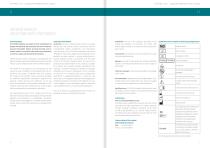
Z-SYSTEMS | Z5-TL | Surgical and Prosthetic Concept | 06 ⁄ 2022 Z-SYSTEMS | Z5-TL | Surgical and Prosthetic Concept | 06 ⁄ 2022 General aspects and important information General aspects Important information Availability: Not all of the products described in this Z-SYSTEMS implants are unique in their combination of Disclaimer: The Z5-TL implant system is part of an overall manual are available in all countries. For further infor- design and material. We expressly ask you to read this concept and may only be used in conjunction with the Explanation of the symbols on labels and package...
Open the catalog to page 4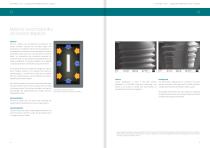
Z-SYSTEMS | Z5-TL | Surgical and Prosthetic Concept | 06 ⁄ 2022 Z-SYSTEMS | Z5-TL | Surgical and Prosthetic Concept | 06 ⁄ 2022 Material, biocompatibility and osseointegration Material All Z5-TL implants are manufactured according to the unique “Zirkolith®” process from zirconium oxide Y-TZP bioceramics in compliance with the ISO 13356 standard - it encompasses our experience in the development, material processing, quality assurance and finishing of zirconium oxide. The composition and production processes for zirconium oxide vary according to the requirements for the system component,...
Open the catalog to page 5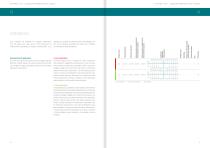
Z-SYSTEMS | Z5-TL | Surgical and Prosthetic Concept | 06 ⁄ 2022 Z-SYSTEMS | Z5-TL | Surgical and Prosthetic Concept | 06 ⁄ 2022 cal strength increases disproportionately with increasing sive bending moments (e.g. extended crowns, extension bridges, bridges with more than one pontic). Limited suit- require special planning. Telescopic or Locator-type abutment restoration on at least 4 implants in the mandibular and 6 implants in the maxilla is recommended. UPPER LEFT | 2nd Quadrant UPPER RIGHT | 1st Quadrant LOWER LEFT | 3rd Quadrant LOWER RIGHT | 4th Quadrant ability for telescopic...
Open the catalog to page 6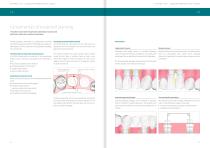
Z-SYSTEMS | Z5-TL | Surgical and Prosthetic Concept | 06 ⁄ 2022 Z-SYSTEMS | Z5-TL | Surgical and Prosthetic Concept | 06 ⁄ 2022 Fundamentals of treatment planning The patient must meet the generally valid implant surgery and prosthetic criteria for an implant restoration. Implant prosthetic restoration is a collaboration involving Planning the positionofthe implant the dentist/surgeon and dental technology and requires a During planning, the instructions for the hard tissue con- high degree of clinical experience and detailed knowledge figurations are to be complied with and soft tissue...
Open the catalog to page 7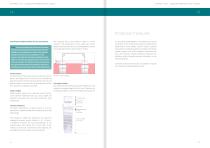
Z-SYSTEMS | Z5-TL | Surgical and Prosthetic Concept | 06 ⁄ 2022 Z-SYSTEMS | Z5-TL | Surgical and Prosthetic Concept | 06 ⁄ 2022 Protective measures Planning the implant position for Zloc restorations tions and avoid loading the implants beyond their For successful osseointegration, the implants must be pro- (1.85 mm if the overdenture is to be made with 0.5 mm CAVE: To ensure trouble-free function of the reten- The functional area of the Novaloc™ matrix is 1.35 mm tected from macro movements during the healing phase. gingiva clearance) above the surrounding gingiva to ensure Depending...
Open the catalog to page 8
Z-SYSTEMS | Z5-TL | Surgical and Prosthetic Concept | 06 ⁄ 2022 Z-SYSTEMS | Z5-TL | Surgical and Prosthetic Concept | 06 ⁄ 2022 Surgical procedure ⁄ Drilling protocol Drilling protocol Removing the implant from the packaging
Open the catalog to page 9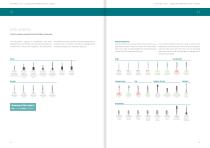
Z-SYSTEMS | Z5-TL | Surgical and Prosthetic Concept | 06 ⁄ 2022 Z-SYSTEMS | Z5-TL | Surgical and Prosthetic Concept | 06 ⁄ 2022 Instruments The Z5-TL surgery cassette from Z-SYSTEMS is to be used. The instruments required for implantation have been are labelled with the respective instrument designation to Material properties designed to be user-friendly. The rotating instruments are avoid any risk of confusion. The drills are arranged in the All instruments that come into direct contact with the sur- This alumina-reinforced zirconium oxide is ideal for the marked with a colour code...
Open the catalog to page 10
Z-SYSTEMS | Z5-TL | Surgical and Prosthetic Concept | 06 ⁄ 2022 Z-SYSTEMS | Z5-TL | Surgical and Prosthetic Concept | 06 ⁄ 2022 Preparation instructions for the surgical cassette The instruments must not touch each other. Exposure These descriptions contain detailed instructions for The Z5-TL implant system instruments are not supplied Completely disassemble all removable instruments (see to a 10-minute ultrasonic bath is recommended before cleaning, disinfecting and sterilising the Z5-TL implant sterile unless expressly marked as sterile. They must be instrument disassembly and assembly)....
Open the catalog to page 11All Z-Systems AG catalogs and technical brochures
 Surgical and Prosthetic Concepts
29 Pages
 Z5m(t)
1 Page
 Z5m
Z5m1 Page
 Z5-TL
Z5-TL1 Page
 Z5-BL
Z5-BL1 Page
 Z-Systems PRODUCT CATALOG
9 Pages
 SCIENTIFIC EVIDENCE
23 Pages


- Implant abutment
- Titanium implant abutment
- Straight implant abutment
- Dental surgery instrument kit
- Dental implant
- Internal implant abutment
- Conical dental implant
- Angled implant abutment
- Drill bit
- Straight dental implant
- Dental implant surgery instrument kit
- Hexagonal implant abutment
- Screw implant abutment
- Internal dental implant
- Cylindrical dental implant
- Dental implant analog
- Internal hexagon implant abutment
- Straight dental implant analog
- Dental drill bit