- Catalogs
- ZAP Surgical Systems Inc
- Whole-Body Dose of Patients Treated With ZAPX Intracranial Gyroscopic Stereotactic

Whole-Body Dose of Patients Treated With ZAPX Intracranial Gyroscopic Stereotactic
Whole-Body Dose of Patients Treated With ZAPX Intracranial Gyroscopic Stereotactic
Introduction
This document discusses the unintended whole-body dose received by patients during ZAP-X intracranial gyroscopic stereotactic radiosurgery. The study aims to measure and minimize the dose outside the primary treatment volume using a phantom-based setup and clinical measurements.
Technical Report
A phantom mimicking a patient's body was used to measure the dose with an ionization chamber and film-based dosimeters. Two treatment plans were generated for trigeminal neuralgia and solitary metastasis, focusing on a target near the cranium's center. The dose was measured at 30 cm from the isocenter, representing the thyroid position.
Results
The mean measured doses for the phantom and patient-based measurements were recorded. For trigeminal neuralgia, the mean dose was 4.995 mGy for the phantom and 3.34 mGy for patients. For solitary metastasis, the mean dose was 1.503 mGy for the phantom and 1.98 mGy for patients. These doses were a small percentage of the prescription dose, indicating minimal unintended exposure.
Discussion
The doses measured are significantly lower than those from other radiotherapy systems, adhering to international safety standards. This low radiation leakage is advantageous for pediatric treatments and potentially allows for the treatment of pregnant women, as the dose is reduced significantly at greater distances from the isocenter.
Conclusions
The ZAP-X system delivers the lowest whole-body dose among Linac and external beam radiotherapy systems, making it one of the safest options regarding secondary cancer risks.
Additional Information
The study was conducted without animal subjects, and informed consent was obtained from human participants. The author disclosed financial relationships with ZAP Surgical Systems, Inc.
Catalog excerpts
Open Access Technical Report Whole-Body Dose of Patients Treated With ZAPX Intracranial Gyroscopic Stereotactic Radiosurgery Review began 10/15/2025 Review ended 10/30/2025 Published 11/04/2025 © Copyright 2025 Weidlich. This is an open access article distributed under the terms of the Creative 1. Medical Physics, ZAP Surgical Systems, San Carlos, USA 2. Medical Physics, National Medical Physics & Dosimetry Company, Inc., Palo Alto, USA Commons Attribution License CC-BY 4.0., which permits unrestricted use, distribution, and reproduction in any medium, provided Corresponding author: Georg A. Weidlich, [email protected] the original author and source are credited. DOI: 10.7759/cureus.96093 Abstract During the delivery of radiosurgery treatments, a small dose is given unintentionally to the areas of the patient’s body outside the primary treatment volume. It is a common practice for radiotherapy platform developers to minimize the dose outside the primary radiation field by providing X-ray target shielding in the beam-defining collimator head of such systems. The amount of such doses was measured for the ZAP-X® delivery platform by designing a phantom-based set-up mimicking the patient and measuring the dose with an ionization chamber and OSLDs. Furthermore, during several clinical ZAP-X radiosurgery treatment deliveries, the dose received by patients was measured with film-based dosimeters. The results were determined as absolute values and as a percentage of the primary dose. Categories: Medical Physics, Radiation Oncology Keywords: in vivo, photon stereotactic radiosurgery, unintended dose, whole-body dose, zap-x® radiosurgery Introduction The delivery of radiation therapy in medicine has been accepted as one important pillar in the treatment of malignant and benign diseases. In addition to the benefits of radiation therapy, one unavoidable consequence is the delivery of a small amount of unintentional radiation to the patient’s body. This secondary radiation consists of X-ray target leakage and scatter radiation emanating from the treatment isocenter. Both types of radiation ultimately contribute to the dose received by the patient’s body [1]. Electrons are accelerated within the linear accelerator and focused onto the X-ray target, where they are converted by the Bremsstrahlung effect to photons. This conversion produces photons that are emitted in many directions, with their energy varying greatly depending on the interactions of the electron with the Xray target material. While the most common direction of emission is forward along the beam path, some of the photons are scattered at large angles in directions that are considered not useful for treatment. The primary beam is collimated by heavy and dense tungsten photon jaws or stereotactic tungsten cones to deliver the prescribed dose to the target volume, while other beam components that are not used for treatment are typically shielded by the linear accelerator collimator housing. The amount of allowable leakage radiation through the collimator is stipulated by the International Electrotechnical Commission (IEC), which specifies the minimum amount of shielding required by a linear accelerator system that will limit the unattended patient dose to an acceptable level (IEC 60601-2-1) [2]. A new specialized device for radiotherapy was introduced in 2016 with the advent of the gyroscopic radiosurgery system called the ZAP-X® [3]. The ZAP-X was designed for dedicated use in intra-cranial stereotactic radiosurgery and employs a relatively low photon energy of 3 MV for optimized beam penetrative quality in the cranium. In addition, the collimator housing was designed to minimize those components of the radiation that reach the patient’s body at large distances from the target. The collimator consists of a massive tungsten shield and a collimator wheel of 15 cm in diameter, which is equivalent to five tenth-value layers (TVLs) [4] at 3 MV photon energy. Collimator sizes of 4-25 mm can be selected. This shielding will result in an X-ray target leakage of approximately 0.001% of primary radiation [5]. The other form of secondary radiation is due to the scatter radiation caused by the interaction of the primary beam with the tissues of the target volume. The mean intensity of such scatter radiation is approximately 0.1%, but varies greatly in intensity and energy. For the ZAP-X, the energy of the X-ray target leakage is similar to the primary accelerating potential of 3 MV, while the scatter radiation is typically of much lower energy in the range of 100 keV to 200 keV. The combination of high-energy/low-intensity and low-energy/high-intensity radiation allowed the system to become self-shielded with relatively little shielding material embedded in the shells of the gyroscopic structure [6]. How to cite this article Weidlich G A (November 04, 2025) Whole-Body Dose of Patients Treated With ZAP-X Intracranial Gyroscopic Stereotactic Radiosurgery. Cureus 17(11): e96093. DOI 10.7759/cur
Open the catalog to page 1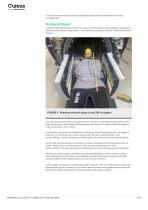
It is this unintended secondary radiation reaching the patient’s body unintentionally that is being investigated here. Technical Report A phantom mimicking the patient’s body was constructed consisting of an anthropomorphic head phantom and tissue-mimicking body shape made of a water-equivalent microsphere material. The phantom is shown in Figure 1. FIGURE 1: Phantom and test setup on the ZAP-X system Two intracranial treatment plans were generated for the treatment of trigeminal neuralgia (TGN) and for a solitary metastasis, as indicated below. Each treatment plan consisted of a single isocenter,...
Open the catalog to page 2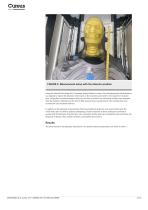
FIGURE 2: Measurement setup with the detector position Using the onboard kilovoltage (kV) Gyroscopic Image Guidance system, the anthropomorphic head phantom was aligned to register the phantom with respect to the isocenter and to deliver the respective treatment plan. During this simulated treatment delivery, the dose received by the ionization chamber was measured after the chamber calibration for the ZAP-X 3MV primary beam was performed. The resulting data were recorded for each treatment delivery. In addition to the phantom measurements, film-based radiation detectors were used to determine...
Open the catalog to page 3