
- Catalogs
- Zirkonzahn
- Brochure from scan to splint – 100% digital


Brochure from scan to splint – 100% digital
Brochure from scan to splint – 100% digital
Modern dental technology combines digital and analogue methods to address complex masticatory system disorders. Collaboration among dentists, dental technicians, and physiotherapists is essential for restoring oral functionality and jaw stability. Digital scanning provides precise 3D jaw representations for diagnostics and therapy.
A 27-year-old cyclist suffered from muscular imbalances and unstable posture due to the loss of tooth 26, leading to jaw misalignment. Physiotherapy alone was insufficient, indicating jaw instability as the root cause.
Treatment requires intraoral scans, 3D positioning in a virtual articulator, and bite registration, using both digital and analogue methods, including 3D printed models.
Data is managed with Zirkonzahn software, using PlaneFinder® and Head Tracker for accurate jaw positioning and efficient workflow via QR codes.
Collaboration between dentists and physiotherapists is vital for determining the ideal skull position, using physical diagnostics and interviews to inform prosthesis production.
The lower jaw's midline, height, and horizontal position are evaluated for stability, with splints and physiotherapy aiding in diagnosis and positioning.
Correct starting position is crucial for stability and force exertion. The restorative team must consider jaw alignment before splint fabrication.
Data is saved in the articulator for splint production, using Zirkonzahn.Modifier software for preparation.
Analogue methods assess position before splint creation. Digital articulation allows automatic positioning, with the JawAligner system used for the lower jaw.
After alignment, a customised splint is produced. Post-stabilisation, an implant is placed in region 26, and remaining teeth are stabilised using the flowable injection technique.
Collaboration is crucial for treatment success. Loss of tooth 26 affected jaw stability and physical balance, improved through jaw analysis and splint therapy.
Information is subject to change. Errors and omissions excepted. Version: 04/04/2025. Digital versions available in multiple languages from Zirkonzahn Worldwide.
Catalog excerpts
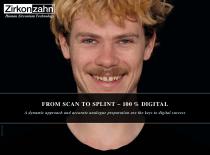
FROM SCAN TO SPLINT – 100 % DIGITAL A dynamic approach and accurate analogue preparation are the keys to digital success
Open the catalog to page 1
INTERDISCIPLINARY SOLUTIONS FOR OPTIMAL JAW STABILITY Modern dental technology faces the challenge of precisely analysing complex functional and structural disorders of the masticatory system and sustainably improving them using innovative treatment methods. An essential part of this work is the interdisciplinary collaboration between dentist, dental technician and physiotherapist, which leads to the development of the optimal solution for restoring oral functionality and structural jaw stability. Digitisation has provided new possibilities in dental technology to accurately capture jaw relations:...
Open the catalog to page 2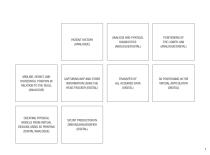
MIDLINE, HEIGHT, AND HORIZONTAL POSITION IN RELATION TO THE SKULL (ANALOGUE) CREATING PHYSICAL MODELS FROM VIRTUAL DESIGNS USING 3D PRINTING (DIGITAL/ANALOGUE) PATIENT HISTORY (ANALOGUE) CAPTURING NHP AND OTHER INFORMATION USING THE HEAD TRACKER (DIGITAL) SPLINT PRODUCTION IN ZIRKONZAHN.MODIFIER (DIGITAL) TRANSFER OF ALL ACQUIRED DATA (DIGITAL) 3D POSITIONING IN THE VIRTUAL ARTICULATOR (DIGITAL)
Open the catalog to page 3
PATIENT HISTORY PATIENT HISTORY A 27-year-old professional cyclist, presented to the dental practice with persistent complaints. Despite intensive physiotherapy, the patient continued to suffer from muscular imbalances, particularly in the neck and back muscles, as well as from an unstable posture during physical activities. This instability manifested in poor movement patterns and limited control during jumps, significantly affecting his athletic performance. A thorough examination revealed that the patient had previously lost a tooth in the upper left jaw: tooth 26 was missing, leading to an...
Open the catalog to page 5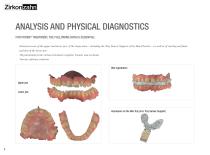
ANALYSIS AND PHYSICAL DIAGNOSTICSFOR PATIENT TREATMENT, THE FOLLOWING DATA IS ESSENTIAL: - Intraoral scans of the upper and lower jaw, of the impression — including the Tray Sensor Support of the Head Tracker — as well as of starting and final position of the lower jaw - 3D positioning in the virtual articulator (sagittal, frontal, and occlusal) - Various software solutions Bite registration Impression on the Bite Tray (incl. Tray Sensor Support)
Open the catalog to page 6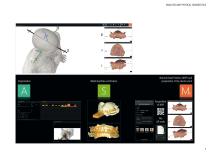
ANALYSIS AND PHYSICAL DIAGNOSTICS Matching/Data verification Natural Head Position (NHP) and preparation of the dental work < Head Tracking Results j? Head ROLL-1.2“ PITCH. Position
Open the catalog to page 7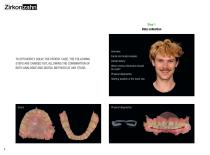
Step 1 Data collection TO EFFICIENTLY SOLVE THE PATIENT CASE, THE FOLLOWING STEPS ARE CARRIED OUT, ALLOWING THE COMBINATION OF BOTH ANALOGUE AND DIGITAL METHODS AT ANY STAGE: Facial and model analysis Dental history Which vertical dimension should be used? Physical diagnostics Starting position of the lower jaw Physical diagnostics
Open the catalog to page 8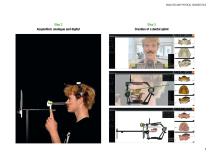
ANALYSIS AND PHYSICAL DIAGNOSTICS Step 2 Acquisition: analogue and digital Step 3 Creation of a dental splint
Open the catalog to page 9
DIGITAL IMPLEMENTATION DURING TREATMENT Once the patient data has been acquired, it is organised in the Zirkonzahn.Archiv software. Models are then verified in Zirkonzahn.Scan or Zirkonzahn.Modifier software. During this process, the quality of the intraoral scans is checked, as well as whether the scans have been correctly matched (different bite positions). The digital registration of the upper jaw position is carried out using the PlaneFinder ® and the Head Tracker: innovative measuring instruments which enable an accurate transfer of the upper jaw position into the software. The patient’s...
Open the catalog to page 10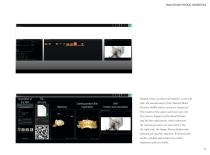
ANALYSIS AND PHYSICAL DIAGNOSTICS Display of jaw position and models: on the left File QR code Matching Starting position/Bite registration side, the measurement of the Natural Head Position (NHP) and its result are displayed. The models of the upper and lower jaw, the Tray Sensor Support of the Head Tracker, and the bite registration, which represent the starting position, are also shown. On the right side, the Image Viewer displays the detected jaw and bite situation. In Zirkonzahn. Archiv, all data and models are clearly organised and accessible. 11
Open the catalog to page 11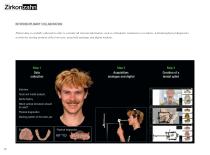
INTERDISCIPLINARY COLLABORATION Patient data is carefully collected in order to consider all relevant information, such as orthodontic treatments or accidents. A detailed physical diagnostics records the starting position of the lower jaw, using both analogue and digital methods. Step 1 Data collection Step 2 Acquisition: analogue and digital Interview Facial and model analysis Dental history Which vertical dimension should be used? Physical diagnostics Starting position of the lower jaw Physical diagnostics Step 3 Creation of a dental splint
Open the catalog to page 12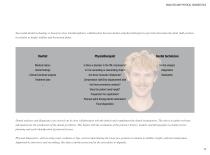
ANALYSIS AND PHYSICAL DIAGNOSTICS Successful dental technology is based on close interdisciplinary collaboration between dentist and physiotherapist to precisely determine the ideal skull position in relation to height, midline and horizontal plane. Medical history Is there a disorder in the TMJ mechanics? Dental analysis Dental findings Is it an ascending or descending chain? Diagnostics Clinical functional analysis Are there muscular imbalances? Realisation Treatment plan Compression side/Disc displacement side ... Are there premature contacts? Does the patient need height? Planned splint therapy/dental...
Open the catalog to page 13
In the case described, it was found that the patient, a professional cyclist in his spare time, exhibits physical instability during jumps. 14 Watch the video: the patient performs jumps with spins, perfect balance, and lightning-fast reactions.
Open the catalog to page 14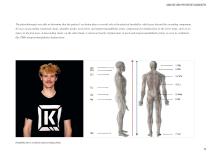
The physiotherapist was able to determine that the patient’s occlusion plays a crucial role in the physical instability, which goes beyond the ascending component. In cases of ascending rotational chain, shoulder girdle, neck joints, and temporomandibular joints compensate for dysfunctions in the lower body, such as an injury in the foot area. A descending chain, on the other hand, is characterised by dysfunctions in neck and temporomandibular joints, as seen in conditions like TMD (temporomandibular dysfunction). Instability due to occlusion and ascending chain.
Open the catalog to page 15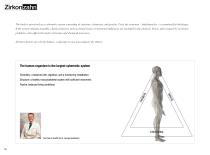
The body is perceived as a cybernetic system consisting of structure, chemistry, and psyche. First, the structure – body/muscles – is examined for blockages. If the system remains unstable, chemical factors such as dental issues or hormonal influences are included in the analysis. Stress, often caused by occlusion problems, also affects the body’s structure and chemical processes. All three factors are closely linked – a disorder in one area impacts the others. The human organism is the largest cybernetic system Chemistry: a balanced diet, digestion, and a functioning metabolism. Structure: a...
Open the catalog to page 16All Zirkonzahn catalogs and technical brochures
 Case gallery Prettau® 5
4 Pages
 Case gallery Prettau® Skin®
4 Pages
 Case gallery Prettau® Skin®
4 Pages
 Case gallery Prettau® Skin®
4 Pages
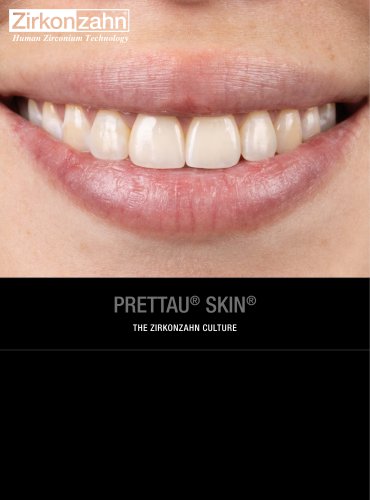 Case gallery Prettau® Skin®
4 Pages
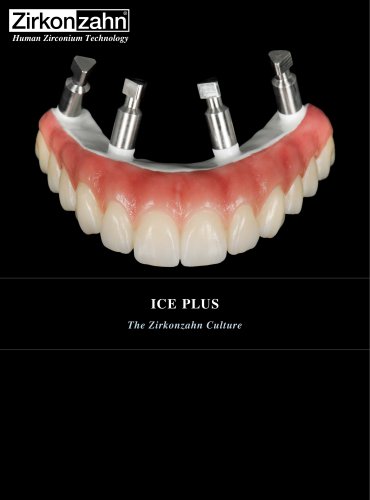 Insert ICE Plus
4 Pages
 Insert X-Ray Sphere
4 Pages
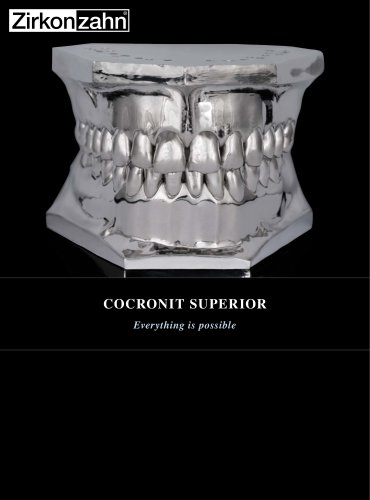 Insert Cocronit Superior
4 Pages
 Insert Clara Zanini
4 Pages
 Case gallery Prettau® Skin®
4 Pages
 Insert Zirkonofen Turbo
4 Pages
 Insert anti-snoring device
4 Pages
 Insert Gingiva-Composites
4 Pages
 Brochure Fresco Ceramics
52 Pages
 Brochure PlaneSystem®
28 Pages
 Insert Zirkonofen 600/V4
4 Pages
 Fresco Ceramics Application
6 Pages
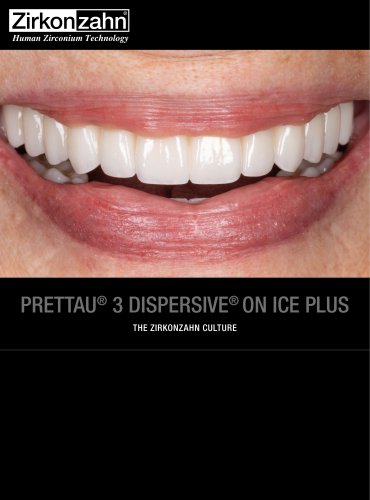
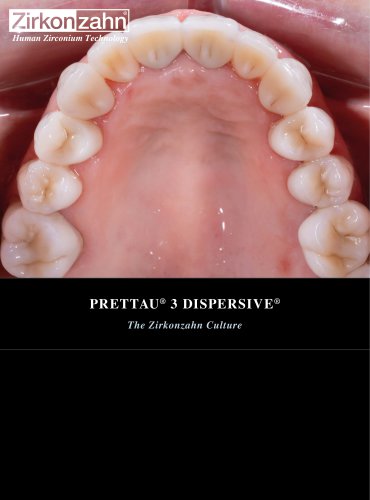
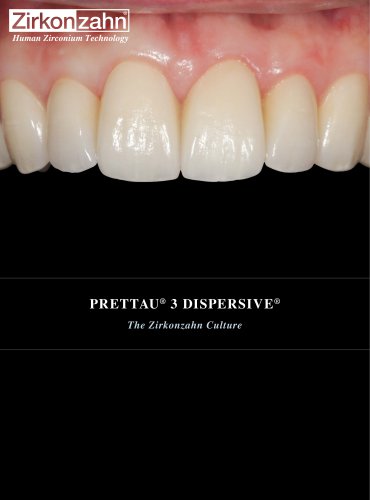
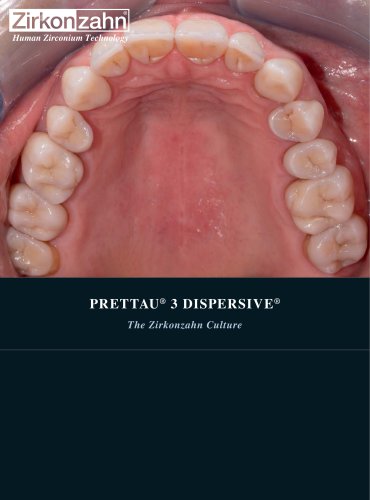 Prettau® 3 Dispersive®
4 Pages
 Brochure Detection Eye
20 Pages
 Brochure JawAligner
28 Pages
 Brochure PlaneSystem®
24 Pages
 Flyer PlaneAnalyser II
1 Page
 Flyer Head Tracker
1 Page
 Brochure CAD/CAM System
88 Pages
 Insert M6 Blank Changer
5 Pages
 Case gallery Bartplatte
4 Pages
 Brochure Zirkonzahn thinks big
12 Pages
 Brochure Shade Guide
52 Pages
 Insert Prettau® Line
4 Pages
 Case gallery Fresco Ceramics
4 Pages
 Brochure Zirkonofen Turbo
36 Pages
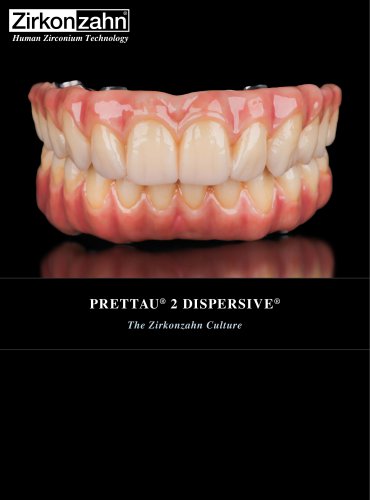
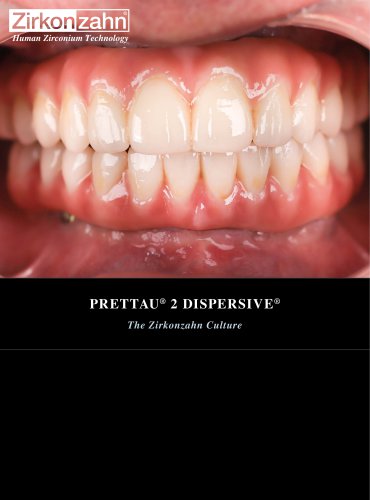
 Case gallery Prettau® 2
4 Pages
 Implant-supported components
100 Pages
 Case gallery Raw-Abutment®
4 Pages
 Insert Software
6 Pages
 Case gallery Bite Splint
4 Pages
 Brochure My Laboratory
32 Pages
 Brochure Zirkonzahn
68 Pages
 Brochure Military School
32 Pages
 Brochure Sintering Furnaces
28 Pages
 Brochure Patients
24 Pages
 Brochure Material diversity
116 Pages




Archived catalogs


- Zirkonzahn dental material
- Zirkonzahn dental restoration material
- Implant abutment
- Titanium implant abutment
- Straight implant abutment
- Dental surgery instrument kit
- Dental burr
- Zirkonzahn resin dental material
- Visualization software
- Zirkonzahn dental prosthesis dental material
- Internal implant abutment
- Zirkonzahn heating oven
- Modeling dental material
- Diamond burr
- Zirkonzahn dental crown material
- Zirkonzahn biocompatible dental material
- Dental bridge material
- Benchtop oven
- Zirkonzahn dental laboratory dental material
- Angled implant abutment