
- Catalogs
- Zirkonzahn
- Case gallery Prettau® 3 Dispersive®


Case gallery Prettau® 3 Dispersive®

Case gallery Prettau® 3 Dispersive®
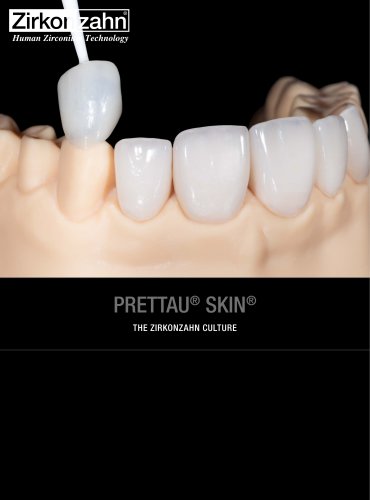
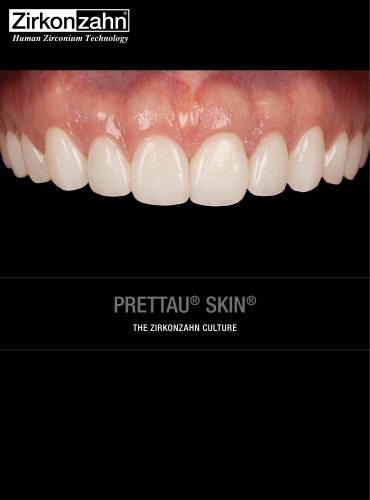
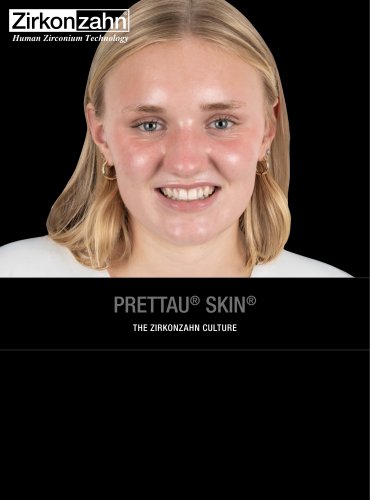
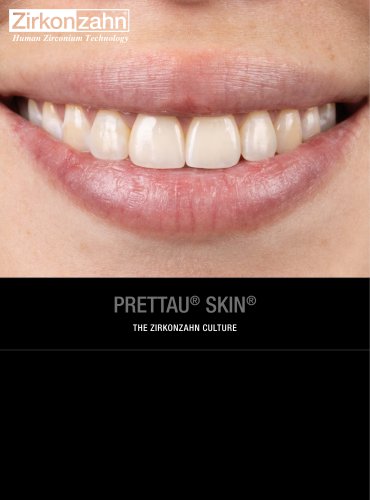
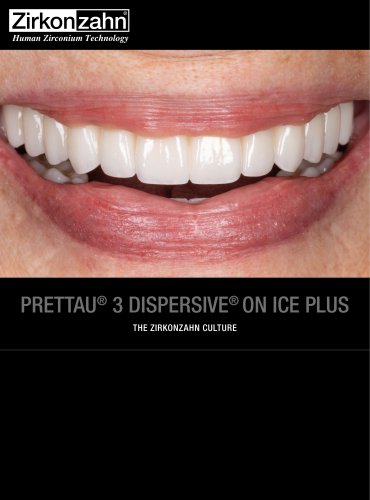
This document discusses the use of Prettau® Skin® ultra-thin veneers made from Prettau® 3 Dispersive® zirconia, focusing on a case involving a young patient with dental caries and missing restorations.
Initial Situation and Planned Restoration
The patient required minimally invasive restoration of teeth 46-47 using Prettau® Skin® veneers. The restoration plan included a sandwich technique for tooth 23, involving minimal enamel preparation and the use of digital block-out models for mock-ups.
Design and Production
Veneers were designed and milled using a digital block-out model. The occlusal region was highlighted, and a preparation guide was created for the upper jaw. The veneers were produced with a minimum thickness of 0.2 mm using Prettau® 3 Dispersive® zirconia, which features gradients in color, translucency, and flexural strength.
Follow-Up and Adjustments
During follow-up, phonetics and aesthetics were rechecked. The sandwich technique required a palatal support surface for canine 23 to optimize function, leading to the design of both vestibular and palatal veneers.
Material and Technology
Prettau® 3 Dispersive® zirconia is characterized by its Gradual-Triplex-Technology, offering a triple gradient in natural coloring, flexural strength, and translucency. It is suitable for various dental restorations, including monolithic single crowns and multi-unit bridges, with no ceramic chipping or antagonist abrasion.
Equipment and Availability
The document mentions the M2 Milling Unit Comfort Line and other milling units compatible with the new Prettau® 3 Dispersive® zirconia. Note that not all products are available in all countries.
Catalog excerpts

PRETTAU® SKIN® THE ZIRKONZAHN CULTURE
Open the catalog to page 1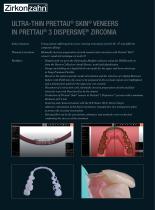
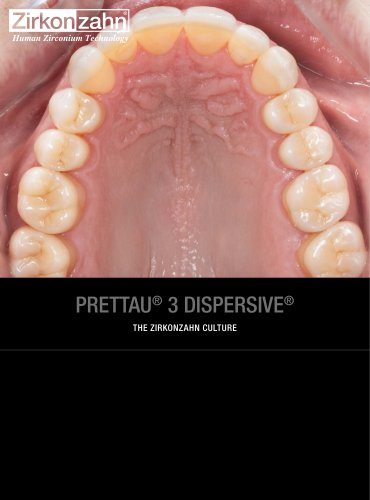
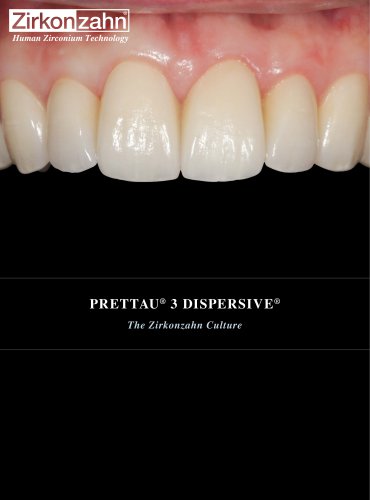
ULTRA-THIN PRETTAU® SKIN® VENEERS IN PRETTAU® 3 DISPERSIVE® ZIRCONIA Initial situation: Young patient suffering from caries, missing restoration of teeth 46 – 47 and different Planned restoration: Minimally invasive preparation of tooth enamel and restoration with Prettau® Skin® veneers; sandwich technique on tooth 23 - from the Heroes Collection virtual library; tooth individualisation Design and milling of a digital block-out model for the upper and lower mock-ups in Temp Premium Flexible Sphere with Ø 240 mm, the areas to be prepared in the occlusal region were highlighted and a preparation...
Open the catalog to page 2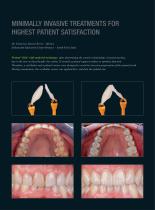
MINIMALLY INVASIVE TREATMENTS FOR HIGHEST PATIENT SATISFACTION Dr. Francisco García Torres – Mexico Prettau® Skin® with sandwich technique: after determining the centric relationship, it turned out that, due to the new occlusal height, the canine 23 needed a palatal support surface to optimise function. Therefore, a vestibular and a palatal veneer were designed to avoid too invasive preparation of the natural toot
Open the catalog to page 3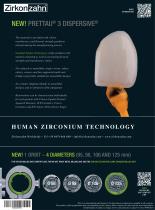
MORE INFORMATION The material is provided with colour, translucency and flexural strength gradients already during the manufacturing process Gradual-Triplex-Technology: triple gradient with natural colouring as well as increasing flexural strength and translucency values For reduced or monolithic single crowns, inlays, onlays, veneers and bar-supported multi-unit bridges (especially suitable for monolithic design) No ceramic chipping (thanks to monolithic design), and no abrasion of the antagonist Restorations can be characterised individually for each patient with Colour Liquids Prettau® H U...
Open the catalog to page 4All Zirkonzahn catalogs and technical brochures
 Case gallery Prettau® 5
4 Pages
 Case gallery Prettau® Skin®
4 Pages
 Case gallery Prettau® Skin®
4 Pages
 Case gallery Prettau® Skin®
4 Pages
 Case gallery Prettau® Skin®
4 Pages
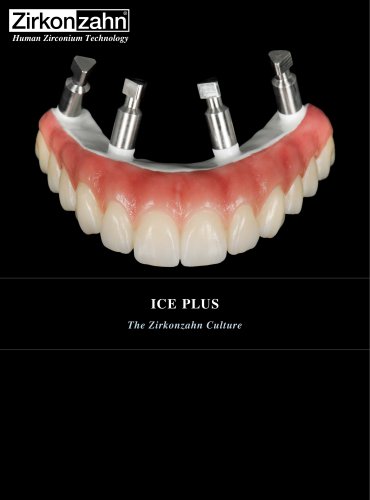 Insert ICE Plus
4 Pages
 Insert X-Ray Sphere
4 Pages
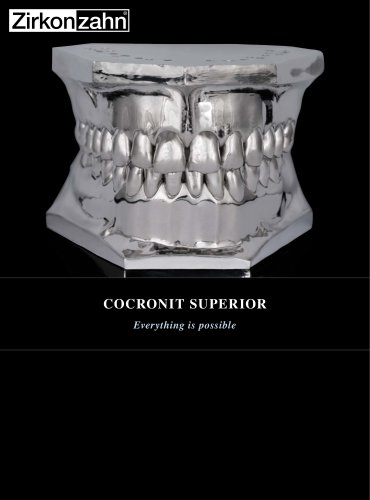 Insert Cocronit Superior
4 Pages
 Insert Clara Zanini
4 Pages
 Case gallery Prettau® Skin®
4 Pages
 Insert Zirkonofen Turbo
4 Pages
 Insert anti-snoring device
4 Pages
 Insert Gingiva-Composites
4 Pages
 Brochure Fresco Ceramics
52 Pages
 Brochure PlaneSystem®
28 Pages
 Insert Zirkonofen 600/V4
4 Pages
 Fresco Ceramics Application
6 Pages
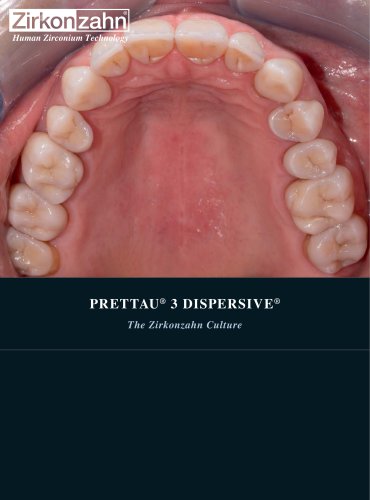 Prettau® 3 Dispersive®
4 Pages
 Brochure Detection Eye
20 Pages
 Brochure JawAligner
28 Pages
 Brochure PlaneSystem®
24 Pages
 Flyer PlaneAnalyser II
1 Page
 Flyer Head Tracker
1 Page
 Brochure CAD/CAM System
88 Pages
 Insert M6 Blank Changer
5 Pages
 Case gallery Bartplatte
4 Pages
 Brochure Zirkonzahn thinks big
12 Pages
 Brochure Shade Guide
52 Pages
 Insert Prettau® Line
4 Pages
 Case gallery Fresco Ceramics
4 Pages
 Brochure Zirkonofen Turbo
36 Pages
 Case gallery Prettau® 2
4 Pages
 Implant-supported components
100 Pages
 Case gallery Raw-Abutment®
4 Pages
 Insert Software
6 Pages
 Case gallery Bite Splint
4 Pages
 Brochure My Laboratory
32 Pages
 Brochure Zirkonzahn
68 Pages
 Brochure Military School
32 Pages
 Brochure Sintering Furnaces
28 Pages
 Brochure Patients
24 Pages
 Brochure Material diversity
116 Pages




Archived catalogs


- Zirkonzahn dental material
- Zirkonzahn dental restoration material
- Implant abutment
- Titanium implant abutment
- Straight implant abutment
- Dental surgery instrument kit
- Dental burr
- Zirkonzahn resin dental material
- Visualization software
- Zirkonzahn dental prosthesis dental material
- Internal implant abutment
- Zirkonzahn heating oven
- Modeling dental material
- Diamond burr
- Zirkonzahn dental crown material
- Zirkonzahn biocompatible dental material
- Dental bridge material
- Benchtop oven
- Zirkonzahn dental laboratory dental material
- Angled implant abutment